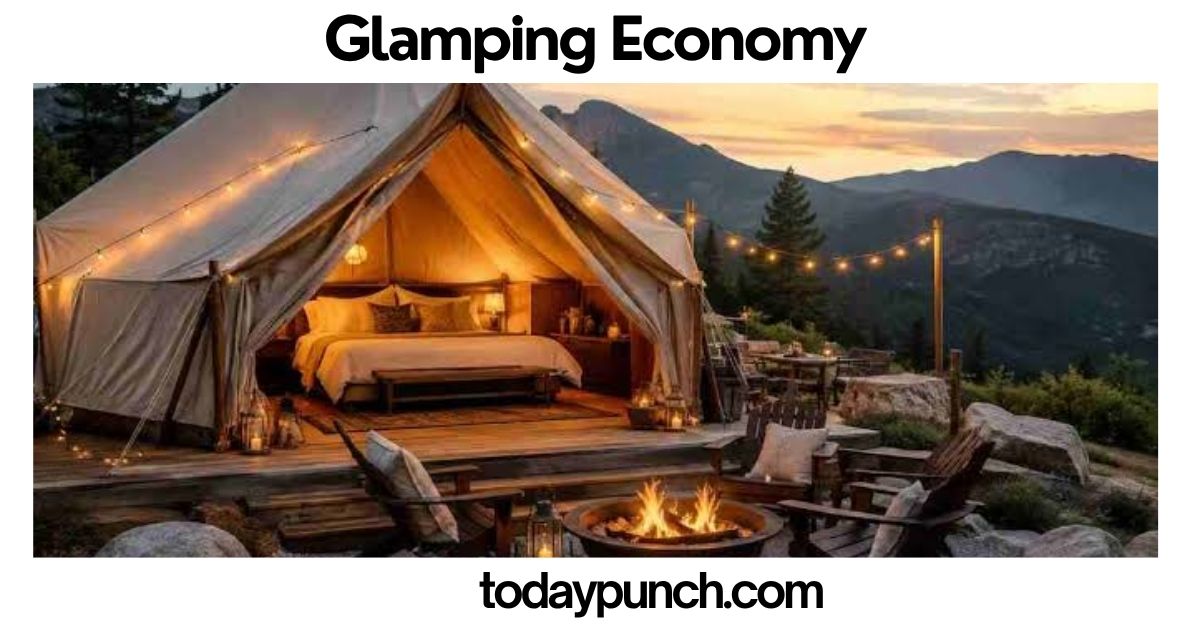
Glamping Economy: How Luxury Camping Is Creating a New Outdoor Hospitality Market
The glamping economy has moved far beyond the idea of putting a comfortable bed inside a tent. What once looked like a small travel trend has developed into a growing part of the outdoor hospitality industry, connecting tourism, real estate, agriculture, recreation, wellness, short-term rentals, and local economic development.
Glamping, a blend of “glamorous” and “camping,” gives travelers a way to enjoy nature without giving up many of the comforts they expect from traditional lodging. Depending on the property, guests may sleep in safari tents, cabins, yurts, domes, treehouses, tiny homes, converted wagons, or other unusual accommodations. Many properties also provide private bathrooms, real beds, heating and cooling, kitchens, hot tubs, fire pits, Wi-Fi, breakfast, guided activities, and other hotel-style services.
The economic opportunity comes from this combination of nature and comfort.
Recent industry research shows that the wider glamping market is expanding at a strong rate, although market-size estimates vary depending on how researchers define glamping and which accommodation types they include. For example, Grand View Research previously estimated the global glamping market at a level that could reach $5.93 billion by 2030, with a projected compound annual growth rate of 10.2%. Its North American forecast was even stronger, with the market projected to reach about $1.73 billion by 2030 at a 12.6% CAGR from 2023 to 2030.
This is important because the often-repeated statement that the glamping economy was worth about $3.5 billion in 2023 should not be treated as one universally accepted industry number. Different research firms use different definitions, regions, and revenue categories. A better way to understand the industry is to focus on the direction of growth and the economic forces behind it rather than relying on one headline figure.
In the United States, the opportunity is also connected to a much larger camping and outdoor hospitality market. According to KOA’s 2026 Camping & Outdoor Hospitality Report, more than 52 million North American households camped in 2025, above pre-pandemic participation levels, generating an estimated $66 billion economic footprint.
That larger market creates a strong foundation for glamping.
This article explains what the glamping economy is, why it is growing, how glamping businesses make money, what consumers want, the role of technology and sustainability, the challenges operators face, and where the industry may go next.
What Is the Glamping Economy?
The glamping economy is the network of businesses, workers, landowners, investors, suppliers, travelers, tourism organizations, and local communities that participate in luxury or comfort-focused outdoor accommodation.
At its simplest level, the business model looks like this:
A property owner provides a nature-based location and accommodation. A traveler pays for the experience. Local businesses benefit from the visitor’s spending. Workers are paid to operate the property. Suppliers provide furniture, tents, utilities, food, maintenance, cleaning, technology, and other services.
The economic effect can therefore be much larger than the nightly room rate.
Imagine a couple paying $350 for one night at a glamping property. Their spending might include the accommodation, breakfast, a guided hike, a massage, a local restaurant, fuel, a farm visit, and souvenirs.
The glamping operator receives only part of the total travel spending.
This is why glamping can be valuable to rural communities. A well-designed property can turn underused land into a tourism asset while encouraging guests to spend money in surrounding communities.
Why Is Glamping Growing?
The growth of the glamping economy is not caused by one single trend. Several consumer and economic changes are working together.
First, many travelers want experiences rather than ordinary hotel rooms.
A standard hotel room can be comfortable, but it may not be memorable. A treehouse overlooking a forest, a dome beneath a dark sky, or a safari tent beside a river creates a story that guests can remember and share.
Second, people increasingly value wellness, nature, privacy, and digital breaks.
Third, glamping removes some of the barriers associated with traditional camping.
Traditional camping can require a tent, sleeping equipment, cooking supplies, transportation, setup time, weather preparation, and knowledge of outdoor skills.
Glamping can remove much of that work.
Guests can arrive with a small bag, check into a prepared accommodation, sleep on a proper mattress, use a private bathroom, and still spend the evening around a fire under the stars.
Also Read: Tubehalote: A Complete Guide
That middle ground is one of the industry’s greatest strengths.
Glamping Sits Between Hotels and Traditional Camping
One useful way to understand the glamping economy is to place it between traditional camping and conventional hospitality.
Traditional camping emphasizes simplicity, equipment, outdoor skills, and low accommodation costs.
Hotels emphasize comfort, convenience, predictable service, and indoor facilities.
Glamping combines selected elements of both.
Guests receive the outdoor setting and sense of adventure associated with camping while receiving many of the comforts associated with hotels.
This creates a broader customer base.
A family that would never sleep on the ground may be willing to stay in a luxury tent.
A couple that enjoys hotels may choose a romantic treehouse for a special weekend.
A group of friends may prefer a cabin with outdoor activities.
Older travelers may enjoy nature without needing to carry camping equipment.
This ability to attract different types of customers is one reason glamping can expand the traditional camping audience.
The Main Types of Glamping Accommodations
The glamping economy includes many accommodation styles.
Safari Tents
Safari tents are among the most recognizable glamping structures.
They often combine a canvas-style exterior with wooden floors, beds, furniture, lighting, and sometimes private bathrooms.
Their major advantage is the feeling of sleeping outdoors while maintaining a residential level of comfort.
Cabins and Pods
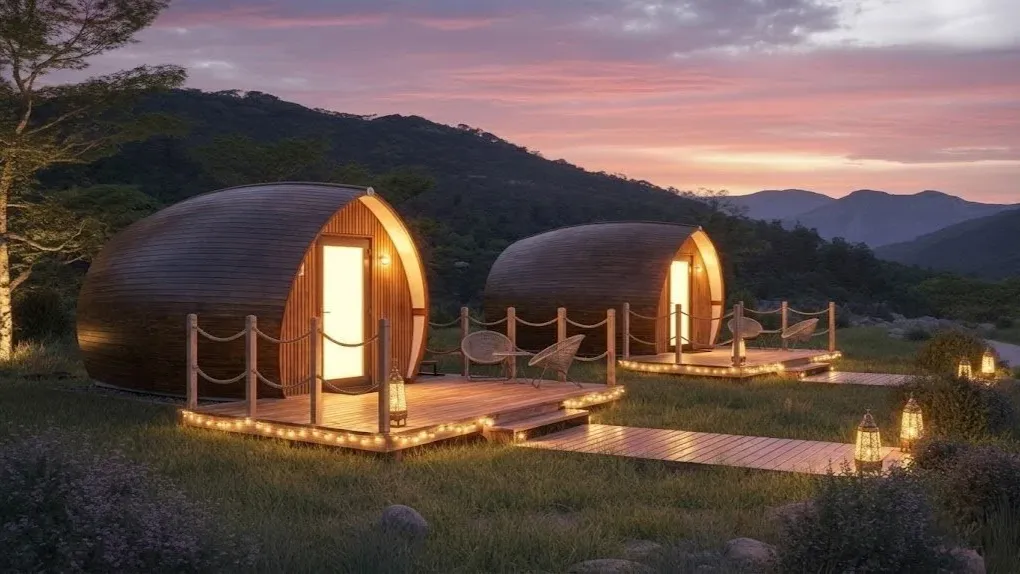
Cabins and pods appeal to travelers who want stronger protection from weather and more privacy.
They can include electricity, kitchens, bathrooms, heating, air conditioning, and other amenities.
They are especially attractive in areas with colder seasons.
Yurts
Yurts have a long history as portable circular dwellings and have become popular in modern outdoor hospitality.
They can be relatively simple or highly luxurious.
A well-designed yurt can create a unique accommodation experience without looking like a conventional hotel.
Treehouses
Treehouses are strongly associated with experiential travel.
They can command premium prices because the structure itself becomes part of the attraction.
Guests are not simply renting a room. They are renting the experience of staying in a treehouse.
Domes
Geodesic domes have become popular because they can create wide views of mountains, forests, deserts, and night skies.
Their design also makes them highly attractive for photography and social media.
Tiny Homes
Tiny homes combine the visual appeal of a small house with the outdoor hospitality model.
They may include kitchens, bathrooms, bedrooms, living areas, and large windows.
For operators, tiny homes can sometimes provide a more standardized product than tents.
How the Glamping Economy Makes Money
The basic revenue source is accommodation.
However, the strongest operators do not depend entirely on the nightly room rate.
They create several revenue streams.
Accommodation revenue may include nightly rates, weekend packages, holiday stays, extended stays, and premium units.
Additional revenue may come from:
- Breakfast and meal packages
- Guided tours
- Hiking experiences
- Fishing
- Horseback riding
- Kayaking
- Bike rentals
- Spa services
- Massages
- Outdoor classes
- Stargazing events
- Firewood
- Picnic baskets
- Local products
- Private dinners
- Weddings
- Corporate retreats
- Photography sessions
- Pet fees
- Early check-in
- Late checkout
- Special occasion packages
This creates an important economic principle.
A glamping property does not have to sell only a bed.
It can sell a complete experience.
Why Experience Can Be More Valuable Than Space
Traditional accommodation businesses often compete around room size, location, cleanliness, price, and amenities.
Glamping can compete on something different: uniqueness.
A 400-square-foot cabin may be worth more per night than a much larger ordinary room if the cabin provides an unforgettable view, private hot tub, excellent design, and access to a special natural environment.
This changes the economics of small properties.
An operator does not necessarily need hundreds of rooms.
A property with ten carefully designed accommodations may be able to create a strong hospitality business if demand, pricing, occupancy, and operating costs are managed correctly.
That does not mean every small glamping property will be profitable.
Land costs, construction costs, utilities, insurance, labor, maintenance, permits, taxes, marketing, and seasonal demand can significantly affect profitability.
The lesson is that glamping can create higher value per unit, but higher revenue does not automatically mean higher profit.
The Role of Land in the Glamping Economy
Land is one of the most important assets in the industry.
Traditional hospitality businesses often prioritize locations near airports, downtown areas, business districts, beaches, or major attractions.
Glamping can succeed in places that traditional hotels may overlook.
A remote forest.
A mountain valley.
A farm.
A desert.
A lakeside property.
A vineyard.
A ranch.
A coastal area.
A wooded rural property.
The key is not simply having beautiful land.
The land must be accessible, safe, legally usable, environmentally suitable, and capable of supporting the required infrastructure.
This creates opportunities for landowners who have attractive property but do not want to sell it.
Instead of selling land once, an owner may potentially generate recurring tourism income by developing accommodations.
However, this strategy requires careful financial and regulatory analysis.
Rural Economic Development and Glamping
One of the most interesting aspects of the glamping economy is its potential effect on rural communities.
A rural destination may have limited opportunities for large-scale hotel development.
Glamping can sometimes operate at a smaller scale.
A property may bring visitors into an area without requiring a massive resort.
Those visitors may then spend money on local restaurants, gas stations, grocery stores, farms, tour companies, museums, shops, guides, and other businesses.
This can create a tourism multiplier effect.
For example, a guest might book a two-night glamping stay but spend money with five or six other local businesses during the trip.
That makes glamping relevant to economic development, not just accommodation.
Glamping and the U.S. Outdoor Economy
The United States has a strong foundation for outdoor hospitality.
National parks, state parks, forests, mountains, deserts, lakes, rivers, coastlines, ranches, farms, and scenic rural areas provide countless environments where outdoor lodging can be developed.
KOA’s latest research shows the scale of the broader camping market. More than 52 million North American households camped in 2025, and the activity generated a $66 billion economic footprint.
Glamping represents only one part of that larger ecosystem.
This distinction matters.
The future of glamping does not depend on converting every camper into a luxury traveler.
Instead, it can expand the total number of people who are comfortable participating in outdoor travel.
The Customer Has Changed
One of the biggest changes in the glamping economy is the changing definition of a camper.
A camper is no longer necessarily someone who owns a tent, sleeping bag, portable stove, cooler, lantern, and camping vehicle.
Modern outdoor travelers may include families, couples, solo travelers, remote workers, retirees, luxury travelers, wellness travelers, photographers, wedding groups, and people trying camping for the first time.
This broad customer base creates new opportunities.
For example, an operator can design one property around several customer needs.
Romantic packages can attract couples.
Family activities can attract parents.
Wellness programs can attract health-focused travelers.
Adventure packages can attract younger visitors.
Quiet cabins can attract travelers seeking relaxation.
The product can therefore be segmented without changing the underlying property.
Glamping and Millennials
Millennials have often been associated with experience-focused travel, although it is important not to reduce the industry to one generation.
Many younger travelers value unique experiences that can be shared with friends or documented through photographs and social platforms.
Glamping naturally fits this behavior.
A distinctive accommodation can become part of the travel experience itself.
But the opportunity extends beyond millennials.
Gen X travelers may appreciate comfort and privacy.
Baby Boomers may enjoy nature without traditional camping difficulties.
Families may like the convenience.
Younger adults may value adventure and design.
The strongest businesses therefore avoid building their entire strategy around one age group.
The Importance of Social Media
Glamping has an unusually strong relationship with visual marketing.
A conventional hotel room may look similar to thousands of others.
A glass cabin overlooking a mountain can immediately communicate a travel experience through one photograph.
This makes platforms such as Instagram, TikTok, Pinterest, YouTube, and visual travel websites useful marketing channels.
However, social media should not replace fundamentals.
A beautiful photograph can generate interest.
It cannot fix poor cleanliness, uncomfortable beds, weak customer service, bad roads, inaccurate descriptions, or safety problems.
The strongest marketing strategy is therefore a combination of attractive visuals and reliable guest experiences.
Technology Is Reshaping Glamping
Technology can reduce operating costs and improve the guest experience.
Many modern properties use digital booking systems, automated payments, smart locks, online check-in, Wi-Fi systems, guest messaging platforms, dynamic pricing tools, and automated customer service.
A small property can therefore operate with fewer administrative tasks.
Technology can also help owners analyze occupancy patterns.
If demand is high on weekends but weak on weekdays, the operator can adjust prices or create weekday packages.
If guests frequently book romantic stays, the property can create special packages.
If customers leave because bathrooms are inconvenient, the owner can use that feedback to improve the product.
Data can turn guest behavior into business decisions.
Artificial Intelligence and the Future of Glamping
Artificial intelligence may become increasingly useful in the glamping economy.
AI tools can help operators write marketing content, answer common guest questions, analyze reviews, identify booking patterns, suggest pricing strategies, create social media content, and organize customer communications.
For small operators, this can be valuable because they may not have large marketing or revenue-management teams.
However, AI should support human hospitality rather than replace it.
Guests may appreciate quick answers about check-in times.
They still want a real person when something goes wrong.
The best use of AI is therefore not to make hospitality less human.
It is to remove repetitive work so operators can spend more time improving the guest experience.
Sustainability and the Glamping Economy
Nature is the main product in glamping.
That creates a major responsibility.
If a business damages the landscape that attracts customers, it can weaken its own long-term economic value.
Sustainable glamping may involve:
- Efficient water use
- Renewable energy
- Solar power
- Responsible wastewater systems
- Waste reduction
- Recycling
- Local food
- Durable construction
- Low-impact landscaping
- Wildlife protection
- Dark-sky practices
- Reduced plastic use
- Responsible trail management
Sustainability should not be treated only as a marketing word.
It should be part of property design and operations.
The goal is to make the business financially successful while protecting the environmental asset that supports demand.
ALso REad: BlessingTide.com: A Complete Guide to the Website, Content, Purpose, and What Readers Should Know
Why Sustainability Can Also Make Business Sense
Sustainable practices can sometimes reduce operating costs.
Solar energy can lower long-term electricity expenses.
Water-efficient fixtures can reduce water consumption.
Durable materials can reduce replacement costs.
Local sourcing can reduce transportation requirements and strengthen relationships with nearby businesses.
However, sustainability investments must be evaluated carefully.
A technology that sounds environmentally friendly is not automatically economically sensible for every property.
The best operators examine the full life-cycle cost.
Glamping and Wellness Tourism
Wellness is becoming an important part of outdoor travel.
People may want to escape traffic, screens, crowded cities, and stressful schedules.
Glamping provides a natural setting for wellness activities.
A property may offer yoga, meditation, forest walks, massage services, healthy meals, outdoor baths, sauna experiences, or quiet areas.
The business opportunity is not simply to rent accommodation.
It is to sell restoration.
This can increase the perceived value of a stay.
The Rise of Longer Outdoor Stays
Another important development in travel is the growth of longer stays.
Research using U.S. Airbnb reservation data from 2019 through 2024 found that average nights per booking increased after the pandemic period, with longer stays remaining more common than before.
This trend may matter to glamping operators.
A guest who stays four nights can be more valuable than a guest who stays one night if acquisition and cleaning costs are spread over more nights.
Operators can encourage longer stays with:
- Weekly discounts
- Midweek pricing
- Work-friendly accommodations
- Reliable Wi-Fi
- Kitchen facilities
- Laundry access
- Multi-day activities
- Family packages
The challenge is balancing longer stays with the ability to charge premium rates during peak periods.
Seasonality Is a Major Business Challenge
Not every glamping location can attract guests year-round.
Mountain properties may experience strong summer and winter demand but weaker shoulder seasons.
Beach destinations may depend heavily on warm weather.
Northern properties can face harsh winters.
Desert destinations may have extreme summer temperatures.
Successful operators think about seasonality before building.
A property may use different experiences during different seasons.
Summer could focus on hiking and water activities.
Fall could focus on foliage and romantic stays.
Winter could emphasize snow, fireplaces, hot tubs, and stargazing.
Spring could focus on wellness and nature.
Seasonality becomes less dangerous when the product changes with the season.
The Importance of Location
Location remains one of the strongest predictors of potential success.
A beautiful property that is extremely difficult to reach may struggle.
At the same time, a property located too close to a busy highway or industrial area may lose the sense of escape customers expect.
The ideal location often balances accessibility and isolation.
Guests should feel that they have escaped everyday life without feeling that they have entered an impossible logistical challenge.
This is especially important in the United States, where many glamping trips are likely to involve driving.
Clear directions, parking, road conditions, mobile connectivity, and emergency access should therefore be part of the business plan.
Regulation Can Make or Break a Project
One of the least glamorous but most important parts of the glamping economy is regulation.
Before developing a property, owners may need to investigate zoning, building codes, septic requirements, water systems, fire safety, accessibility rules, business licensing, environmental regulations, insurance requirements, and short-term rental regulations.
The exact requirements depend heavily on location.
A structure that looks like a tent to a customer may be classified differently by a local authority.
This is not simply a paperwork issue.
Regulatory uncertainty can delay construction, increase costs, or prevent a project from operating.
Recent international developments demonstrate the problem. For example, an Australian glamping controversy involved luxury tents being ordered to be removed because of questions about how the structures were classified under local planning rules.
U.S. operators should therefore investigate local rules before purchasing land or ordering accommodation units.
The Investment Case for Glamping
Investors are attracted to glamping because the model can potentially generate premium revenue from relatively limited accommodation inventory.
But the investment case should not be reduced to “high nightly rates.”
A serious financial model should consider:
Land acquisition or lease costs.
Construction costs.
Accommodation costs.
Site preparation.
Roads.
Water.
Electricity.
Wastewater.
Internet.
Furniture.
Insurance.
Permits.
Taxes.
Marketing.
Booking platform fees.
Cleaning.
Maintenance.
Labor.
Property management.
Replacement reserves.
Financing costs.
Seasonality.
Occupancy.
Average daily rate.
Revenue per available unit.
The real question is not how much a guest pays.
The real question is how much operating cash flow remains after all relevant costs.
Occupancy Is Only Half the Story
Suppose a glamping unit charges $400 per night.
That sounds impressive.
But if it is occupied only 30% of the year, the revenue picture is very different from a property that charges $300 and maintains 70% occupancy.
Operators should therefore balance price and occupancy.
Dynamic pricing can help.
Peak weekends may justify higher rates.
Weekdays may require lower rates or packages.
Holiday periods may command premium pricing.
Shoulder seasons may need promotions.
The goal is not always to maximize the nightly price.
The goal is to maximize profitable demand.
What Makes a Glamping Property Successful?
A strong glamping property usually combines several elements.
The location must be appealing.
The accommodation must be comfortable.
The experience must feel special.
The property must be easy to book.
The price must match perceived value.
The service must be reliable.
The photographs must accurately represent the property.
The reviews must remain strong.
The operation must be financially disciplined.
The most important word is consistency.
A guest may forgive a small inconvenience if the overall experience is excellent.
Repeated operational failures can quickly damage reviews and future bookings.
Reviews Are an Economic Asset
Online reviews are not merely reputation tools.
They can influence demand, conversion rates, pricing power, and repeat business.
A guest deciding between two similar properties may choose the one with stronger reviews.
This means customer service becomes part of the property’s financial strategy.
Fast communication, clean accommodations, comfortable beds, accurate descriptions, and thoughtful details can create better reviews.
A host should therefore view every guest interaction as part of marketing.
The Role of Local Businesses
Glamping properties can create partnerships with nearby businesses.
A local farm can supply breakfast.
A restaurant can offer delivery.
A guide can provide hiking tours.
A winery can provide tasting experiences.
A photographer can offer engagement packages.
A wellness professional can provide massage or yoga.
A local shop can supply welcome baskets.
This creates an ecosystem instead of an isolated accommodation business.
The result can be more value for guests and more economic activity for the community.
Glamping and Events
Events can become another major revenue opportunity.
Weddings, birthdays, reunions, corporate retreats, wellness retreats, family gatherings, and small festivals can fill multiple units at once.
An operator with ten accommodations may generate significant revenue from a group booking that occupies most of the property.
However, events also create additional risks.
Noise, parking, waste, insurance, staffing, local regulations, and neighbor relationships must be considered.
An event strategy should therefore be designed carefully rather than added casually.
Challenges Facing the Glamping Economy
The glamping economy has strong growth potential, but it is not risk-free.
One challenge is competition.
As more entrepreneurs discover glamping, more properties enter the market.
A basic tent may no longer be enough to stand out.
Operators must develop a clear identity.
Another challenge is rising development costs.
Construction, labor, utilities, insurance, and financing can make new projects expensive.
Weather is another risk.
Extreme heat, storms, wildfire, flooding, and winter conditions can affect operations.
Environmental responsibility is also increasingly important.
Poorly planned development can damage the natural environment and create community opposition.
Regulation is another major variable.
Finally, customer expectations are rising.
Guests may expect hotel-quality cleanliness even when staying in a tent.
The Danger of Overbuilding
One of the most important lessons for future investors is that more units do not automatically mean more profit.
A property with too many accommodations can lose privacy.
Too many guests can create noise, parking problems, environmental pressure, and weaker experiences.
Glamping is partly successful because it feels different from mass tourism.
There is a point where expansion can damage the product.
Smart growth may therefore be more valuable than maximum growth.
How Small Operators Can Compete
Small businesses can compete with larger hospitality companies by being more personal and specialized.
A large hotel may offer standardized service.
A small glamping property can create a highly personal experience.
The owner can recommend a hiking trail.
A welcome basket can feature local products.
A guest can receive a personalized anniversary setup.
A small property can build a strong relationship with its local community.
This creates a competitive advantage that is difficult to reproduce at scale.
The Future of Glamping in the United States
The future of the U.S. glamping economy is likely to become more diverse.
The industry may move beyond luxury tents into a broader outdoor hospitality category that includes cabins, tiny homes, domes, treehouses, renovated structures, and hybrid resort models.
We are already seeing strong consumer interest in distinctive outdoor accommodations. Recent U.S. glamping rankings and travel coverage continue to highlight properties ranging from desert pods to safari tents and treehouses, showing that the market is increasingly driven by differentiated experiences rather than one standard accommodation format.
The next stage may also bring stronger integration with hotels, resorts, campgrounds, vacation rentals, and destination tourism.
Glamping does not necessarily need to compete with hotels.
It can become another category within hospitality.
Will Glamping Become Mainstream?
Glamping is unlikely to replace hotels or traditional camping.
That is not necessary for it to become a major industry.
Its opportunity comes from serving people who want something between the two.
Some travelers want a cheap tent.
Some want a five-star hotel.
Others want a private cabin in the woods with a comfortable mattress, fire pit, hot shower, and mountain view.
That third group is where glamping has found its economic opportunity.
As outdoor hospitality becomes more sophisticated, the line between camping, vacation rentals, resorts, and experiential lodging may continue to become less clear.
Where the Biggest Opportunities May Be
Future opportunities may appear in areas with several characteristics.
They may have attractive natural scenery, reasonable access from major population centers, limited high-quality lodging, strong tourism demand, and enough land for responsible development.
Weekend destinations within a few hours of large cities may be particularly attractive because guests can reach them by car.
This creates an interesting business model.
The property does not need to be internationally famous.
It may simply need to provide a memorable experience within a manageable driving distance.
The Next Generation of Glamping Guests
The future guest may expect more than a bed and a view.
They may want fast Wi-Fi, a private bathroom, comfortable temperature control, excellent coffee, outdoor experiences, wellness options, sustainable practices, and easy digital booking.
At the same time, they may want less noise, fewer crowds, and more connection with nature.
This creates an interesting contradiction.
The future of glamping may be about using more technology while making the guest feel less connected to technology.
A guest may use a smartphone to book the property, unlock the door, order breakfast, and receive directions.
Once they arrive, they may want to put the phone away.
That is a powerful value proposition.
A Practical Framework for Building a Glamping Business
Anyone considering entering the industry should begin with the market rather than the accommodation.
First, identify the target guest.
Second, study competing properties.
Third, understand local regulations.
Fourth, evaluate the land.
Fifth, calculate infrastructure costs.
Sixth, estimate realistic occupancy.
Seventh, determine a sustainable nightly rate.
Eighth, identify additional revenue opportunities.
Ninth, build an operating plan.
Tenth, create a marketing strategy.
Finally, test whether the business still works under conservative assumptions.
A good investment should not depend on perfect occupancy or constantly increasing prices.
How to Research a Glamping Market
Market research should answer practical questions.
How far are customers willing to drive?
What are nearby properties charging?
Which accommodations are most popular?
What amenities receive the best reviews?
What complaints appear repeatedly?
What seasons have the strongest demand?
Are there enough restaurants and activities nearby?
How easy is the property to reach?
Are there attractions that can support longer stays?
What regulations apply?
The answers can reveal opportunities that are not obvious from a simple Google search.
What Customers Really Buy
A major insight from the glamping economy is that customers are rarely buying accommodation alone.
They are buying a feeling.
A couple may be buying romance.
A family may be buying shared memories.
A stressed professional may be buying peace.
A traveler may be buying adventure.
A photographer may be buying scenery.
A group of friends may be buying connection.
This is why experience design is so important.
The strongest operators understand the emotional reason behind the booking.
Glamping Is an Experience Business
The future winners may not necessarily have the most expensive accommodations.
They may have the clearest experience.
A property could become known for stargazing.
Another could focus on romance.
Another could specialize in families.
Another could focus on wellness.
Another could offer farm experiences.
Another could build its identity around adventure.
Specialization makes marketing easier because customers immediately understand what makes the property different.
What the $3.5 Billion Discussion Really Tells Us
The commonly cited $3.5 billion figure is useful as an indication of industry scale, but it should be treated carefully.
There is no single universal database that measures every glamping dollar worldwide in exactly the same way.
Market research companies may count different accommodation categories, countries, booking channels, and revenue types.
For example, one report may include only dedicated glamping accommodation while another may include cabins, pods, resorts, and related outdoor lodging.
Therefore, the strongest conclusion is not that one specific number is guaranteed.
The stronger conclusion is that the category has moved into a meaningful and growing part of the global outdoor hospitality market.
Independent market research supports that direction. Grand View Research has projected double-digit growth for the global market and an even faster growth rate for North America.
Why the Glamping Economy Could Continue Growing
Several structural factors support future growth.
People continue to travel.
Outdoor recreation remains popular.
Consumers value experiences.
Domestic travel can be attractive.
Wellness remains important.
Social media rewards visually distinctive destinations.
Technology makes small hospitality businesses easier to manage.
Unused rural land can sometimes be converted into tourism assets.
And the broader camping economy remains substantial.
KOA’s latest research provides evidence that camping participation remains strong in North America, with 52 million households camping in 2025.
These trends create favorable conditions for glamping, although individual businesses will still face normal hospitality risks.
The Biggest Strategic Lesson
The most important lesson is simple:
Glamping is not really about luxury tents.
It is about creating valuable experiences in natural places.
Also Read: Magazineluiza com br Email Format: A Complete Guide to Magazine Luiza Email Addresses
The accommodation is the physical product.
Nature is the setting.
Hospitality is the service.
Experience is the differentiator.
Technology is the operating system.
And local economic activity is the wider impact.
Understanding this model helps explain why the glamping economy has attracted attention from entrepreneurs, landowners, tourism organizations, and hospitality investors.
Frequently Asked Questions About the Glamping Economy
Is glamping considered part of the hospitality industry?
Yes. Glamping is generally considered part of hospitality and outdoor tourism because businesses provide paid accommodation, guest services, amenities, and experiences.
Is glamping cheaper than a hotel?
Not necessarily. Glamping can cost more than basic hotels because guests are paying for a unique location, private accommodation, outdoor setting, amenities, and experiences. Prices vary greatly by destination, season, accommodation type, and service level.
Can a glamping business operate on a small property?
Potentially, yes. Some businesses operate with a small number of accommodations. However, zoning, access, utilities, wastewater, fire safety, parking, and other local requirements must be evaluated before development.
**Do glamping businesses operate all year?
Some do, while others operate only during selected seasons. Climate, accommodation design, heating and cooling, road access, and local demand determine whether year-round operation is practical.
What is the biggest expense in a glamping business?
There is no single answer. Depending on the project, land, infrastructure, construction, utilities, accommodations, financing, labor, and site development can all represent major expenses.
Can glamping work near a major city?
Yes. Being within a reasonable driving distance of a large population center can be an advantage because customers can take short weekend trips without flying.
Do guests expect bathrooms at glamping sites?
Many guests do, particularly in premium glamping markets. Private bathrooms can significantly improve comfort and perceived value, although expectations differ by accommodation type and target customer.
Can farms benefit from glamping?
Potentially. Farms may have scenery, existing infrastructure, local food, and agricultural experiences that can become part of a tourism product. However, owners must first confirm that accommodation is legally permitted on the property.
Is glamping environmentally friendly?
Glamping can be designed with lower-impact practices, but it is not automatically sustainable. The environmental impact depends on construction, water use, energy consumption, waste management, transportation, land disturbance, and guest behavior.
What makes a glamping property memorable?
The strongest properties usually combine a compelling location, distinctive accommodation, excellent comfort, thoughtful service, and activities that guests cannot easily reproduce at home.
Can glamping properties make money during weekdays?
Yes, but weekday demand often requires a different strategy from weekend demand. Remote-work packages, wellness retreats, couples’ packages, extended stays, and special events can help create weekday revenue.
Does glamping depend on social media?
No, but social media can be especially valuable because glamping accommodations are highly visual. Search engines, direct bookings, repeat customers, partnerships, travel publications, reviews, and referrals are also important.
Can glamping survive an economic slowdown?
No hospitality category is completely protected from economic downturns. However, businesses can improve resilience by controlling costs, targeting different customer groups, offering different price points, encouraging longer stays, and maintaining a strong value proposition.
Is glamping a good investment?
It can be, but the answer depends on the specific property and financial model. Investors should analyze land costs, development expenses, realistic occupancy, average daily rates, operating expenses, financing, seasonality, regulations, and exit options before investing.
Final Thoughts on the Glamping Economy
The glamping economy represents one of the most interesting developments in modern outdoor hospitality because it connects two things that were once treated as separate: the desire for nature and the desire for comfort.
Travelers no longer have to choose completely between a hotel room and a traditional campsite.
They can sleep under the stars while enjoying a comfortable bed.
They can spend the day hiking and the evening using a private bathroom.
They can enjoy a remote landscape while still having reliable Wi-Fi.
That combination creates a powerful product.
The economic opportunity extends beyond nightly accommodation. Glamping can support local restaurants, guides, farms, retailers, transportation providers, event businesses, construction companies, maintenance workers, designers, technology providers, and tourism organizations.
The broader outdoor hospitality market also provides a strong foundation. KOA’s 2026 research found that more than 52 million North American households camped in 2025 and that camping generated a $66 billion economic footprint.
At the same time, investors should remain realistic. Market growth does not guarantee the success of every glamping property. Land costs, regulations, weather, competition, infrastructure, seasonality, insurance, staffing, environmental limits, and customer expectations can all affect results.
The future of the industry will likely belong to operators who understand that glamping is more than a trendy place to sleep.
It is an experience business.
The best properties will combine beautiful locations with thoughtful design, dependable hospitality, responsible environmental practices, smart technology, strong financial management, and authentic connections with local communities.
For travelers, that means more ways to experience the outdoors without giving up comfort.
For landowners, it can create a new use for suitable property.
For rural communities, it can generate visitor spending and new tourism opportunities.
For entrepreneurs, it creates a hospitality model that can operate at a smaller scale than many traditional resorts.
And for the broader travel industry, it shows how consumer demand is changing.
People are not simply asking where they can stay.
Increasingly, they are asking what they can experience.
That shift is at the heart of the glamping economy, and it is likely to remain one of the most important forces shaping outdoor hospitality in the years ahead.