Asbestlint: What It Is, Where It Was Used, Health Risks, Identification, and Safe Handling
Asbestlint is a term that can be confusing because it is not a standardized modern scientific or regulatory name in the United States. In historical and product-related contexts, asbestlint can refer to asbestos tape, asbestos ribbon, asbestos cloth, or similar flexible asbestos-containing material that was used for insulation, heat protection, sealing, and other industrial purposes.
The material was valued because asbestos fibers could tolerate high temperatures, resist fire, provide insulation, and add strength to woven products. These qualities made asbestos tape useful around pipes, boilers, furnaces, ovens, electrical equipment, machinery, and other high-temperature systems.
The problem is that the same asbestos fibers that made these products useful can create serious health hazards when they become airborne and are inhaled. The U.S. Occupational Safety and Health Administration, or OSHA, recognizes asbestos as a serious occupational hazard associated with diseases such as asbestosis, lung cancer, and mesothelioma.
For that reason, understanding asbestlint today is less about finding a useful insulation product and more about recognizing a potential asbestos-containing material and managing it safely.
This guide explains what asbestlint means, how asbestos tape was used, how it may appear, where it can be found, why disturbing it can be dangerous, what homeowners and workers should do if they discover it, and how modern U.S. regulations affect asbestos work.
What Is Asbestlint?
Asbestlint generally refers to asbestos-based tape, ribbon, strip, or woven material. The word is sometimes encountered in discussions of older insulation products and industrial materials.
Unlike a rigid asbestos cement sheet or an asbestos-containing floor tile, asbestos tape was flexible. It could be wrapped around objects, folded into joints, placed around openings, or woven into protective material.
Historically, manufacturers could turn asbestos fibers into textile-like products. These included:
- Asbestos tape
- Asbestos ribbon
- Asbestos rope
- Asbestos cloth
- Asbestos cord
- Asbestos wick
- Asbestos packing material
- Heat-resistant woven products
These materials could be especially useful where ordinary fabrics would burn, melt, or deteriorate.
The U.S. EPA confirms that asbestos was historically incorporated into many products because of its strength and heat resistance. Uses included insulation, building products, heat-resistant fabrics, packaging, gaskets, coatings, and automotive friction products.
Therefore, when someone encounters the word asbestlint in an older technical document, product description, industrial setting, or renovation discussion, the safest interpretation is that it may refer to a flexible asbestos-containing material unless the original product documentation proves otherwise.
Is Asbestlint an Official Scientific Term?
No. This distinction is important.
Asbestlint is not a major official asbestos classification used by U.S. federal agencies such as OSHA or EPA. U.S. regulations instead use terms such as asbestos-containing material, presumed asbestos-containing material, thermal system insulation, surfacing material, friable asbestos-containing material, and other defined categories.
This means people should not assume that every product called asbestlint has exactly the same composition.
The word can be used differently depending on the source. Some online discussions use it for asbestos tape or ribbon. Other recent websites use it more loosely to describe fine asbestos fibers or asbestos-related contamination.
For practical safety purposes, the physical material and its asbestos content matter more than the name.
If an old tape-like material is suspected of containing asbestos, the right question is not simply, “Is this asbestlint?” The better question is, “Does this material contain asbestos, and could handling it release respirable fibers?”
That approach leads to a much safer decision.
Also Read: Troozer com: The Online Platform, Features, Safety, and User Experience
The Difference Between Asbestlint and Modern Asbestos Warning Tape
Another source of confusion is the word “asbestos tape.”
Historically, asbestos tape could mean a tape actually made with asbestos fibers.
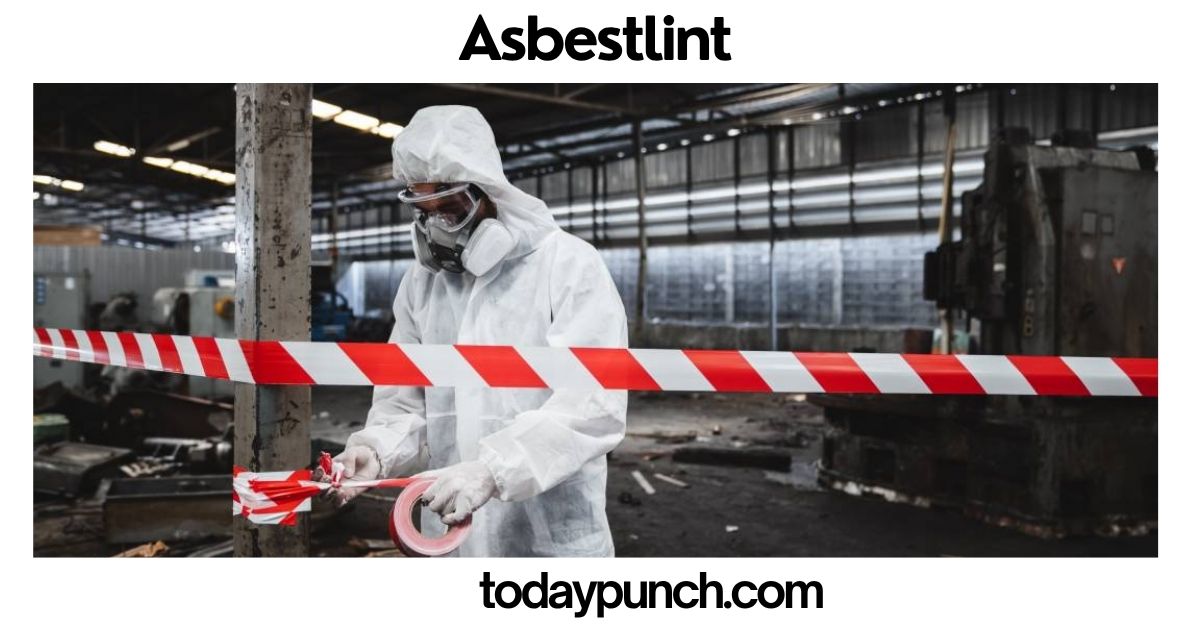
Today, an asbestos warning tape can mean something completely different. Modern warning tape may simply be a plastic or synthetic tape printed with warnings such as “DANGER ASBESTOS” and used to restrict access to a work area.
These two products should never be confused.
Historical asbestos tape is potentially an asbestos-containing material.
Modern asbestos warning tape is normally a safety-marking product used to identify or isolate an asbestos work area.
The name alone is not enough to determine what a product contains.
This distinction is especially important when searching for information online because different websites may use “asbestlint,” “asbestos tape,” “asbestos ribbon,” and “asbestos warning tape” interchangeably even though they can describe completely different things.
Why Was Asbestlint Used?
Asbestos became popular because it offered a combination of properties that was difficult to achieve with ordinary materials.
Asbestos fibers are naturally resistant to heat and corrosion. They can also be incorporated into products that provide insulation and strength. OSHA notes that asbestos was historically used in products including pipe insulation, building materials, heat-resistant products, and vehicle brake and clutch components.
Flexible asbestos tape offered several practical advantages.
Heat Resistance
One of the main reasons asbestos textile products were used was their ability to withstand high temperatures.
A strip of asbestos tape could be positioned around hot components where ordinary cotton, paper, or synthetic materials would deteriorate.
Insulation
Asbestos-containing textile materials could help reduce heat transfer.
This made them useful around hot pipes, machinery, furnaces, boilers, and other industrial equipment.
Fire Protection
Asbestos was also valued because it did not burn like ordinary organic fibers.
This property made asbestos-based textiles attractive for fire-resistant applications.
Flexibility
A rigid insulation board cannot easily wrap around every shape.
Tape and ribbon could be wrapped around pipes, fittings, joints, valves, and irregular surfaces.
Durability
Asbestos fibers are durable and resistant to many environmental conditions.
That durability helped asbestos products remain in buildings and industrial equipment for decades.
Ironically, this durability is one reason asbestos remains an issue today.
A product installed many decades ago may still exist even after the equipment surrounding it has been replaced.
Where Was Asbestlint Used?
Historical asbestos tape or ribbon could be found in many high-temperature or industrial applications.
Potential locations include:
- Pipes
- Boilers
- Furnaces
- Heating systems
- Ovens
- Kilns
- Ductwork
- Industrial machinery
- Electrical equipment
- Steam systems
- Valves
- Pipe joints
- High-temperature seals
- Gaskets
- Fire-resistant equipment
- Industrial textile applications
The exact application depended on the product and the industry.
In older buildings, asbestos-containing thermal system insulation is particularly important because OSHA specifically defines thermal system insulation as asbestos-containing material applied to pipes, fittings, boilers, breeching, tanks, ducts, or other structural components to prevent heat loss or gain.
This does not mean every old pipe covering contains asbestos.
It means that old insulation should not automatically be assumed to be asbestos-free.
What Does Asbestlint Look Like?
There is no single appearance that proves a material is asbestlint.
Historical asbestos tape can have a woven, braided, layered, paper-like, cloth-like, or ribbon-like appearance depending on how it was manufactured.
It may appear:
- White
- Gray
- Cream
- Tan
- Light brown
- Dirty gray from age
- Darkened from heat or oil
Old material may become discolored, brittle, frayed, or damaged.
However, appearance is not a reliable asbestos test.
The EPA specifically warns that people generally cannot determine whether a material contains asbestos simply by looking at it unless it is clearly labeled. When there is uncertainty, EPA recommends leaving the material alone and obtaining professional evaluation, especially before renovation or disturbance.
That advice is particularly important for old tape and insulation because many modern products can look similar to historical asbestos-containing materials.
Why Identification Can Be Difficult
Asbestos was used in many different products and mixed with other materials.
An old tape may look like ordinary fabric.
An old insulation covering may resemble paper.
An old gasket may look like compressed cardboard.
A pipe wrap may look like aged cloth.
None of these visual observations can reliably establish asbestos content.
Age can provide a reason for caution, but age alone is not proof.
Likewise, color is not proof.
Texture is not proof.
Thickness is not proof.
A homeowner should never rely on an online photograph to decide that an old insulation product is safe to remove.
Professional inspection and laboratory analysis are much more reliable.
What Happens When Asbestos Tape Is Damaged?
The greatest concern is the release of airborne asbestos fibers.
Asbestos-containing material can be relatively stable when it remains intact and undisturbed. Risk can increase when the material is damaged, deteriorated, cut, drilled, sanded, scraped, broken, or otherwise disturbed.
OSHA explains that the potential for an asbestos-containing product to release breathable fibers is strongly related to its friability. Friable material can be crumbled with hand pressure and is more likely to release fibers when disturbed.
This is one reason old asbestos tape deserves special attention.
A woven strip may appear harmless, but pulling it apart, cutting it, brushing it, scraping it, or removing it from a pipe can release fibers.
The danger is not simply that asbestos exists in the building.
The more important concern is whether respirable fibers can become airborne and enter the breathing zone.
What Are Asbestos Fibers?
Asbestos is a group of naturally occurring mineral fibers.
The major asbestos types recognized by OSHA include chrysotile, amosite, crocidolite, tremolite, anthophyllite, and actinolite.
The fibers have unusual physical properties.
They are:
- Strong
- Heat resistant
- Chemically durable
- Flexible when processed into textiles
- Resistant to burning
- Extremely small when broken into respirable fibers
Their small size is a major health concern.
A person cannot reliably see airborne asbestos fibers with the naked eye.
This creates a dangerous misconception: if there is no visible dust, people may assume there is no exposure.
That conclusion is not safe.
Health Risks Associated With Asbestlint
If asbestlint refers to asbestos-containing tape or ribbon, the health risks are the same general risks associated with inhaling asbestos fibers.
OSHA identifies asbestos exposure as a cause of serious respiratory disease and cancer. Major asbestos-related diseases include asbestosis, lung cancer, and mesothelioma.
Asbestosis
Asbestosis is a chronic lung disease caused by inhaling asbestos fibers.
The lungs develop scar tissue, which can reduce normal lung function.
The disease can become severe and disabling.
Lung Cancer
Asbestos exposure is associated with an increased risk of lung cancer.
Smoking can further increase the danger for people exposed to asbestos, which is why smoking history is important when doctors assess asbestos-related health risks.
Mesothelioma
Mesothelioma is a rare but serious cancer associated with asbestos exposure.
It most commonly affects the lining around the lungs, although it can occur in other locations.
One of the difficult aspects of asbestos disease is the long delay between exposure and illness.
OSHA notes that asbestos-related diseases can take many years to appear after exposure.
This long latency period means that a person may feel completely healthy after an exposure and still need to take the history seriously.
Does One Exposure Mean Someone Will Become Sick?
No.
A possible exposure does not mean a person will definitely develop an asbestos-related disease.
Risk depends on factors such as:
- Amount of exposure
- Duration of exposure
- Frequency of exposure
- Type of asbestos
- Work conditions
- Whether fibers became airborne
- Individual factors
- Other exposures
However, OSHA states that there is no known safe level of asbestos exposure and emphasizes the importance of controlling exposure wherever it may occur.
Also Read: Messonde: Its Meaning, Cultural Significance, Creative Philosophy, and Modern Influence
The practical lesson is simple: do not create unnecessary exposure.
If an old asbestos-containing material is intact, leaving it undisturbed may be safer than attempting an unnecessary DIY removal.
Is Intact Asbestlint Dangerous?
An intact asbestos-containing product should still be treated with caution, but the risk is different from actively disturbing it.
A material that is firmly bonded, stable, and unlikely to release fibers is generally less likely to create airborne exposure than damaged or friable material.
That does not make it safe to cut, pull, drill, sand, or remove.
The EPA’s homeowner guidance emphasizes leaving suspected asbestos materials alone when possible and seeking professional evaluation if renovation or damage could disturb them.
This leads to an important principle:
The best asbestos exposure is the exposure that never happens.
What Should You Do If You Find Suspected Asbestlint?
If you discover old tape, ribbon, insulation, or another material that might contain asbestos, stop disturbing it.
Do not pull it away from a pipe.
Do not scrape it.
Do not cut it.
Do not sand it.
Do not drill through it.
Do not sweep loose pieces with a normal household broom.
Do not use ordinary household equipment to create unnecessary airborne dust.
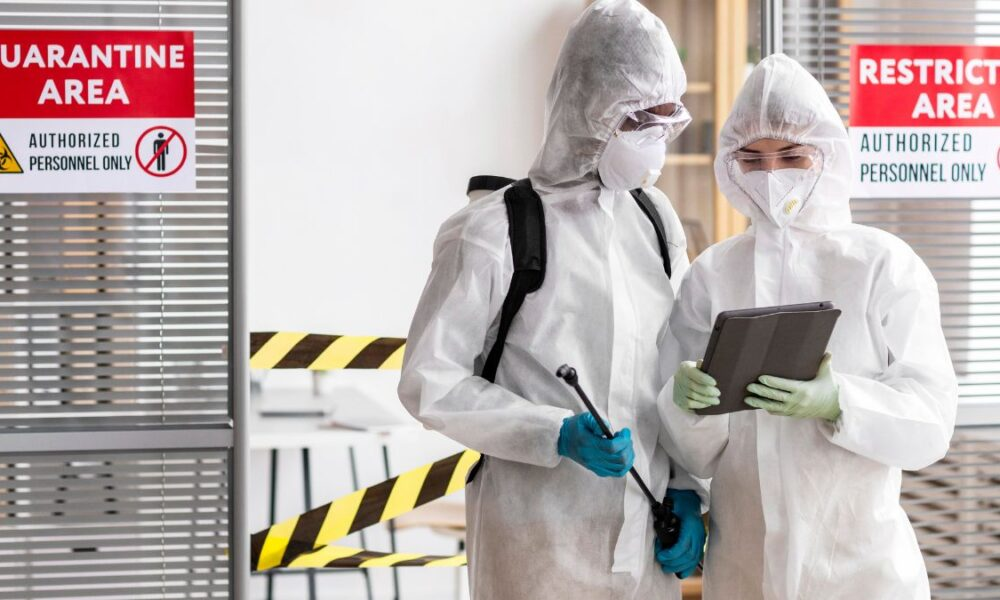
Instead, keep people away from the immediate area and determine whether professional asbestos evaluation is appropriate.
If renovation is planned, contact a trained asbestos professional before work begins.
EPA recommends having suspected asbestos-containing materials sampled by a properly trained and accredited asbestos professional when materials are damaged or renovation could disturb them. A qualified laboratory can analyze the sample.
Should Homeowners Test Asbestlint Themselves?
DIY asbestos sampling can create an exposure problem.
Taking a sample usually requires disturbing the material. If that action is done incorrectly, fibers can be released.
For that reason, homeowners should not treat asbestos sampling like ordinary home testing.
A trained asbestos inspector can assess the material, determine where sampling may be needed, collect samples using appropriate procedures, and arrange for laboratory analysis.
EPA identifies asbestos inspectors and asbestos contractors as separate professional roles. Inspectors can evaluate suspected materials and advise about corrective actions, while contractors can perform repair or removal work.
The exact licensing and accreditation requirements vary by state and locality.
How Is Asbestlint Tested?
Laboratory analysis is used to determine whether a material contains asbestos.
A professional may collect a representative sample from the suspected material.
The sample is then analyzed by a qualified laboratory using an appropriate analytical method.
The objective is to establish whether asbestos is present and, depending on the test and circumstances, what type or percentage may be present.
This is much more dependable than trying to identify asbestos from photographs.
A useful rule for homeowners is:
If you cannot prove that an old material is asbestos-free, do not disturb it merely to satisfy curiosity.
Asbestlint and Renovation Projects
Renovation is one of the most important situations where asbestos awareness matters.
Removing a wall, replacing old plumbing, changing a heating system, opening a ceiling, repairing a floor, or modifying an older building can disturb hidden asbestos-containing materials.
The EPA advises homeowners to consider asbestos before remodeling because renovation can disturb older building materials.
For larger commercial or institutional projects, federal asbestos requirements can also apply.
EPA’s Asbestos National Emission Standards for Hazardous Air Pollutants, commonly called NESHAP, establish work practices for certain demolition and renovation activities. These requirements are designed to minimize the release of asbestos fibers.
The important point is that asbestos planning should happen before demolition begins, not after an old insulation product has already been torn apart.
What Does OSHA Require for Asbestos Work?
OSHA has asbestos standards covering construction, general industry, and maritime employment.
For example, OSHA’s construction standard is found at 29 CFR 1926.1101, while general industry requirements are addressed under 29 CFR 1910.1001.
These standards address issues such as:
- Exposure limits
- Regulated areas
- Work practices
- Engineering controls
- Respiratory protection
- Protective clothing
- Exposure monitoring
- Training
- Medical surveillance in specified circumstances
- Building owner responsibilities
- Competent-person requirements
For workers, asbestos safety is not simply a matter of wearing a mask.
Proper control can require a complete work system designed to prevent fibers from becoming airborne and to prevent contamination from spreading.
What Is the OSHA Asbestos Exposure Limit?
OSHA’s asbestos standards establish a permissible exposure limit of 0.1 asbestos fiber per cubic centimeter of air as an eight-hour time-weighted average for covered workplaces. Additional short-term requirements also apply under the standards.
This number should not be interpreted by a homeowner as a target for DIY work.
The existence of a workplace exposure limit does not mean a person should intentionally expose themselves to asbestos as long as they believe they are below the limit.
The better approach is exposure prevention and professional control.
EPA Rules and Asbestlint
EPA regulates asbestos under several federal authorities.
The Asbestos NESHAP program is particularly relevant to certain renovation and demolition activities because it establishes requirements intended to minimize asbestos emissions into the environment.
EPA also provides guidance for building owners and homeowners dealing with asbestos-containing materials.
Importantly, asbestos regulation in the United States is more complicated than saying, “All asbestos is banned.”
EPA explains that a 1989 rule intended to ban most asbestos-containing products was overturned in 1991, leaving only certain products subject to federal bans.
EPA also finalized a 2024 rule concerning chrysotile asbestos, the only form known to be imported, processed, and distributed in the United States at that time. OSHA notes that the rule prohibited ongoing uses covered by the EPA action.
Therefore, the statement “asbestos is completely banned in America” is an oversimplification.
The current regulatory picture depends on the specific asbestos use, activity, workplace, building type, and applicable federal, state, and local requirements.
Why State and Local Rules Matter
Federal requirements are only part of the picture.
States and local governments may have additional asbestos requirements.
OSHA notes that OSHA-approved State Plans can operate asbestos-related workplace safety programs and may have requirements that are more stringent than federal OSHA requirements.
EPA also advises homeowners to check state and local requirements when dealing with asbestos professionals.
For this reason, anyone planning asbestos-related work in the United States should check the rules applicable to the specific state and project.
A contractor who works safely in one state may face different licensing, notification, disposal, or work-practice requirements in another.
Should You Remove Old Asbestlint?
Not automatically.
Removal is not always the best answer.
If an asbestos-containing material is stable and will not be disturbed, management in place may sometimes be safer than removal.
Removal can itself create a major exposure risk if it is performed improperly.
EPA specifically warns that improper asbestos removal can increase exposure to homeowners and their families.
Removal may become appropriate when material is badly damaged, when renovation will disturb it, or when professional assessment determines that removal is the best management option.
The correct decision depends on the condition of the material, its location, the planned work, regulatory requirements, and the likelihood of fiber release.
Why DIY Asbestlint Removal Is a Bad Idea
DIY removal may seem attractive because an old strip of tape can look simple to remove.
The physical task may actually take only a few minutes.
The safety problem is much larger.
Pulling asbestos tape from a pipe can disturb fibers.
Cutting it can generate dust.
Scraping adhesive can disturb surrounding material.
Sweeping debris can redistribute contamination.
Ordinary household vacuum cleaners are not designed to safely manage asbestos contamination.
The EPA’s guidance is clear that asbestos removal is complex and should be handled by trained professionals when removal is necessary.
This is one area where saving money on labor can create a much larger health and cleanup problem.
What Does Professional Asbestos Removal Involve?
Professional asbestos work can include several stages.
The first is assessment.
The professional determines what material is present and what condition it is in.
The second is planning.
The work area, containment approach, worker protection, waste handling, and applicable regulatory requirements are considered.
The third is controlled work.
Professionals use appropriate engineering controls and work practices to limit fiber release.
The fourth is cleanup.
The goal is to prevent asbestos contamination from spreading beyond the controlled work area.
The fifth is waste management.
Asbestos-containing waste must be handled according to applicable requirements.
EPA explains that asbestos NESHAP work practices can include wetting regulated asbestos-containing material, sealing waste in leak-tight containers, and disposing of asbestos-containing waste appropriately.
The exact procedure depends on the type and amount of material and the project.
Why Wet Methods Are Important
Water can help control dust during certain asbestos activities.
EPA’s asbestos guidance describes wetting asbestos-containing material as an important work practice for reducing fiber release during regulated activities.
However, this does not mean a homeowner should simply spray an unknown material with water and start removing it.
Professional asbestos work involves a complete control strategy.
Water alone does not make an unsafe DIY removal project safe.
What About Air Testing?
Air monitoring can be part of professional asbestos work.
OSHA standards include requirements for exposure monitoring in applicable workplace situations.
EPA also notes that asbestos professionals can perform air monitoring as part of corrective action and cleanup activities.
Air testing is especially useful when the question is whether asbestos fibers may have become airborne or whether a controlled work area has been properly cleaned.
However, a single air test should not be viewed as a universal guarantee that a building contains no asbestos.
Asbestos assessment is a broader process that includes material identification, condition assessment, work history, location, and environmental controls.
What If Asbestlint Has Already Been Disturbed?
Do not panic, but do take the situation seriously.
If you accidentally disturbed suspected asbestos tape, stop the activity.
Avoid unnecessary movement through the area.
Keep children, pets, and other people away from the immediate location.
Do not sweep or clean the area using ordinary household methods.
Do not continue the renovation until the situation has been evaluated.
Contact an appropriately qualified asbestos professional for advice about the next step.
If there was a significant occupational exposure, follow the workplace’s asbestos exposure procedures and speak with the responsible safety professional.
If you are concerned about a personal exposure, a healthcare professional can discuss your individual circumstances and whether any medical evaluation is appropriate.
Does Asbestlint Cause Immediate Symptoms?
Usually, asbestos-related diseases are not an immediate result of exposure.
The major health conditions associated with asbestos generally develop after long latency periods.
That means a person should not use the absence of coughing, chest pain, or breathing difficulty immediately after an exposure as proof that no harm occurred.
OSHA explains that asbestos-related diseases can take years to develop.
This is another reason asbestos exposure prevention matters.
The risk cannot be judged simply by how someone feels immediately afterward.
Can Asbestlint Be Cleaned With a Normal Vacuum?
No one should assume that an ordinary household vacuum is appropriate for suspected asbestos contamination.
The problem is that asbestos fibers can be extremely small.
Improper cleaning can spread contamination instead of removing it.
Professional asbestos cleanup uses appropriate equipment and procedures designed for hazardous particulate control.
The exact equipment and methods depend on the situation and applicable regulations.
For a homeowner, the safest first step is to stop disturbing the suspected material and obtain professional advice rather than attempting to vacuum it.
Asbestlint in Older Homes
Older U.S. homes can contain many different asbestos-containing materials.
These can include:
- Pipe insulation
- Floor materials
- Ceiling materials
- Roofing products
- Wall materials
- Joint compounds
- Adhesives
- Heating-system components
- Electrical components
- Certain insulation products
OSHA has noted that asbestos-containing materials can still be found in older buildings, particularly those constructed before 1980.
But construction date is only a clue.
A newer building is not automatically asbestos-free, and an older building is not automatically dangerous.
The actual material and its condition matter.
Asbestlint in Industrial Buildings
Industrial environments can present additional concerns because asbestos was historically valuable for high-temperature equipment.
Factories, power facilities, shipyards, manufacturing plants, boiler rooms, and other industrial locations may contain old thermal system insulation.
Workers performing maintenance can sometimes encounter asbestos materials that have been hidden behind newer equipment.
OSHA identifies construction, ship repair, manufacturing, and certain maintenance activities as areas where occupational asbestos exposure can occur.
Industrial asbestos management therefore requires more than simply labeling visible materials.
A good program identifies suspect materials before maintenance and renovation work begins.
Asbestlint and Fire Safety
Asbestos was historically used partly because it resisted heat and fire.
That can create a misleading impression today.
A material can have excellent fire resistance and still be hazardous to human health.
This is an important lesson from the history of asbestos.
The fact that a product performs well in one engineering category does not make it safe in every category.
Modern materials can provide heat resistance and fire protection without relying on asbestos, which is one reason asbestos-containing products have been replaced by safer alternatives in many applications.
Modern Alternatives to Asbestos Tape
Today, manufacturers have access to many non-asbestos materials.
Depending on the application, alternatives can include:
- Fiberglass tape
- Ceramic fiber products
- Aramid fibers
- Mineral-based insulation products
- High-temperature synthetic fabrics
- Modern gasket materials
- Specialized heat-resistant textiles
The best replacement depends on temperature, pressure, chemical exposure, mechanical stress, electrical requirements, and applicable engineering standards.
The key point is that modern high-temperature systems do not need to rely on asbestos simply because the historical product did.
Why Asbestlint Still Matters Today
Someone might ask why a historical material deserves attention if asbestos use has declined.
The answer is simple: old materials remain in old buildings.
A product installed decades ago does not disappear simply because manufacturers stopped using it.
A boiler may be replaced while old insulation remains.
A building may be renovated while an old pipe covering stays hidden inside a wall.
An industrial facility may continue operating with equipment installed many decades earlier.
As a result, asbestos management is still relevant in renovation, maintenance, demolition, property management, construction, and occupational safety.
The Most Important Mistake to Avoid
The biggest mistake is treating suspected asbestos as an ordinary building material.
If you find an old piece of tape, you may instinctively want to pull it off.
If you see damaged insulation, you may want to clean it.
If you are renovating, you may want to remove everything before beginning construction.
With suspected asbestos, those instincts can be exactly backward.
The safer sequence is:
Stop.
Do not disturb the material.
Assess the situation.
Have it professionally evaluated if necessary.
Plan the work.
Then proceed using appropriate controls.
That simple change in thinking can dramatically reduce unnecessary exposure.
A Practical Asbestlint Safety Checklist
If you encounter suspected asbestlint or old asbestos tape, use the following checklist.
Step 1: Stop disturbing the material
Do not pull, cut, scrape, sand, drill, or break it.
Step 2: Keep people away
Prevent unnecessary access to the immediate area.
Step 3: Do not rely on appearance
A material that looks like ordinary cloth may still contain asbestos.
Step 4: Avoid DIY sampling
Professional sampling is safer than experimenting with an unknown material.
Step 5: Contact an asbestos professional
Use a qualified professional appropriate for your state and project.
Step 6: Test before renovation
If renovation could disturb suspected material, arrange appropriate assessment before work begins.
Also Read: Fanquer: The Future of Digital Fan Participation, Community Building, and Co-Creation
Step 7: Follow applicable rules
Check federal, state, and local asbestos requirements.
Step 8: Use qualified contractors when removal is necessary
Do not choose a contractor based only on the lowest price.
Step 9: Keep records
For buildings and businesses, retain inspection, testing, work, and disposal documentation as appropriate.
Step 10: Do not panic
Finding suspected asbestos does not automatically mean that a building is unsafe to occupy.
The correct response is controlled assessment, not fear.
How Property Owners Can Reduce Asbestos Risk
Property owners can take several practical steps.
First, identify older building materials before major renovation.
Second, maintain records of asbestos surveys and previous renovation work.
Third, tell maintenance workers about known or suspected asbestos-containing materials.
Fourth, avoid unnecessary disturbance.
Fifth, use qualified asbestos professionals when assessment or removal is needed.
Sixth, make asbestos awareness part of renovation planning.
EPA recommends developing appropriate operations and maintenance practices for buildings that contain asbestos.
This is a much better strategy than waiting for an emergency.
Asbestlint and Real Estate Transactions
Asbestos can also become relevant during property sales, inspections, renovations, and commercial building transactions.
A home inspection does not necessarily provide the same service as an asbestos inspection.
A general inspector may identify suspicious material but may not be qualified to confirm asbestos content.
If an older property contains suspect insulation or other materials, specialized evaluation may be appropriate before major renovation.
Buyers should also understand that the presence of asbestos does not automatically mean a property is defective or unlivable.
Many asbestos-containing materials can be managed safely when left undisturbed and properly maintained.
The real question is whether the material presents a current exposure risk or will be disturbed by planned work.
Asbestlint and Workplace Training
Workers who may encounter asbestos need appropriate awareness and protection.
This is especially important for people working in:
- Construction
- Demolition
- Plumbing
- HVAC
- Electrical maintenance
- Ship repair
- Industrial maintenance
- Building management
- Renovation
- Insulation
- Boiler maintenance
OSHA’s asbestos requirements include training and work-practice provisions for covered activities.
Training helps workers recognize that an old piece of tape or insulation is not necessarily harmless simply because it looks dry and dusty.
The Future of Asbestos Management
The future of asbestos safety is not simply about removing every old material.
A better approach combines identification, risk assessment, maintenance, worker education, controlled removal when necessary, and responsible disposal.
Technology may also improve asbestos management.
Digital building records can help property managers track known asbestos-containing materials.
Improved inspection tools can help professionals locate suspect materials.
Laboratory analysis continues to provide more reliable identification than visual inspection.
The biggest improvement, however, is likely to remain basic: better planning.
If asbestos is identified before renovation starts, professionals can build appropriate controls into the project.
If it is discovered after demolition begins, the project may face delays, contamination concerns, additional costs, and unnecessary exposure.
What Asbestlint Teaches Us About Building Safety
The history of asbestlint provides a broader lesson about construction.
Materials should not be judged only by how well they perform their intended engineering function.
Asbestos was effective at resisting heat and fire.
That did not make it harmless.
Modern building safety considers the entire life cycle of a material.
That means asking:
How is it installed?
How long will it last?
What happens when it deteriorates?
Can it be repaired?
Can it be removed safely?
What happens to workers who maintain it?
What happens when the building is demolished?
These questions are now central to responsible building management.
Frequently Asked Questions About Asbestlint
What does asbestlint mean?
Asbestlint is a nonstandard term that can refer to asbestos tape, asbestos ribbon, or similar flexible asbestos-containing material historically used for insulation, heat protection, sealing, and industrial applications.
Is asbestlint the same as asbestos?
Not exactly. Asbestlint is a descriptive or informal term rather than the name of a separate mineral. If it refers to historical asbestos tape or ribbon, the material contains asbestos fibers incorporated into a flexible product.
Is asbestlint dangerous?
If asbestlint contains asbestos, it can present a health hazard when respirable asbestos fibers become airborne and are inhaled. OSHA recognizes asbestos exposure as a cause of serious diseases including asbestosis, lung cancer, and mesothelioma.
Can you identify asbestlint by appearance?
No. Appearance alone cannot reliably determine whether a material contains asbestos. EPA recommends professional assessment and laboratory analysis when suspected materials need to be evaluated.
Is old asbestos tape still dangerous if it is not damaged?
An intact and stable asbestos-containing material generally presents less opportunity for fiber release than damaged or disturbed material. However, it should not be cut, scraped, pulled, sanded, or otherwise disturbed without appropriate precautions.
Can I remove asbestos tape myself?
DIY removal is not recommended when asbestos is suspected. Improper removal can release fibers and increase exposure. EPA recommends using trained asbestos professionals for asbestos removal.
Does asbestos have an odor?
Asbestos fibers themselves do not provide a reliable warning odor. This is one reason visual or sensory inspection cannot be used to determine whether airborne asbestos is present.
Can a normal vacuum remove asbestos fibers?
Homeowners should not assume that an ordinary household vacuum is suitable for asbestos contamination. Improper vacuuming can spread hazardous material.
What should I do if old asbestos tape is falling apart?
Do not touch or disturb it. Keep people away from the area and contact an appropriately qualified asbestos professional for assessment and advice.
Is asbestos completely banned in the United States?
No. That statement is too broad. Federal restrictions and bans apply to particular asbestos products and uses, while other uses have been subject to regulatory controls. EPA’s asbestos rules are more specific than a simple nationwide total ban.
Can asbestos be found in newer buildings?
Possible asbestos-containing materials can exist in buildings of different ages. Building age is useful background information, but it cannot by itself prove whether a particular material contains asbestos.
Does removing asbestos always make a building safer?
Not necessarily. Removal can create exposure if performed improperly. In some situations, leaving stable material undisturbed and managing it properly may be safer than unnecessary removal. EPA specifically recognizes the importance of appropriate management and professional decision-making.
Is asbestos tape the same as asbestos warning tape?
No. Historical asbestos tape may contain asbestos fibers. Modern asbestos warning tape is generally a safety-marking product used to identify or restrict access to an asbestos work area. The two should not be confused.
What is the safest first step after discovering suspected asbestlint?
Stop disturbing the material. Prevent unnecessary access to the area and seek advice from an appropriately qualified asbestos professional, particularly if renovation or repair work is planned.
Final Thoughts on Asbestlint
Asbestlint is an unusual term, but the material behind the term can be important.
When used to describe historical asbestos tape or ribbon, asbestlint represents one of the many flexible forms in which asbestos was incorporated into industrial and building products. Its heat resistance, durability, insulating ability, and fire resistance made it useful for decades.
Today, those historical advantages are outweighed by the health risks associated with asbestos fiber exposure.
The most important thing to understand is that asbestos risk is not about how frightening an old material looks. It is about whether asbestos fibers can become airborne and be inhaled.
That is why an old tape-like material should not be pulled apart simply because it looks harmless. It is also why a damaged piece of suspected asbestos insulation should not automatically be swept, vacuumed, or thrown away.
The safest approach is based on identification, prevention, professional evaluation, and controlled management.
For homeowners, the practical message is simple: if you suspect that old tape, ribbon, pipe insulation, or another material contains asbestos, leave it alone until it has been properly evaluated.
For contractors and building managers, the lesson is even more important: asbestos assessment should be part of renovation and maintenance planning before work begins.
For workers, training and proper controls are essential.
And for anyone researching asbestlint, the most useful distinction is this: the word itself is not the hazard. The potential asbestos-containing material and the release of respirable asbestos fibers are what demand attention.