
Pulsamento: Meaning, Origins, Uses, and Why Rhythmic Pulsation Matters
Pulsamento is a fascinating word built around a simple idea: something that beats, pulses, moves, or repeats in a recognizable rhythm. You can see the idea in a heartbeat, hear it in music, notice it in a vibrating machine, or observe it in a repeating signal. Although the word appears more often online than it does in everyday American English, its central meaning is easy to understand.
The most important point is that pulsamento does not have one universally accepted technical definition in modern English. Online sources use it in several ways, including rhythm, pulsation, body movement, music, vibration, technology, and creative expression. For that reason, it is better to understand pulsamento as a broad descriptive concept rather than as a formal scientific diagnosis or a single specialized discipline.
The closest established English terms are pulse, pulsation, pulsing, rhythm, beat, vibration, oscillation, and periodic movement. Merriam-Webster, for example, defines pulsation as rhythmic throbbing or vibrating and also as a recurring increase and decrease in a quantity such as pressure, volume, or voltage. Its definition of pulse also covers rhythmic beating, vibrating, sounding, and short variations in electrical or physical quantities.
This distinction is important because many recent articles about pulsamento present it as though it were a formal medical, scientific, or musical term with one fixed definition. The available evidence does not support such a narrow claim. A more useful approach is to examine the idea behind the word and understand how rhythmic pulsation works in different areas of life.
What Is Pulsamento?
In simple language, pulsamento can be understood as a repeated pulse, beat, or rhythmic movement that continues over time.
Imagine tapping your finger on a table at regular intervals. Tap, pause, tap, pause, tap, pause. That repeated movement has a pulse.
Now imagine a heartbeat. The heart contracts and relaxes in a repeating pattern. Blood moves through the arteries, creating a pulse that can be felt at places such as the wrist. That is another example of rhythmic pulsation.
Think about music. A drummer may establish a steady beat while other instruments play different patterns around it. The underlying beat gives the music a sense of movement and organization.
The same basic idea can also appear in technology. A digital system may send a series of electrical pulses. A machine may produce repeated vibrations. A sensor may record a signal that rises and falls over time.
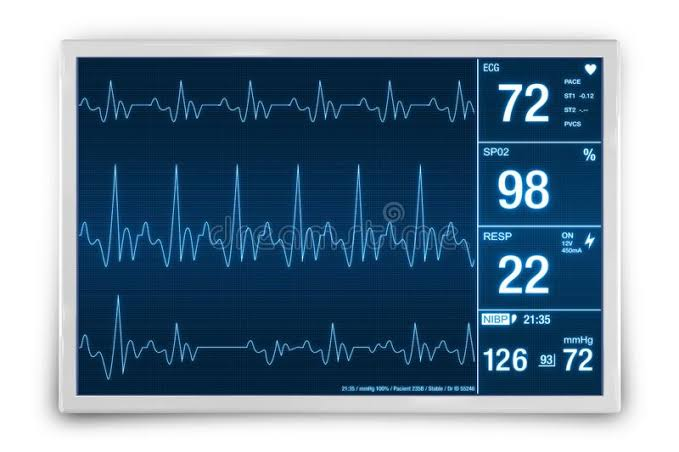
These examples look different, but they share an important feature: repetition combined with timing.
That is the most useful way to understand pulsamento.
Rather than treating the word as a mysterious new concept, it can be viewed as a broad expression for the pulse or rhythmic character of something.
Pulsamento Meaning in Simple Terms
A simple definition of pulsamento is:
Pulsamento refers to a rhythmic, repeated, or pulsating movement, signal, beat, or pattern that occurs over time.
The exact meaning depends on the context.
In music, it may describe the feeling of a steady rhythmic pulse.
In the human body, it may be used informally to describe a heartbeat, pulse, or another repeated bodily movement.
In physics, a similar idea can involve periodic changes in pressure, voltage, force, or another measurable quantity.
In engineering, it can describe recurring mechanical or electrical behavior.
In art and design, it may describe visual repetition or movement that creates a sense of rhythm.
In everyday language, it can simply describe something that seems to beat or move repeatedly.
This broad meaning explains why people may encounter the word in very different types of content.
Is Pulsamento an Official English Word?
This is one of the most important questions about pulsamento.
The answer requires some care.
Pulsamento is not a standard English medical diagnosis or a widely established technical term in the way pulse, pulsation, rhythm, heartbeat, or oscillation are.
That does not mean the concept is meaningless. It means the word should be interpreted according to its context.
Established dictionaries provide much stronger support for the related terms. Merriam-Webster defines pulse as a regular arterial expansion caused by the heart, but it also gives broader meanings involving rhythmic beating, vibrating, sounding, and brief changes in electrical or physical quantities.
Merriam-Webster similarly defines pulsation as rhythmic throbbing or vibrating and as a recurring increase and decrease in a quantity.
Therefore, when someone searches for pulsamento meaning, the safest explanation is not to claim that it is a universally standardized scientific term. Instead, it is more accurate to connect it to the established family of concepts surrounding pulse and pulsation.
This approach also makes the word easier to understand.
Where Does the Word Pulsamento Come From?
Pulsamento appears to be closely connected with the broader Latin and Romance-language family surrounding words for beating, striking, pulsing, and pulsation.
The Latin verb pulsare is associated with repeated striking or beating and is part of the history behind English words such as pulse and pulsation. Merriam-Webster traces pulsation to Latin pulsatio and ultimately to pulsare, meaning repeated striking or beating.
Related Romance-language words also make the connection clear.
For example, the Italian word pulsazione is translated into English as pulsation, heartbeat, pulse, or throb depending on context. Cambridge and Collins both document these meanings.
Spanish has related words such as pulsación and pulso. The Royal Spanish Academy’s student dictionary defines pulsación in connection with pressing or tapping and also with the beats produced by blood in the arteries.
This linguistic background helps explain why pulsamento feels naturally connected to ideas such as beating, rhythm, pressure, movement, and repetition.
However, it is important not to turn an etymological connection into a false claim that pulsamento has always been a formal scientific term. Language develops in many ways, and modern online usage can give an old linguistic idea a newer or broader meaning.
Pulsamento and Pulsation: What Is the Difference?
Pulsamento and pulsation are closely related in meaning, but they should not automatically be treated as exact synonyms.
Pulsation is a well-established English word. It normally refers to rhythmic beating, throbbing, vibrating, or recurring changes.
Pulsamento is used much less consistently in English. Online writers may use it as a more expressive way to describe a pulse, rhythm, or ongoing movement.
This creates an important practical difference.
If you are writing a scientific paper, medical report, engineering document, or formal technical explanation, words such as pulsation, pulse, oscillation, periodic signal, vibration, or rhythmic movement will usually be clearer.
If you are discussing an artistic or conceptual idea, pulsamento may be used as a broader term for the sense of continuous pulse and movement.
In other words, pulsation is the more established technical word, while pulsamento can function as a broader or more expressive label depending on the writer and context.
Pulsamento and Pulse Are Not Exactly the Same
The word pulse has several established meanings.
In medicine, a pulse is the beat that can be detected in an artery as the heart pumps blood. It can also refer to the number of beats during a specific period, such as one minute.
Also Read: BrassSmile: A Smile Improvement, Oral Health, Dental Care
But pulse has meanings beyond medicine.
It can describe a rhythmic beat in music.
It can describe a brief electrical signal.
It can describe a short pressure disturbance.
It can even be used metaphorically to describe the vitality or mood of a community.
Pulsamento can be understood as a broader concept that connects many of these ideas through one central feature: repeated movement or change.
That is why the word can feel useful even when it is not a standard technical term.
Pulsamento in Music
Music is one of the easiest places to understand the idea behind pulsamento.
Every piece of music has some relationship with time. Sounds happen before or after other sounds. Some notes are longer, some are shorter. Some sounds receive more emphasis. Some patterns repeat.
The pulse provides an underlying sense of timing.
A listener may not know formal music theory, but they can often recognize a beat. They may tap their foot, nod their head, clap their hands, or move their body with the music.
This is where pulsamento can be a useful descriptive idea.
It can refer to the feeling that keeps music moving.
It is important, however, to separate pulse from rhythm and tempo.
Pulse is the underlying recurring beat.
Rhythm concerns how sounds are organized in time.
Tempo concerns how fast the underlying pulse moves.
Meter organizes beats into repeating groups, such as groups of two, three, or four.
These concepts work together, but they are not identical.
A song can have a steady pulse while its rhythm becomes complex. A musician can play notes that do not always land directly on the main beat while the listener still feels the underlying pulse.
This shows why pulsamento is best understood as a conceptual description rather than a replacement for established music theory terminology.
How Pulsamento Creates Musical Movement
A strong musical pulse gives listeners a sense of direction.
Consider a simple drum pattern.
If the beat repeats consistently, the listener can predict when the next beat will arrive. This predictability creates stability.
A musician can then create interest by changing other elements around that stable foundation.
For example, a drummer might keep the basic beat while adding extra notes. A guitarist may play a melody across the beat. A singer may hold a note longer than expected.
The underlying pulse remains important because it gives the listener something against which to understand these changes.
This is one reason rhythm feels physical.
People often experience music through the body. They clap, dance, tap, or move even when they are not consciously analyzing the musical structure.
Pulsamento, in this conceptual sense, describes that underlying feeling of rhythmic continuity.
Pulsamento in the Human Body
The human body contains many natural rhythms.
The most obvious is the heartbeat.
The heart contracts and relaxes repeatedly, pushing blood through the circulatory system. The resulting arterial pulse can be detected at certain points on the body.
Breathing is another rhythm.
A person inhales, exhales, pauses, and repeats the process.
Sleep and wake patterns also follow cycles.
Body temperature changes throughout the day.
Hormones can follow biological cycles.
Movement can become rhythmic during walking, running, swimming, or dancing.
These examples show that rhythmic behavior is deeply connected to biology.
However, it is important not to describe pulsamento as a medical condition. It is not a recognized diagnosis simply because someone uses the word to describe a bodily sensation.
If a person notices a heartbeat, throbbing sensation, or unusual pulse, established terms such as pulse, heart rate, pulsation, palpitation, or irregular heartbeat provide much clearer communication with a healthcare professional.
Pulsamento and the Human Pulse
The human pulse is a measurable physical phenomenon.
When the heart contracts, blood is pushed into the arterial system. This creates a pressure wave that travels through the arteries.
A pulse can often be felt at the wrist, neck, or other locations.
A healthcare professional may assess pulse to learn more about heart rate and circulation.
The pulse is therefore more than simply a sensation. It reflects a physical event occurring within the cardiovascular system.
This is another reason why readers should distinguish between the broad idea of pulsamento and the medical meaning of pulse.
If someone says, “I feel pulsamento,” that statement does not tell a doctor exactly what is happening.
A clearer description might be:
“I feel a rhythmic throbbing in my wrist.”
“My heart feels like it is beating very fast.”
“I feel fluttering in my chest.”
“My pulse feels irregular.”
“I notice a pulsing sensation in my neck.”
Specific descriptions provide much more useful information than an unfamiliar general word.
Pulsamento and Heartbeat Awareness
People sometimes become more aware of their heartbeat after exercise, during emotional stress, after consuming caffeine, or when lying quietly.
Being aware of a heartbeat does not automatically mean something is wrong.
The important issue is the complete situation.
For example, a person may notice a stronger heartbeat after running because the body needs more oxygen and blood flow.
Someone may notice their heartbeat during a stressful moment because the body’s normal stress response can change heart rate and awareness.
A person may also notice rhythmic movement when sitting quietly because there are fewer distractions.
The word pulsamento should not be used to diagnose any of these experiences.
If a person has concerning symptoms such as chest pain, fainting, severe shortness of breath, severe dizziness, or a persistent abnormal heartbeat, medical evaluation is more appropriate than trying to interpret the experience through a broad internet term.
Pulsamento and Exercise
Exercise provides another clear example of rhythmic movement.
Running involves repeated steps.
Walking involves alternating movement of the legs.
Cycling involves repeated pedal rotations.
Swimming involves repeated arm and leg movements.
At the same time, breathing and heart rate change according to the body’s needs.
This creates several overlapping rhythms.
An athlete may develop a strong awareness of these rhythms because successful performance often depends on timing.
A runner may coordinate breathing with steps.
A cyclist may maintain a steady cadence.
A swimmer may coordinate strokes and breathing.
A dancer may coordinate body movements with musical beats.
This is a useful way to understand pulsamento: rhythm is not only something we hear. It can also organize physical movement.
Pulsamento in Dance
Dance depends heavily on timing.
A dancer listens to or feels a musical pulse and uses it to organize movement.
Some movements may match the beat directly.
Other movements may happen between beats.
A skilled dancer can create tension by moving against the expected timing and then returning to the main pulse.
This relationship between predictable timing and variation is central to expressive movement.
The concept of pulsamento can therefore be useful when discussing the feeling of continuous motion that connects separate dance movements.
It does not mean that every dance movement must be perfectly regular.
In fact, artistic expression often becomes interesting because the performer moves between stability and variation.
Pulsamento in Nature
Nature contains countless examples of repeating patterns.
Ocean waves rise and fall.
Day changes into night.
Seasons repeat.
Some animals follow feeding or migration cycles.
Plants respond to cycles of light and darkness.
Certain natural systems show periodic changes in temperature, pressure, or other measurable conditions.
These examples are not all identical, and they should not all be described as the same kind of pulse.
Still, they share a general idea of recurrence.
That is why pulsamento can be used metaphorically to describe the rhythm of nature.
The key is not to claim that nature has one universal rhythm. Natural systems operate on many different timescales.
A heartbeat may occur many times per minute.
A breathing cycle may take several seconds.
Day and night take about 24 hours.
Seasons operate over much longer periods.
Pulsamento therefore works best as a conceptual word for recurring movement rather than a claim that all natural cycles behave identically.
Pulsamento in Technology
Modern technology depends heavily on pulses and timing.
Computers process digital information through electrical states and timed operations.
Communication systems transmit signals.
Sensors collect measurements.
Electronic circuits respond to changing voltages and currents.
Digital devices use clock signals to coordinate operations.
In these areas, the concept of a pulse is very precise.
A pulse may have a measurable duration, amplitude, frequency, shape, and timing.
Engineers can study how frequently pulses occur and how they change.
This is where the established term pulse is much more useful than pulsamento.
For example, an engineer might discuss a pulse width, pulse frequency, waveform, signal timing, or periodic signal.
Using precise terminology matters because technical systems require measurements and definitions.
Pulsamento may still serve as a broad conceptual description, but it should not replace the technical vocabulary used by engineers and scientists.
Pulsamento and Digital Signals
A digital signal can be imagined as a pattern of changes over time.
One simple example is a signal switching between two states.
The timing of those changes can carry information or help a system coordinate its operations.
If a signal repeats regularly, it has a recognizable frequency.
If the timing changes, the pattern changes.
If noise interferes with the signal, the expected pattern may become less clear.
This provides an excellent example of why timing matters.
A pulse is not defined only by the fact that something changes. The timing, shape, duration, and repetition pattern can also matter.
Pulsamento, when used conceptually, can describe the broader sense of repeated activity.
But technical analysis requires specific terms.
Pulsamento in Engineering
Mechanical systems can also show repeated movement.
A rotating machine may create vibration.
A pump may produce pressure fluctuations.
An engine can generate recurring mechanical forces.
A fan rotates repeatedly.
A motor creates movement through repeating electromagnetic interactions.
Engineers measure these behaviors because unwanted vibration can indicate imbalance, wear, looseness, misalignment, or another mechanical problem.
This is an important insight: not every pulse or vibration is desirable.
Rhythm can be useful when it is intentional and controlled.
The same type of repeated movement can become a warning sign when it appears where it should not.
That distinction makes the idea of pulsamento more practical.
The goal is not simply to identify repetition. It is to understand what causes it, whether it is expected, and what effect it has on the system.
Pulsamento in Art and Design
Artists often use repetition to create visual rhythm.
A pattern of circles can produce a sense of movement.
Repeated lines can guide the eye.
Alternating shapes can create visual timing.
Animation uses repeated images to create the perception of movement.
Graphic designers can use spacing and repetition to make a design feel calm, energetic, balanced, or dynamic.
In this setting, pulsamento can be understood as a visual or conceptual pulse.
For example, imagine a poster with several shapes that gradually increase in size. The eye may naturally move through the sequence.
The design does not literally beat like a heart, but it creates a visual rhythm.
This shows how the concept can move beyond physical pulsation into perception and artistic experience.
Pulsamento and Human Perception
Humans are very sensitive to patterns.
We notice repeated sounds.
We recognize familiar movement.
We anticipate events that occur at regular intervals.
This ability is useful because prediction helps the brain organize information.
Music takes advantage of this ability.
A steady beat allows listeners to anticipate when the next beat will occur.
Visual patterns can also create expectations.
A repeated movement can become calming because it is predictable.
A sudden change can attract attention because it breaks the pattern.
This gives pulsamento an interesting psychological dimension, although it is better to discuss established concepts such as rhythm, timing, attention, prediction, and sensory processing when making scientific claims.
Pulsamento and Emotional Experience
Rhythm can influence how an experience feels.
A slow musical pulse may feel calm or reflective.
A fast beat may feel energetic.
A repeated visual pattern may feel orderly.
A sudden interruption may create tension.
These effects are not universal. People respond to music and rhythm differently depending on culture, experience, personal preference, and context.
Still, repetition can clearly shape perception.
This is why words such as pulse and rhythm appear so often in descriptions of emotional experiences.
Pulsamento can be used as a creative way to describe that sense of movement and continuity.
But it should not be presented as a scientifically proven emotional therapy unless specific evidence supports the claim.
Pulsamento and Meditation
Some people use repetitive sounds, breathing patterns, movement, or music during relaxation practices.
The basic idea is easy to understand.
Attention can be placed on something repetitive, such as breathing.
Instead of constantly following outside distractions, a person notices the repeated cycle of inhalation and exhalation.
This may help create a feeling of structure and focus.
However, pulsamento itself is not a recognized medical treatment.
It is better to describe rhythmic breathing or mindfulness practices using their established names rather than claiming that pulsamento provides special medical benefits.
This distinction is especially important in health-related content.
Also Read: Glamping Economy: How Luxury Camping Is Creating a New Outdoor Hospitality Market
A useful article should explain what is known without turning a broad concept into a treatment claim.
Pulsamento and the Idea of Balance
One of the most interesting features of rhythmic systems is the relationship between repetition and change.
A completely repetitive system can become predictable.
A completely random system can become difficult to follow.
Many useful systems operate somewhere between these extremes.
Music provides a good example.
A steady beat creates stability.
Variations create interest.
The human body provides another example.
Heartbeat follows a repeating pattern, but the body is not a perfectly mechanical clock. Biological systems naturally respond to changing conditions.
This suggests a deeper interpretation of pulsamento.
It is not simply repetition.
It is repetition with timing, variation, and relationship.
That is what makes rhythm meaningful.
Pulsamento Versus Rhythm
Pulsamento and rhythm are related but should not be treated as identical.
Rhythm generally concerns the organization of events in time.
Pulse is the underlying recurring beat that can help organize those events.
Pulsamento can be used as a broad descriptive term for the pulsing quality that connects these ideas.
A useful example is a drum performance.
The pulse might remain steady.
The rhythm may become more complex.
The drummer can add accents, pauses, and subdivisions.
The result can feel energetic even though the underlying pulse remains stable.
This difference is important for anyone researching pulsamento in music.
Pulsamento Versus Tempo
Tempo answers the question, “How fast?”
Pulse answers the question, “What recurring beat gives us a sense of timing?”
Pulsamento, in a broad sense, describes the presence or character of that repeated movement.
For example, two songs may have different tempos but both have strong pulses.
A slow song can have a very clear pulse.
A fast song can have a very clear pulse.
Therefore, pulsamento should not be treated as another word for speed.
Pulsamento Versus Vibration
Vibration means repeated movement around a position or state.
Pulsation can also involve repeated movement.
But not every vibration is necessarily described as a pulse.
For example, a machine may vibrate at a certain frequency.
A pressure system may experience pulsations.
A speaker cone moves back and forth to produce sound.
These are related physical phenomena, but the exact terminology depends on the scientific or engineering context.
Again, context matters.
Pulsamento Versus Palpitation
This distinction is especially important in health-related searches.
Pulsamento is a broad descriptive concept.
Palpitation is a medical symptom term referring to the awareness of one’s heartbeat, often described as pounding, racing, fluttering, or skipping.
They are not interchangeable.
If someone is concerned about their heart, using the correct medical language is much more helpful.
Instead of saying, “I have pulsamento,” a person should describe what they actually feel and when it happens.
For example, they could explain whether the sensation occurs during exercise, at rest, after caffeine, during stress, or together with other symptoms.
This gives healthcare professionals more useful information.
Why People Are Searching for Pulsamento
The growing appearance of unusual terms online can have several causes.
A word may be used in one language and then adopted by English-language writers.
It may appear in music, lifestyle, or creative communities.
It may be used metaphorically.
It may be introduced by online publishers attempting to describe a familiar idea in a new way.
Search engines can then connect related articles, causing more people to encounter the term.
As a result, a word can become increasingly visible without becoming a formally standardized technical term.
That appears to be an important part of the current pulsamento landscape.
People searching for the term may therefore have very different goals.
One person may want its dictionary meaning.
Another may be interested in music.
Another may have noticed a pulsing body sensation.
Another may be researching rhythm or creative expression.
A high-quality explanation needs to address these different possibilities without pretending that one definition applies everywhere.
Common Misunderstandings About Pulsamento
One common misunderstanding is that pulsamento is a medical condition.
It is not established as a medical diagnosis.
Another misunderstanding is that pulsamento has one official scientific definition.
The word is used inconsistently enough that context is necessary.
A third misunderstanding is that pulsamento always refers to the heartbeat.
The concept can also be used to describe music, vibration, movement, signals, and other repeating patterns.
Another mistake is assuming that every rhythmic sensation is harmless.
A pulsing feeling can have many possible explanations depending on where it occurs and what other symptoms are present.
That is why concerning physical symptoms should be evaluated using established medical terminology.
Finally, it is a mistake to assume that a new or unusual internet term must represent a new scientific discovery.
Sometimes an unusual word is simply a different way of describing an old and familiar idea.
How to Use Pulsamento in a Sentence
Because pulsamento is not common in everyday American English, writers should make the meaning clear from context.
For example:
“The artist used pulsamento to describe the repeating movement in the installation.”
“The composition creates a strong sense of pulsamento through its steady beat.”
“The designer used repeated shapes to create visual pulsamento.”
“The machine showed a rhythmic pulsamento that required further technical testing.”
In formal writing, it may be better to replace the word with a more precise term when possible.
For example:
“The system showed periodic pressure pulsations.”
“The musician maintained a steady rhythmic pulse.”
“The sensor recorded repeated electrical pulses.”
“The patient reported a throbbing sensation.”
Precision is usually more valuable than using an unusual keyword.
Is Pulsamento Useful for SEO and Online Content?
From a search perspective, pulsamento is an interesting example of a low-frequency or emerging query.
People who search an unusual word often want a direct answer first.
They want to know what it means.
After that, they may want examples, origins, related terms, applications, and differences from similar words.
This means a strong page about pulsamento should not repeat the same definition in dozens of paragraphs.
Instead, it should answer the main question quickly and then provide useful context.
Search-friendly content should also use related concepts naturally.
Relevant terms include:
pulse
pulsation
pulsating movement
rhythm
rhythmic movement
heartbeat
body rhythm
musical pulse
beat
vibration
oscillation
periodic signal
rhythmic flow
repetition
timing
These related terms help readers understand the subject without forcing unnatural keyword repetition.
The exact keyword pulsamento should appear naturally in important locations such as the title, introduction, selected headings, explanatory sections, and conclusion.
Overusing the keyword can make an article sound artificial.
Good search content should primarily serve the reader.
How to Research Pulsamento Responsibly
Because the term has inconsistent online usage, research quality matters.
Start with established dictionaries and reference works.
Then examine language sources to understand related words.
For health questions, use medical organizations and professional healthcare sources.
For music questions, use established music theory references.
For engineering questions, use technical standards, textbooks, and professional organizations.
Avoid relying on a single blog to establish a definition.
This is especially important when an unfamiliar word appears to have a scientific meaning.
A website may confidently state that a term is a recognized medical or scientific concept even when established references do not support that claim.
Good research compares sources.
What Pulsamento Can Teach Us About Language
The story of pulsamento also reveals something interesting about language.
Words do not always fit neatly into one box.
A concept can move between languages, professions, cultures, and online communities.
The central idea may remain similar while the exact word changes.
The family of pulse-related words demonstrates this clearly.
English has pulse and pulsation.
Italian has pulsazione.
Spanish has pulso and pulsación.
These words overlap but are not always exact equivalents.
The broader concept of rhythmic beating is easy to recognize across languages.
That may help explain why pulsamento feels understandable even to English speakers who have never encountered the word before.
The Broader Idea Behind Pulsamento
The most useful interpretation of pulsamento is not the word itself.
It is the idea of patterned movement.
A pulse provides a sense of continuity.
A repeated pattern provides structure.
Timing gives that pattern meaning.
Variation prevents repetition from becoming meaningless.
Together, these features create rhythm.
This is why the concept appears naturally across music, biology, engineering, design, movement, and everyday experience.
The applications are different, but the underlying question is similar:
What is repeating, how often does it repeat, how strong is it, and what happens when the pattern changes?
That is a much more useful framework than treating pulsamento as a mysterious standalone concept.
Why Rhythm Matters in Everyday Life
People live with rhythm every day.
We wake up, work, eat, rest, exercise, and sleep.
We walk at a pace.
We speak with changes in timing and emphasis.
We listen to music.
We respond to notifications and repeated digital signals.
Traffic moves in cycles.
Machines operate in repeated processes.
Businesses follow schedules.
Nature follows cycles.
Much of modern life depends on timing.
This is why pulse and rhythm are such powerful ideas.
Also Read: Fappelo: Features, User Experience, Privacy Risks, and Security Tips
They help us understand change over time.
Pulsamento can be viewed as a broad word that draws attention to this continuous movement.
A Practical Framework for Understanding Pulsamento
When you encounter the word pulsamento, ask five simple questions.
First, what is moving or changing?
Second, is the movement repeated?
Third, is there a recognizable pattern?
Fourth, is the timing regular or irregular?
Fifth, what does the pattern mean in that particular context?
If the subject is music, examine beat, rhythm, meter, and tempo.
If the subject is health, examine pulse, heart rate, breathing, and symptoms.
If the subject is engineering, examine vibration, frequency, pressure, voltage, and waveform.
If the subject is design, examine repetition, spacing, movement, and visual rhythm.
If the subject is technology, examine signals, timing, cycles, and data.
This framework prevents confusion because it turns a vague word into a specific question.
What Is the Future of Pulsamento?
It is difficult to predict whether pulsamento will become a standard term in English.
It may remain an informal or creative word used online.
It may become more common in discussions of music, movement, design, or wellness.
It may also be replaced by more established words such as pulse, pulsation, rhythm, or rhythmic flow.
The future will depend on how speakers and writers use the term.
A word becomes established when communities consistently use it and reference works eventually recognize that usage.
For now, the safest position is to recognize pulsamento as a useful descriptive concept while avoiding claims that it is a universally standardized technical term.
Frequently Asked Questions About Pulsamento
What does pulsamento mean?
Pulsamento generally refers to a repeated pulse, rhythmic movement, beat, or pulsating pattern. The exact meaning depends on the context in which the word is used.
Is pulsamento a medical term?
No. Pulsamento should not be treated as a standard medical diagnosis. In health discussions, terms such as pulse, heart rate, pulsation, palpitation, and irregular heartbeat are more precise.
Is pulsamento the same as pulsation?
Not exactly. Pulsation is an established English word for rhythmic throbbing, vibrating, or recurring changes. Pulsamento is less standardized in English and is often used more broadly or expressively.
What is pulsamento in music?
In music-related discussions, pulsamento can be used to describe the underlying feeling of a steady pulse or rhythmic movement. More formal music theory normally uses terms such as pulse, beat, rhythm, tempo, and meter.
Does pulsamento always mean heartbeat?
No. The concept can also relate to musical rhythm, mechanical vibration, electrical signals, visual patterns, and other repeated movements.
Can pulsamento describe technology?
It can be used descriptively to discuss recurring signals or repeated activity, but technical writing should normally use precise terms such as pulse, waveform, frequency, periodic signal, or oscillation.
Is pulsamento the same as rhythm?
No. Rhythm concerns the organization of events in time, while pulse refers more specifically to a recurring underlying beat. Pulsamento can be used broadly to describe the sense of pulsing or rhythmic continuity.
Is pulsamento the same as tempo?
No. Tempo describes how fast a musical pulse or rhythmic pattern occurs. Pulsamento, when used conceptually, concerns the presence or character of the pulse rather than simply its speed.
Can pulsamento describe visual art?
Yes. In an artistic or design context, pulsamento can be used metaphorically to describe repeated visual elements that create movement or rhythm.
Can machines have pulsamento?
A machine can certainly produce repeated mechanical or electrical activity. However, engineers usually describe these effects using specific terms such as vibration, oscillation, pressure pulsation, frequency, or periodic motion.
Why does pulsamento appear in different types of articles?
The word is broad and has been used online in connection with rhythm, music, body awareness, movement, technology, and creative ideas. Its meaning can therefore change depending on the writer and subject.
Is pulsamento a scientific theory?
There is no basis for treating pulsamento as a single established scientific theory. The underlying phenomena it may describe, such as pulses, oscillations, vibrations, and periodic signals, are studied scientifically using established terminology.
Can I use pulsamento in formal academic writing?
You can use it if you clearly define what you mean and if the relevant field accepts the term. However, for technical or academic writing, a more established word is often preferable.
How should I explain pulsamento to a child?
You could say that pulsamento means something that keeps beating or moving in a repeated pattern, like a heartbeat or a steady drumbeat.
What are the closest English words to pulsamento?
Depending on context, close terms include pulse, pulsation, pulsing, beat, rhythm, throb, vibration, oscillation, and periodic movement.
Why is pulsamento difficult to define?
The main reason is that the word does not have one widely standardized English definition. Different online sources use it in different contexts, so the surrounding subject is important.
Can a heartbeat be called pulsamento?
In a broad descriptive sense, someone could use the word to refer to a heartbeat or pulse. However, “heartbeat” and “pulse” are clearer terms when discussing human health.
What is an example of pulsamento in everyday life?
A simple example is a person tapping their foot repeatedly to a song. The repeated movement follows a pulse and creates a clear rhythmic pattern.
Is pulsamento related to vibration?
Yes, conceptually. Both involve repeated movement, although vibration and pulsation have more specific technical meanings in science and engineering.
Does pulsamento have one fixed pronunciation?
Because it is not a common standardized English word, pronunciation may vary. A straightforward pronunciation is roughly “pul-sa-MEN-to,” although speakers familiar with another language may pronounce it according to that language’s rules.
Is pulsamento a new concept?
The underlying concept is certainly not new. Humans have understood beating, rhythm, pulse, and repeated movement for thousands of years. What is newer is the visibility and varied online use of the word pulsamento.
Final Thoughts on Pulsamento
Pulsamento is best understood through its central idea: rhythmic repetition.
A heartbeat pulses.
Music has a beat.
Machines can vibrate.
Signals can repeat.
Waves can rise and fall.
People move in rhythms.
Art can create visual repetition.
These examples show why the concept behind pulsamento is so broad and interesting.
At the same time, accuracy matters. Pulsamento should not automatically be presented as a formal medical diagnosis, a universally recognized scientific theory, or a fixed music-theory term. Established words such as pulse, pulsation, rhythm, vibration, oscillation, heartbeat, and periodic signal are often more precise.
The strongest interpretation is therefore both simple and flexible.
Pulsamento describes the idea of something moving, beating, changing, or repeating in a recognizable pattern. Its value comes from helping people notice the rhythm that exists beneath many different experiences.
For readers researching the word, the best approach is to start with context. Ask whether the discussion is about music, the human body, technology, engineering, art, or everyday movement. Then choose the precise terminology used in that field.
That approach turns an unusual search term into something much easier to understand.
Ultimately, the most important idea behind pulsamento is not the word itself. It is the pulse that connects movement with time, repetition with structure, and change with continuity. That simple idea appears throughout nature, technology, music, and human experience, which is why it remains useful as a way to think about rhythm and recurring movement.