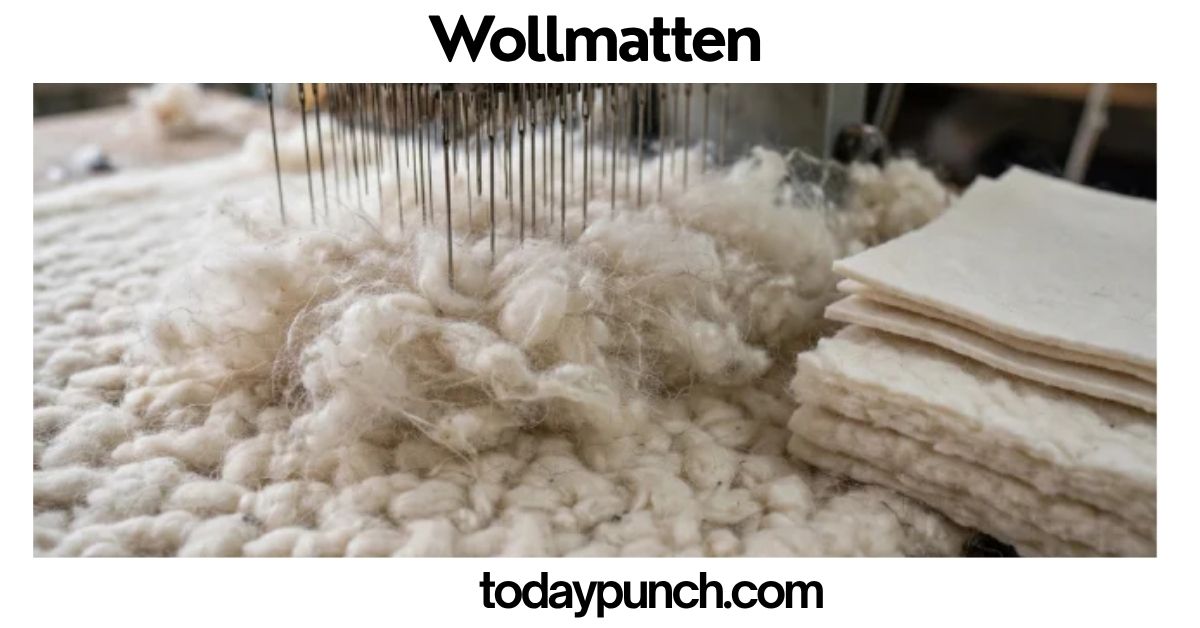
Wollmatten: A Complete Guide to Wool Mats, Benefits, Uses, Materials, and Care
Wollmatten are woollen mats made from natural sheep’s wool. They are valued for their durability, breathability, natural insulation, comfort, and relatively low environmental impact compared with many synthetic mat materials. The German word “Wollmatten” can be translated simply as “wool mats” or “woolen mats.”
Although the term may be unfamiliar to many English-speaking readers in the United States, the basic product concept is easy to understand. A wollmatte is a mat or felted material made primarily from wool fibers. Depending on how it is manufactured, it can be used for home furnishings, insulation, crafts, acoustic applications, padding, pet areas, automotive projects, and other practical purposes.
This guide explains what wollmatten are, how they are made, why wool is useful in mat form, where wool mats are commonly used, how to choose one, how to care for it, and what buyers should know about sustainability, safety, and product quality.
What Does Wollmatten Mean?
Wollmatten is the German plural form generally used for wool mats. The singular form is wollmatte.
In simple terms, wollmatten are mats manufactured from sheep’s wool or wool fibers. The fibers may be compressed, felted, woven, stitched, or otherwise processed to create a material with a specific thickness, density, and texture.
The exact characteristics of a wool mat depend on several factors:
- The type of wool used
- Fiber length and thickness
- Manufacturing method
- Mat density
- Thickness
- Whether other fibers are added
- Whether the wool has been treated
- Intended application
Some wool mats are soft and flexible, while others are dense and rigid. This means “wollmatten” does not describe just one standardized product.
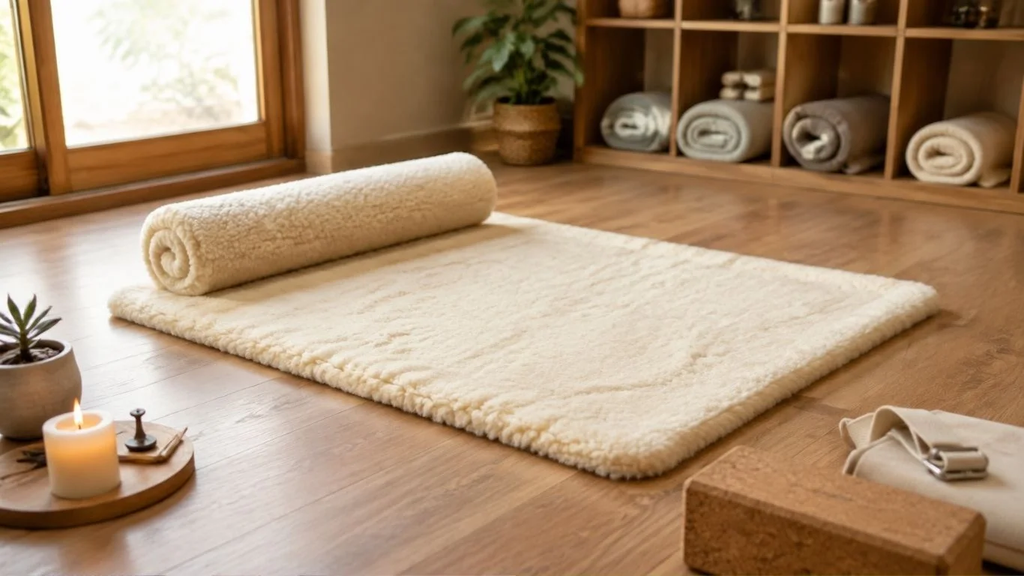
Quick Answer: What Are Wollmatten?
Wollmatten are mats made from sheep’s wool or wool fibers. They can provide insulation, cushioning, moisture management, sound absorption, and durability. Their uses range from household and decorative applications to insulation, crafts, and specialized industrial projects.
Why Are Wollmatten Made From Wool?
Wool has been used by people for thousands of years because of its unusual combination of properties.
Unlike many plant-based fibers, wool is an animal fiber. It comes primarily from sheep and consists largely of keratin, the same broad family of protein found in human hair and fingernails.
The structure of wool fibers helps explain why wool mats behave differently from many plastic-based mats.
Wool fibers naturally have a complex surface structure and can trap air. When many fibers are combined into a dense mat, the resulting material can provide thermal insulation and cushioning.
Wool can also absorb and release moisture vapor. This property is one reason wool products are often described as breathable.
For a wool mat, these properties can be useful in environments where comfort, insulation, or moisture management matters.
How Are Wollmatten Made?
The manufacturing process varies according to the type of wool mat being produced.
A basic process may involve several stages.
1. Wool Collection
Sheep are typically sheared periodically, with the timing depending on breed, climate, farming practices, and animal management.
The resulting fleece contains wool fibers along with natural substances and foreign material.
Also Read: Schedow: The Smart Scheduling and Digital Productivity
2. Sorting and Cleaning
Raw wool is sorted according to fiber characteristics and intended use.
It may then be cleaned to remove dirt, vegetable matter, and excess natural grease.
This stage is important because raw wool can contain lanolin and other materials that are not desirable in every finished product.
3. Fiber Preparation
The wool may be opened and separated into individual or partially separated fibers.
Manufacturers can blend different wool grades depending on the characteristics required for the finished mat.
4. Felting or Other Manufacturing
Some wollmatten are made through felting.
Felting uses mechanical action, moisture, heat, and pressure to encourage wool fibers to interlock. Because wool fibers naturally have a scaly surface, they can become strongly entangled under appropriate conditions.
Other wool mats may be produced through processes involving:
- Needle punching
- Woven construction
- Knitting
- Layering
- Stitching
- Mechanical compression
The production method strongly affects the final product.
5. Cutting and Finishing
Once the wool material reaches the desired density and thickness, it can be cut into specific dimensions.
Manufacturers may also apply edge finishing, surface treatments, backing materials, or other modifications.
What Makes Wollmatten Different From Synthetic Mats?
One of the biggest differences between wool mats and synthetic mats is the source of the fiber.
Synthetic mats are often made from materials such as:
- Polyester
- Polypropylene
- Nylon
- Polyurethane
- Other petroleum-derived polymers
Wool mats are primarily based on natural animal fiber.
This difference can influence the material’s behavior, appearance, environmental profile, and end-of-life options.
However, natural does not automatically mean better in every application.
A synthetic mat may be more appropriate where exceptional water resistance, very low cost, high chemical resistance, or specific mechanical performance is required.
The best material depends on the intended use.
Key Benefits of Wollmatten
Wool mats have several characteristics that explain their continued popularity.
Natural Insulation
Wool fibers can trap air, helping slow the movement of heat.
A thick wool mat can therefore provide useful thermal insulation.
This is especially relevant when wool mats are used in walls, floors, ceilings, equipment, or other areas where temperature control matters.
However, insulation performance depends on density, thickness, moisture level, installation method, and the specific product.
A wool mat should not automatically be assumed to provide the same insulation performance as a purpose-designed building insulation product.
Breathability
Wool can absorb moisture vapor from surrounding air and later release some of that moisture when environmental conditions change.
This behavior is different from simply being waterproof.
A wool mat can therefore help manage humidity in some applications, but it should not be treated as a waterproof barrier.
Durability
Good-quality wool fibers can be remarkably durable.
A dense wool mat can withstand repeated use, particularly when it is designed for an appropriate application.
The actual lifespan depends on:
- Fiber quality
- Density
- Thickness
- Friction
- Weight placed on the mat
- Moisture exposure
- Cleaning practices
- Installation conditions
Comfort and Cushioning
Wool has a naturally soft feel, particularly when fine fibers are used.
Dense wool mats can also provide cushioning beneath furniture, equipment, flooring systems, or other objects.
Sound Absorption
Fibrous materials can help absorb sound energy.
Because wool mats contain many fibers and air spaces, certain wool products can be useful in acoustic applications.
The acoustic performance of a particular product should be evaluated using manufacturer test data rather than assumed solely from the fact that it contains wool.
Renewable Fiber Source
Sheep produce new wool as they grow.
This makes wool a renewable natural fiber when sheep are raised and managed responsibly.
That does not mean every wool product has the same environmental impact. Farming, processing, transportation, cleaning, chemical treatments, packaging, and disposal all affect the overall environmental footprint.
Are Wollmatten Eco-Friendly?
The environmental profile of wollmatten is one of their most interesting characteristics.
Wool is a natural and renewable fiber. It can also be durable, which means a well-made wool product may remain useful for many years.
At the same time, wool production requires land, water, animal management, transportation, and processing.
Therefore, it is more accurate to say that wool mats can offer environmental advantages rather than saying that every wool mat is automatically eco-friendly.
When evaluating a wool mat, consider the complete product life cycle.
Important questions include:
- Where was the wool produced?
- How was it processed?
- Does the product contain synthetic fibers?
- Are chemical treatments used?
- How long is the expected service life?
- Can the product be repaired?
- Can it be reused?
- Can it be recycled or composted under appropriate conditions?
- How far did it travel before reaching the consumer?
These questions provide a more realistic view of sustainability.
Wollmatten and Natural Materials
Wollmatten fit into a larger category of natural fiber products.
Other natural fibers include:
- Cotton
- Hemp
- Flax
- Jute
- Sisal
- Coir
Each material has different characteristics.
Wool is especially interesting because it combines relatively good insulation, moisture management, resilience, and natural flame resistance compared with many common fibers.
However, product performance always depends on construction.
A thin wool fabric and a dense wool insulation mat should not be expected to behave in exactly the same way.
Common Uses of Wollmatten
The phrase wollmatten can cover many different applications.
Home Interiors
Wool mats can be used in homes for comfort, insulation, padding, and decorative purposes.
Possible applications include:
- Floor coverings
- Underlays
- Furniture padding
- Decorative mats
- Wall materials
- Acoustic panels
The appropriate product depends on whether the priority is appearance, cushioning, insulation, or sound absorption.
Thermal Insulation
Wool-based insulation mats can be used in certain building applications.
Their fibrous structure can reduce heat transfer by trapping air.
Before using a wool mat for building insulation in the United States, consumers should check local building codes and the manufacturer’s technical specifications.
Important information can include:
- R-value
- Density
- Thickness
- Fire performance
- Moisture performance
- Installation requirements
A decorative wool mat should not be substituted for a certified building insulation product.
Acoustic Applications
Wool mats may also be useful for controlling sound.
They can be incorporated into acoustic panels, wall systems, furniture, and interior design projects.
The goal may be to reduce reflected sound rather than completely block sound transmission.
This distinction is important.
Sound absorption and soundproofing are not the same thing.
Automotive and Transportation Applications
Specialized wool-based materials can be used in vehicles for insulation, padding, carpets, and interior components.
The requirements in automotive applications can be demanding, so products designed specifically for vehicles should be used rather than ordinary household wool mats.
Crafts and DIY Projects
Wool matting can be attractive to people who enjoy crafts.
It can be cut, layered, shaped, or incorporated into handmade projects.
Its natural texture can also provide a distinctive visual appearance.
Pet Applications
Some wool products are used as pet bedding or cushioning.
However, not every wool mat is appropriate for animals.
Consumers should check whether:
- Dyes are pet-safe
- Treatments are present
- Loose fibers could be swallowed
- The product can be cleaned properly
- The animal could chew or damage it
A product designed specifically for pets may be preferable.
Wollmatten for Home Insulation
One of the most practical uses of wool matting is insulation.
Wool insulation works primarily by reducing heat movement through trapped air.
During winter, this can help reduce heat escaping from a building.
During warmer conditions, insulation can slow heat entering the building.
However, insulation is only one part of building energy performance.
A home’s efficiency also depends on:
- Windows
- Doors
- Air leakage
- HVAC equipment
- Roof construction
- Wall construction
- Floor construction
- Moisture control
- Ventilation
Installing wool insulation without addressing major air leaks may produce disappointing results.
Wool Mats and Moisture
Moisture is an important topic when discussing wool.
Wool can absorb moisture vapor. This can make wool feel less clammy than some materials under changing humidity conditions.
But wool is not immune to water damage.
Prolonged exposure to liquid water can create problems such as:
- Increased weight
- Reduced insulation performance
- Odor
- Mold or microbial growth under suitable conditions
- Material deterioration
For this reason, wool mats should be used according to the manufacturer’s moisture requirements.
Good ventilation and appropriate building design are also important.
Are Wool Mats Naturally Flame Resistant?
Wool has several fire-related characteristics that distinguish it from some synthetic fibers.
It generally has a higher ignition temperature than many common textile fibers and tends to burn less readily than several alternatives.
However, “naturally flame resistant” does not mean “fireproof.”
Wool can still burn under sufficient heat and appropriate conditions.
Consumers should always check the specific fire-performance information for the product being considered.
This is particularly important for:
- Building insulation
- Upholstery
- Commercial interiors
- Transportation
- Public spaces
Never rely on the word “wool” alone when a project has specific fire-code requirements.
How to Choose the Right Wollmatte
Selecting a wool mat begins with understanding its purpose.
Consider the Thickness
Thickness affects:
- Insulation
- Cushioning
- Weight
- Flexibility
- Installation requirements
A thick mat may be excellent for cushioning but unnecessary for a decorative application.
Consider Density
Density affects how the material feels and performs.
A dense wool mat may be stronger and more resistant to compression, while a lower-density product may provide different insulation or acoustic characteristics.
Check the Fiber Composition
Do not assume every product labeled as wool is made from 100% wool.
Some products may contain:
- Polyester
- Cotton
- Other natural fibers
- Synthetic binders
Read the product specification carefully.
Check Dimensions
For projects involving installation, measure the required space before purchasing.
Remember that wool materials can sometimes change slightly due to humidity, compression, or handling.
Check Certifications
For specialized applications, certifications and test reports can provide useful evidence of product performance.
Look for information relevant to the intended use rather than relying on general marketing claims.
How to Clean Wollmatten
Cleaning depends on the specific product.
The manufacturer’s instructions should always come first.
For many wool products, aggressive washing is not recommended.
A simple maintenance routine may include:
- Vacuum or gently remove loose dirt.
- Clean small spills promptly.
- Avoid excessive water.
- Use cleaning products specifically suitable for wool when required.
- Allow the material to dry thoroughly.
- Avoid unnecessary high heat.
Wool fibers can felt or shrink under certain combinations of heat, moisture, agitation, and pressure.
That is why treating a wool mat like an ordinary synthetic floor mat can damage it.
Can Wollmatten Be Washed?
Some wool mats can be washed, while others cannot.
The answer depends on:
- Construction
- Fiber treatment
- Mat density
- Backing material
- Adhesives
- Manufacturer instructions
If the label says dry cleaning or spot cleaning only, those instructions should be followed.
When in doubt, test any cleaning method on a small, hidden area first.
How Long Do Wool Mats Last?
There is no single lifespan for all wollmatten.
A high-quality, dense wool mat used indoors and maintained correctly may last for many years.
A lightweight wool mat exposed to constant moisture, heavy friction, sunlight, or outdoor weather may deteriorate much faster.
Also Read; Kotora Melnkalne: Kotor Montenegro Attractions, History & Travel
Longevity is influenced by:
- Fiber quality
- Construction
- Usage
- Cleaning
- Moisture
- UV exposure
- Temperature
- Maintenance
The most sustainable product is often one that remains useful for a long time.
Wollmatten vs. Cotton Mats
Cotton and wool have different properties.
Wool generally provides better natural insulation and resilience, while cotton is often soft and easy to process.
Cotton can absorb substantial amounts of water, whereas wool has different moisture-management behavior.
For warmth and insulation, wool can have an advantage.
For certain lightweight textile applications, cotton may be more suitable.
The right choice depends on the application rather than a simple “better” or “worse” comparison.
Wollmatten vs. Synthetic Mats
Synthetic mats often provide predictable performance, low cost, and resistance to certain types of moisture and wear.
Wool mats offer a natural fiber option with distinctive insulation, texture, and moisture characteristics.
Synthetic materials can also be engineered for highly specific performance requirements.
Therefore, the decision should consider:
- Price
- Durability
- Moisture exposure
- Fire requirements
- Environmental goals
- Comfort
- Maintenance
- Intended lifespan
Potential Disadvantages of Wollmatten
A balanced discussion should include disadvantages as well as benefits.
Higher Cost
High-quality wool can cost more than many synthetic fibers.
Moisture Sensitivity
Wool can tolerate some moisture vapor but is not designed to remain wet indefinitely.
Cleaning Requirements
Some wool products require more careful cleaning than synthetic alternatives.
Potential Shrinkage or Felting
Heat, moisture, and mechanical agitation can cause certain wool materials to shrink or felt.
Allergies and Sensitivities
Some people may experience irritation from wool fibers, dyes, treatments, or other components.
A wool product should not automatically be considered hypoallergenic.
Product Variation
“Wool mat” is a broad category. Quality can differ substantially between manufacturers and products.
Is Wool Sustainable?
Wool’s sustainability depends on how the entire product system is managed.
The advantages include:
- Renewable fiber production
- Potential long service life
- Natural origin
- Reusability in some applications
- Biodegradability of untreated wool under suitable environmental conditions
But there are also environmental considerations.
Sheep farming has impacts involving land use, feed, water, transportation, and greenhouse-gas emissions.
Processing wool also consumes energy and water.
Some products contain synthetic binders or coatings that alter their environmental profile.
For that reason, responsible purchasing requires more than looking at the word “natural.”
How to Identify High-Quality Wollmatten
A high-quality wool mat should have characteristics appropriate for its intended use.
Look for clear information about:
- Fiber content
- Wool source
- Product dimensions
- Weight or density
- Thickness
- Manufacturing method
- Intended applications
- Cleaning instructions
- Fire performance where relevant
- Certifications where relevant
- Warranty or expected lifespan
Avoid products that make broad environmental or performance claims without supporting details.
Transparency is an important part of trustworthy product information.
What Consumers Should Know About Wool Certifications
Certifications can provide additional information about how a wool product was produced or processed.
Depending on the product and market, consumers may encounter certifications related to:
- Animal welfare
- Organic production
- Textile safety
- Environmental management
- Chemical restrictions
- Supply-chain traceability
A certification should be understood in context.
Not every certification measures the same thing.
One may focus on animal welfare, while another may focus on chemical processing or environmental management.
Consumers should therefore read what the certification actually covers.
Wollmatten and Indoor Air Quality
Indoor air quality is another reason some people consider natural fiber products.
A wool mat itself is not automatically guaranteed to improve indoor air quality.
What matters is the complete composition of the product.
A wool mat may contain:
- Wool fibers
- Dyes
- Adhesives
- Backing materials
- Synthetic binders
- Surface treatments
If indoor air quality is a major concern, look for products with transparent material information and relevant emissions testing.
Are Wollmatten Safe for Children?
A wool mat can potentially be used around children, but safety depends on the specific product.
Parents should consider:
- Loose fibers
- Small detachable parts
- Chemical treatments
- Dyes
- Choking hazards
- Cleaning requirements
- Slip resistance
- Fire safety
A product intended for children should meet the applicable safety requirements for its specific use.
Natural material alone does not guarantee child safety.
Can Wollmatten Be Used Outdoors?
Some wool mats may be suitable for limited outdoor use, but wool generally requires more protection from prolonged moisture and weather exposure than materials specifically designed for outdoor environments.
Rain, high humidity, sunlight, and repeated wetting can shorten the life of wool.
For outdoor use, check the manufacturer’s specifications carefully.
An indoor wool mat should not automatically be treated as an outdoor product.
How to Store Wool Mats
Proper storage can help preserve wool products.
Store a wool mat:
- Clean and completely dry
- Away from excessive humidity
- Away from direct sunlight
- In a well-ventilated area when possible
- Protected from insects when long-term storage is required
Clothes moths and some other insects can damage animal fibers.
Regular inspection is especially useful when wool products are stored for long periods.
Wollmatten and Moth Protection
Wool is a protein-based animal fiber, which means certain insects can feed on it.
Moth larvae can damage wool products.
Preventive steps include:
- Keeping wool clean
- Checking products regularly
- Avoiding damp storage
- Maintaining appropriate storage conditions
- Following manufacturer recommendations
Chemical moth treatments should be used carefully and according to their labels.
Digital Shopping Tips for Buying Wollmatten
People searching for wollmatten online may encounter products from different countries and manufacturers.
Because product descriptions can be translated automatically, terminology may vary.
One seller may call a product a wool mat, while another may call it:
- Wool felt mat
- Wool insulation mat
- Wool felt sheet
- Wool padding
- Wool fiber mat
- Felted wool
- Sheep wool insulation
Understanding these related terms can make online research easier.
Before purchasing, verify the actual material composition rather than relying only on product titles.
Common Mistakes When Buying Wool Mats
Several mistakes can lead to disappointment.
Mistake 1: Assuming Every Wool Mat Is 100% Wool
Always check the fiber composition.
Mistake 2: Buying Based Only on Thickness
Thickness alone does not tell you everything about insulation, durability, or cushioning.
Mistake 3: Ignoring Moisture Conditions
Wool should be selected with the expected moisture environment in mind.
Mistake 4: Assuming Natural Means Chemical-Free
Natural wool products can still be dyed, treated, bonded, or finished with additional materials.
Mistake 5: Ignoring the Intended Application
A decorative wool mat is not necessarily suitable for construction insulation.
Mistake 6: Choosing Price Over Product Information
A low price may be attractive, but transparent specifications are often more useful when comparing products.
What Should You Look for in a Wollmatten Product Description?
A useful product description should answer basic questions.
For example:
- What percentage of the product is wool?
- What is the mat’s thickness?
- What is its density?
- What are its dimensions?
- Is it felted or woven?
- Does it contain synthetic fibers?
- Is it treated?
- Where can it be used?
- How should it be cleaned?
- Is it suitable for moisture-prone areas?
- Does it have relevant safety certifications?
If important information is missing, contacting the manufacturer may be worthwhile.
Also Read: OTI IAS: A Complete Guide to Two Different Airport Codes
Frequently Asked Questions About Wollmatten
1. Can Wollmatten Be Cut to a Custom Shape?
Many wool mats can be cut, especially felt-style products. However, cutting may expose the internal structure or cause edges to change shape depending on the construction. For a permanent installation, it is best to confirm with the manufacturer whether cutting is recommended.
2. Do Wollmatten Have a Natural Smell?
Some wool products can have a mild natural wool odor, particularly when new. The smell may be related to residual natural oils or processing. Odor intensity varies considerably between products. Strong or persistent chemical odors may justify contacting the manufacturer and checking what treatments were used.
3. Can Wollmatten Be Reused After a Renovation Project?
Potentially, yes. If a wool mat remains clean, dry, structurally sound, and free from contamination, it may be possible to reuse it. Reuse depends heavily on the original application and product condition. Materials exposed to chemicals, mold, pests, or construction contamination should be evaluated carefully before reuse.
4. Does the Color of a Wool Mat Affect Its Performance?
Color usually has less influence on basic insulation or cushioning performance than factors such as thickness, density, fiber composition, and construction. However, dyes and surface treatments can affect certain characteristics. For technical applications, product test data is more useful than color when evaluating performance.
5. Can Wool Mats Be Recycled at the End of Their Life?
Some wool products can potentially be reused, recovered, or recycled, but there is no universal recycling system for every wool mat. Blended fibers, adhesives, coatings, and backing materials can make recycling more difficult. Before disposal, check local textile recycling programs and manufacturer take-back options where available.
Conclusion
Wollmatten are woollen mats made from natural sheep’s wool, and their usefulness comes from the distinctive properties of wool fibers. They can provide insulation, cushioning, moisture management, sound absorption, durability, and a natural material alternative to many synthetic mats.
Their applications range from interior furnishings and crafts to specialized insulation and acoustic products. However, not every wool mat is designed for every purpose. Product density, thickness, fiber composition, manufacturing method, moisture exposure, fire performance, and maintenance requirements all matter.
Wool can also have environmental advantages because it is a renewable natural fiber and can be long-lasting. At the same time, responsible evaluation should consider the entire life cycle, including sheep farming, processing, transportation, additional materials, and end-of-life options.
For consumers in the United States, the most important lesson is simple: choose the product based on the application rather than the name alone. A well-documented wool mat with clear specifications can be a useful and durable material, while an unsuitable product may perform poorly regardless of how natural or attractive it appears.
Understanding what wollmatten are, how wool behaves, and what information manufacturers provide allows buyers to make informed decisions based on practical needs, safety, durability, and environmental considerations.