Quartz Events Sponsor Matching Companies: Complete Guide to B2B Event Sponsorship and Qualified Meetings
If you are researching “quartz events sponsor matching companies,” you may be trying to understand how Quartz Events connects businesses with potential customers, what sponsor matching means, which companies participate, and whether this type of event sponsorship is different from a traditional trade show.
The short answer is yes.
Quartz Events, now primarily presented under the Quartz Network brand, uses a meeting-based B2B event model. Instead of focusing only on exhibition booths, banners, and general networking, its events are designed to create structured meetings between senior business decision-makers and solution providers that may be relevant to their current needs. Quartz says its sponsor programs include guaranteed qualified meetings, detailed prospect information, and opportunities for thought leadership and networking.
This makes the phrase “quartz events sponsor matching companies” slightly confusing. It is not the name of a formal industry category containing a fixed list of sponsor-matching companies. It is better understood as a search term related to Quartz Network, its event sponsorship model, and the wider market for B2B event matchmaking.
This guide explains the model in simple terms. It covers how Quartz sponsor matching works, what types of companies can participate, how meetings are selected, what sponsors should measure, possible advantages and limitations, privacy considerations, and how Quartz compares with traditional B2B conferences.
What Are Quartz Events Sponsor Matching Companies?
Quartz Events sponsor matching companies can be understood as businesses, platforms, and event programs that help connect B2B solution providers with executives who may need their products or services.
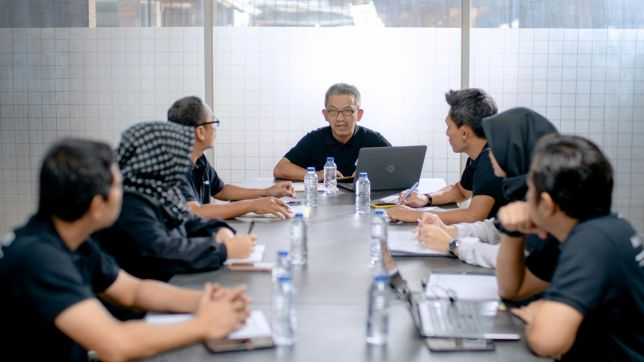
In the specific Quartz context, the main organization is Quartz Network. Its current website describes the business as a meeting-based B2B platform that connects solution providers with senior decision-makers. Quartz says it has spent 18 years developing its matchmaking model and works with both purchasers and solution providers to understand what each side needs.
There are three important groups in this model:
| Participant | Main role |
| Quartz Network | Organizes events, qualifies participants, and facilitates meetings |
| Executive attendees | Research solutions, learn, network, and discuss business priorities |
| Solution providers | Present products or services to potentially relevant decision-makers |
The important idea is relevance.
A company selling cybersecurity software does not necessarily need to meet every person at a large technology conference. It may want conversations with executives responsible for cybersecurity, IT, risk, compliance, data protection, or related technology decisions.
Likewise, an HR technology provider may get more value from meeting CHROs, HR executives, talent leaders, and people-operations professionals than from speaking with hundreds of unrelated attendees.
Quartz’s event pages show this function-specific approach across areas such as finance, marketing, HR, supply chain, procurement, IT, data, analytics, and other corporate functions.
What Is Quartz Network?
Quartz Network is the current public-facing brand most closely associated with the older Quartz Events name.
The company operates executive events and a broader solution-finding platform. Its events can be held in person or online and are organized around specific business functions and leadership roles.
For example, current U.S. event programs include CONNECT CFO, CONNECT CMO, CONNECT HR, and SCOPE Supply Chain, Procurement & Manufacturing. Quartz also operates programs focused on technology, data strategy, analytics, and other professional areas.
The basic philosophy is simple: put a relevant buyer and a relevant provider into a structured conversation.
This is different from a conference where a sponsor may spend money primarily for brand exposure.
Also Read: Woeken: Meaning, Origin, Uses, and What the Term Really Means in 2026
Quartz describes its sponsorship offering as meeting-based B2B events. Sponsors can receive information about prospective attendees, select people they want to meet, and participate in scheduled one-to-one meetings.
How Quartz Events Sponsor Matching Works
The Quartz sponsor matching process can be explained in several steps.
1. Executive attendees are identified and qualified
The first part of a matchmaking system is the audience.
Quartz focuses on senior professionals and business decision-makers. Its sponsorship website states that 100% of attendees are senior-level decision-makers with buying power, although businesses evaluating the program should still ask how “decision-maker” and “buying power” are defined for the specific event.
This qualification is important because job titles alone do not always tell you whether someone can influence a purchase.
A vice president may control a major budget in one company but have limited authority in another. A director may directly own a technology project and have significant influence even without a C-suite title.
Good B2B matching therefore looks beyond titles.
2. Attendee needs are collected
Quartz’s event pages explain that attendees provide information about their current challenges and priorities during registration.
That information helps determine which solution providers may be relevant.
For example, a finance executive might indicate that their organization is reviewing financial planning software. An HR leader might be evaluating employee experience technology. A supply chain executive might be working on supplier risk or operational resilience.
This changes the nature of the meeting.
Instead of asking a salesperson to start with a general introduction, the salesperson can enter the discussion with some understanding of the executive’s business problem.
3. Solution providers define their ideal customers
The sponsor side also provides information.
A solution provider may define its preferred customer based on factors such as:
- Industry
- Company size
- Geography
- Job function
- Technology environment
- Business challenge
- Buying stage
- Budget
- Existing initiatives
- Target accounts
- Product fit
Quartz says it works with solution providers to understand exactly what they look for in a customer.
This information becomes part of the matching process.
4. Potential matches are identified
The event organizer then looks for overlap between executive needs and sponsor capabilities.
A simple example would be:
Executive need: Improve enterprise data governance.
Potential solution provider: Data governance and compliance software company.
A match becomes more useful if other factors also align, such as company size, project timing, geography, budget, and decision-making responsibility.
This is why B2B matchmaking is more than simply putting a technology company in a room with technology executives.
5. Sponsors can select people to meet
Quartz says event sponsors know who is attending ahead of time and can handpick people they want to meet. It also says selected attendees are informed in advance so there is meaningful interest in the conversation.
This is one of the main differences between meeting-based sponsorship and ordinary exhibition sponsorship.
At a typical trade show, a salesperson waits for someone to approach the booth.
In a structured meeting model, the meeting is arranged before the event.
6. Meetings take place during the event
The central activity is the one-to-one meeting.
Quartz says its event sponsorship packages can provide between 15 and 120 guaranteed qualified meetings, depending on the program and package.
The exact package should always be confirmed directly with Quartz because meeting volumes, definitions, formats, and commercial terms can vary.
Some meetings are conducted in person. Others may be conducted online.
Quartz’s current event listings show both formats. For example, its U.S. event portfolio includes in-person leadership summits as well as online executive meetings.
Why Meeting-Based Sponsorship Is Different From a Traditional Trade Show
Traditional trade shows usually focus on scale.
The goal may be to attract thousands of visitors, exhibitors, speakers, and sponsors into one physical location.
This can create significant brand exposure.
However, high attendance does not automatically mean high-quality sales conversations.
A booth may receive visitors who are:
- Students
- Job seekers
- Competitors
- Vendors
- Casual attendees
- Researchers
- People with no purchasing authority
- People who are simply collecting promotional items
Meeting-based B2B events approach the problem differently.
The central question is not:
“How many people came to the event?”
It is:
“How many relevant people did the sponsor actually speak with?”
That distinction is important for enterprise sales organizations.
A software company selling a $500,000 enterprise platform may not need 1,000 casual leads. It may prefer 20 serious conversations with executives who have a current project and meaningful influence over the decision.
What Types of Companies Sponsor Quartz Events?
Quartz’s sponsor ecosystem is primarily relevant to B2B solution providers.
The exact companies vary by event, but common categories include:
Enterprise software companies
These businesses may sell software for finance, HR, marketing, analytics, supply chain, operations, security, or other business functions.
Technology providers
Technology companies may offer cloud platforms, data services, cybersecurity, artificial intelligence, infrastructure, automation, or related solutions.
Consulting firms
Management and technology consulting companies can use executive events to discuss transformation projects, strategy, implementation, and organizational challenges.
Professional services companies
This can include providers of specialized business services such as compliance, procurement, workforce solutions, financial services, and technology services.
Marketing and advertising technology companies
Marketing-focused events may attract providers serving customer experience, digital marketing, advertising, content, analytics, and marketing operations.
HR and workforce technology companies
HR events can include vendors serving recruitment, talent management, employee experience, learning, payroll, workforce planning, and HR analytics.
Supply chain and procurement providers
Supply chain events can attract companies offering procurement technology, logistics solutions, planning systems, supplier management, manufacturing technology, and operational services.
Quartz’s current event pages show solution-provider categories tailored to each event’s business function. For example, its data and analytics programs cover areas including data platforms, cloud architecture, governance, data integration, analytics, AI and machine learning, and data security.
Examples of Quartz Event Categories in the United States
The Quartz Network portfolio changes over time, so businesses should check the current event calendar rather than relying on an old list.
Current U.S. examples include:
CONNECT CFO
CONNECT CFO is designed for senior finance leaders. The current fall 2026 U.S. event is scheduled for October 5–7, 2026, in New Orleans, with curated one-to-one meetings between finance leaders and solution providers.
CONNECT CMO
CONNECT CMO is focused on marketing leaders and covers subjects such as growth, artificial intelligence, changing buyer behavior, and marketing strategy. The fall 2026 U.S. program is listed for October 5–7, 2026, in New Orleans.
CONNECT HR
CONNECT HR focuses on HR and people leadership. Current event information describes discussions around workforce strategy, talent, leadership, employee experience, and related business priorities.
SCOPE Supply Chain, Procurement & Manufacturing
SCOPE serves supply chain and procurement leaders and addresses issues such as resilience, planning, supplier strategy, and operational performance. A U.S. fall 2026 event is listed for October 11–13, 2026, in Atlanta.
Data Strategy and Analytics
Quartz also runs programs for data and analytics leaders. These can cover data modernization, governance, analytics, artificial intelligence, machine learning, data quality, and decision intelligence.
These examples show why Quartz sponsor matching is better understood as a collection of specialized B2B communities rather than one generic conference.
What Does a Quartz Event Sponsor Receive?
The exact sponsorship package depends on the event and agreement.
However, Quartz currently describes several core elements.
Qualified meetings
The main feature is access to scheduled one-to-one conversations with relevant executives.
Quartz states that its sponsorship programs guarantee between 15 and 120 qualified meetings, depending on the package.
Prospect information
Sponsors receive information about prospective customers before meetings.
The purpose is to help sales teams prepare rather than enter the meeting without context.
Ability to select meetings
Quartz says sponsors can handpick people they want to meet from the event audience.
Thought leadership
Sponsorship can include opportunities beyond meetings, such as educational sessions and thought leadership.
This gives companies a chance to demonstrate expertise rather than relying entirely on direct selling.
Networking
Events may also include broader networking activities.
This can help sponsors build relationships with people outside their scheduled meetings.
Are Quartz Sponsor Meetings Really “Guaranteed”?
This is an important question for anyone considering the model.
Quartz uses the phrase “guaranteed, qualified meetings” on its sponsor page.
However, “guaranteed meetings” should not be interpreted as “guaranteed sales.”
A meeting guarantee concerns the delivery of meetings under the applicable program terms.
It does not mean that a prospect will:
- Buy a product
- Sign a contract
- Request a proposal
- Become a customer
- Have an approved budget
- Choose the sponsor over competitors
This distinction is critical.
A good meeting is an opportunity.
The sponsor still needs a strong product, clear positioning, good salespeople, competitive pricing, useful follow-up, and a solution that genuinely fits the customer’s situation.
What Is the ROI of Quartz Events Sponsor Matching?
Return on investment is one of the biggest reasons companies consider meeting-based event sponsorship.
Traditional event marketing can be difficult to measure.
A company might spend money on:
- Booth space
- Travel
- Accommodation
- Event staff
- Printed materials
- Sponsorship fees
- Advertising
- Entertainment
- Shipping
- Lead scanning
It may then return home with a large spreadsheet of contacts.
The hard part is determining which contacts matter.
Meeting-based sponsorship creates a more direct measurement path.
A sponsor can track:
- Meetings purchased or included
- Meetings scheduled
- Meetings completed
- Follow-up conversations
- Sales-qualified opportunities
- Proposals
- Pipeline
- Closed revenue
- Customer acquisition cost
- Revenue influenced by the event
Quartz’s website promotes an ROI calculator and gives example performance figures, including a stated 15.3x ROI example and $4.5 million average contract value in the calculator context. These are company-provided marketing figures rather than independent performance guarantees, so prospective sponsors should evaluate their own expected economics rather than assume those results will apply to them.
A Simple Way to Calculate Event Sponsorship ROI
Suppose a company spends $100,000 on a sponsorship.
The event produces 40 completed meetings.
The cost per completed meeting would be:
$100,000 ÷ 40 = $2,500 per meeting.
That number alone does not tell you whether the investment was good.
Suppose those meetings create eight qualified opportunities.
The cost per opportunity becomes:
$100,000 ÷ 8 = $12,500.
If two opportunities eventually become customers and produce $500,000 in gross profit, the economics may be attractive.
This is why cost per meeting should never be the only KPI.
The Most Important Metrics for Sponsor Matching
Companies evaluating Quartz events sponsor matching companies should consider a complete measurement framework.
Meeting acceptance rate
How many proposed meetings are accepted by attendees?
Meeting completion rate
How many scheduled meetings actually occur?
Target-account coverage
How many meetings involve companies that the sponsor already considers strategically important?
Decision-maker relevance
Does the person have responsibility or influence related to the product being sold?
Sales-qualified opportunities
How many meetings become genuine sales opportunities?
Pipeline created
What dollar value of qualified pipeline can reasonably be linked to the event?
Pipeline influenced
Did the event accelerate existing opportunities?
Closed revenue
Did the program eventually contribute to actual customer revenue?
Cost per opportunity
How much did the sponsor spend for each qualified opportunity?
Customer acquisition cost
How does the event compare with other acquisition channels?
These metrics provide a much better picture than attendance numbers alone.
Who Benefits Most From Quartz Events Sponsor Matching?
The model may work particularly well for companies with a clearly defined B2B customer profile.
Also Read: Koriandri: The Fresh Green Herb, Uses, Nutrition, Storage, and Safety
A strong candidate may have:
- A high average contract value
- A long enterprise sales cycle
- A clearly defined buyer
- A product that solves a specific business problem
- Salespeople capable of consultative conversations
- A need for senior executive access
- Enough sales capacity to follow up quickly
For example, if a company sells a complex enterprise analytics platform, speaking directly with data executives who are actively reviewing analytics projects may be more useful than collecting hundreds of general conference leads.
Who May Not Benefit as Much?
Meeting-based sponsorship is not automatically right for every company.
It may be less attractive when:
- The product has a very low selling price
- The target audience is consumers
- The company has no defined ideal customer profile
- The sales team cannot handle follow-up
- The product is still too early to demonstrate value
- The company needs mass-market brand awareness more than targeted meetings
- The sponsor cannot provide a strong reason for executives to meet
A company should choose the event channel based on its business model rather than assuming that more meetings always mean better marketing.
Quartz Events vs. Traditional Trade Shows
The two models serve different purposes.
| Factor | Meeting-Based Quartz Model | Traditional Trade Show |
| Primary goal | Qualified conversations | Exposure and networking |
| Meetings | Structured and scheduled | Often spontaneous |
| Audience | Function-specific executives | Often broader |
| Buyer qualification | Central to the model | Varies by event |
| Booth traffic | Less important | Often very important |
| Preparation | High | Moderate |
| Measurement | Meetings and pipeline | Leads, traffic, exposure |
| Best fit | Complex B2B sales | Broad awareness and networking |
Neither model is universally better.
A cybersecurity company launching a new brand may want a major trade show.
The same company may also use Quartz-style executive meetings when it wants direct conversations with senior security buyers.
The strongest event strategy can use multiple channels.
Quartz Events Sponsor Matching Companies and Account-Based Marketing
One of the most useful ways to think about the Quartz model is through account-based marketing, or ABM.
ABM starts with a simple idea:
Do not treat every potential customer as equally valuable.
Instead, identify the organizations that matter most and create a targeted strategy around them.
A meeting-based event fits naturally into this approach.
Before the event, a sponsor can identify:
- Strategic accounts
- Existing opportunities
- Expansion accounts
- Target industries
- High-value prospects
- Accounts with active projects
The sales team can then prepare specific talking points for each meeting.
This creates a stronger connection between event marketing and revenue generation.
How Sponsors Should Prepare for a Quartz Event
The value of matching depends heavily on preparation.
Research each meeting
Do not assume the matching process replaces sales research.
Look at the executive’s company, role, industry, recent business activity, and likely priorities.
Build a meeting hypothesis
Enter each conversation with a clear idea of why the solution might matter.
For example:
“We believe this company may be evaluating automation because its operations team is expanding rapidly.”
The hypothesis may be wrong.
That is fine.
The purpose is to start with a useful question rather than a generic sales pitch.
Ask questions first
A strong first meeting should usually focus on discovery.
Questions might include:
- What business problem are you trying to solve?
- What have you already tried?
- What is driving the project?
- What is the expected timeline?
- Who else is involved?
- What would success look like?
- Are you evaluating technology now or later?
Avoid over-selling
Senior executives often have limited time.
A useful meeting should help determine whether there is a genuine fit.
If there is no fit, ending the conversation professionally may be better than forcing a sales pitch.
Follow up quickly
The value of a meeting decreases if follow-up is delayed.
Sales teams should document:
- Key pain points
- Buying timeline
- Decision process
- Budget status
- Competitors
- Next steps
- Stakeholders
- Materials requested
What Should Event Organizers Look For in Sponsor Matching Companies?
The phrase “quartz events sponsor matching companies” can also be interpreted more broadly by event organizers searching for sponsorship partners.
If you are organizing an event and looking for sponsors, focus on audience fit rather than simply building the largest sponsor list.
Ask:
Does the sponsor want your audience?
A company should have a genuine business reason to reach your attendees.
Does your audience trust the sponsor category?
A sponsor should make sense within the context of the event.
Is the commercial relationship clear?
Make sure everyone understands what the sponsor receives and what the event organizer provides.
Are sponsor goals compatible with attendee experience?
The best sponsorships add useful content, resources, expertise, or services rather than creating unwanted sales pressure.
Can performance be measured?
Set clear goals before signing an agreement.
Common Mistakes in Event Sponsorship Matching
Sponsor matching can fail when the process focuses too much on quantity.
Mistake 1: Matching by job title alone
A “Chief Marketing Officer” is not automatically a good prospect for every marketing technology company.
Business need matters.
Mistake 2: Ignoring buying timing
A prospect may be an excellent fit but have no project for another three years.
Mistake 3: Treating every meeting equally
Some meetings deserve senior executives from the sponsor.
Others may be better handled by a product specialist.
Mistake 4: Failing to follow up
Even excellent meetings can become worthless if the sales team does not follow through.
Mistake 5: Measuring only meeting volume
Forty meetings are not necessarily better than ten.
Ten highly relevant meetings may produce more pipeline.
Privacy and Data Considerations
B2B matchmaking requires information.
That can include professional details such as:
- Name
- Job title
- Company
- Business function
- Professional interests
- Project needs
- Business challenges
- Contact information
- Meeting preferences
Because these details can influence matching, both sponsors and attendees should understand how information is collected and shared.
Quartz’s solution platform states that an executive’s information will not be shared with solution providers without permission.
That is an important principle for digital B2B matchmaking.
Users should still read the privacy notice and event-specific terms before submitting information.
Companies should also make sure their own employees understand what information they are allowed to share during meetings.
Is Quartz Events Sponsor Matching Safe?
There is no single answer because safety depends on the specific event, participant, contract, and data practices.
From a business perspective, the key concerns are normally privacy, commercial transparency, data handling, and unwanted communication.
Attendees should know:
- Why their information is being collected
- Which information is shared
- Who can contact them
- Whether meetings are optional
- How they can control future communication
Sponsors should also understand:
- What attendee information they receive
- How it can be used
- What restrictions apply
- Whether information can be exported
- How long data remains available
Good digital literacy means not assuming that “matched” means “approved” or that “qualified” means “guaranteed customer.”
Is Quartz Network Legitimate?
Quartz Network is an established B2B event and solution-finding organization with a current public website, active event listings, and a stated meeting-based sponsorship model.
Its website currently lists active U.S. and international events, sponsorship opportunities, executive meetings, and a year-round solution platform.
However, legitimacy and suitability are different questions.
A legitimate event can still be the wrong investment for a particular company.
Businesses should evaluate the specific event, audience, contract, expected meeting profile, costs, and internal sales capacity before committing money.
Also Read: MMSBRE: A Complete Guide to Business Efficiency, Technology, Customer Focus, and Sustainable Growth
How to Evaluate a Quartz Sponsorship Opportunity
Before signing an agreement, ask the following questions.
What exactly counts as a guaranteed meeting?
Does the guarantee refer to scheduled meetings, accepted meetings, or completed meetings?
Who qualifies as a decision-maker?
Ask about titles, responsibilities, budget authority, and business involvement.
How are meetings matched?
Is the process based on questionnaires, account lists, human review, technology, or a combination?
Can sponsors select attendees?
Quartz says sponsors can handpick people they want to meet, but the exact process should be confirmed for the event you are considering.
What prospect information is provided?
Ask what data will be available before each meeting.
What happens if a meeting cancels?
Understand the replacement or make-good policy.
What is included beyond meetings?
Ask about speaking opportunities, content, networking, branding, and other benefits.
What is the total cost?
Include travel, staff, preparation, follow-up, and internal sales time.
What is the expected business outcome?
Define success before the event.
A Practical Decision Framework
A simple scoring system can help a marketing team decide whether a sponsorship makes sense.
Score each category from 1 to 5:
| Category | Score |
| Audience fit | /5 |
| Buyer seniority | /5 |
| Problem relevance | /5 |
| Target-account coverage | /5 |
| Meeting quality | /5 |
| Sales capacity | /5 |
| Expected pipeline | /5 |
| Total cost | /5 |
| Strategic value | /5 |
A high score does not guarantee success.
It simply creates a more disciplined decision process.
The most important point is to compare the sponsorship with alternative uses of the same budget.
For example, $100,000 could potentially be used for:
- A major conference
- Executive dinners
- Digital advertising
- Content marketing
- Paid search
- Account-based marketing
- Sales development
- Customer events
- Meeting-based executive events
The correct question is not “Is Quartz good?”
The better question is “Is this the best use of our budget for the customers we need to reach?”
The Future of B2B Sponsor Matching
The broader event industry is moving toward more targeted experiences.
Several trends are likely to influence sponsor matching.
More personalized events
Executives increasingly expect event experiences to match their professional interests.
Greater use of data
Event organizers can use registration data, business priorities, account information, and engagement signals to improve matching.
AI-assisted matchmaking
Artificial intelligence can help identify patterns across large numbers of buyer and supplier profiles.
However, human judgment remains important because business relationships cannot always be reduced to keywords.
More hybrid experiences
Online meetings allow buyers and vendors to connect without travel.
Quartz already offers online executive meeting formats alongside physical events.
More focus on measurable revenue
Marketing departments increasingly need to demonstrate how events influence pipeline and revenue.
This favors event models that make meetings and follow-up easier to track.
Frequently Asked Questions About Quartz Events Sponsor Matching Companies
1. Does Quartz Network only work with technology companies?
No. Quartz Network’s event portfolio covers many business functions, so the solution-provider ecosystem can include technology companies, consulting firms, professional services organizations, and other B2B providers. The best fit depends on the particular event and the business problems being addressed.
2. Can a small B2B company sponsor a Quartz event?
Potentially, yes. Company size alone does not determine whether a sponsorship is appropriate. A smaller company may benefit if it has a strong product-market fit, a clearly defined enterprise buyer, and enough sales capacity to handle the resulting conversations. The company should compare the sponsorship cost with its average contract value and expected pipeline.
3. Do Quartz events replace a company’s normal sales process?
No. An event can shorten the path to a relevant conversation, but it does not replace discovery, qualification, demonstrations, proposals, procurement, legal review, negotiation, or other normal sales activities. The sponsor is still responsible for moving qualified opportunities through its sales process.
4. Can an attendee be matched with several solution providers?
Yes, the structure of these events can involve attendees meeting multiple relevant solution providers. Quartz describes its events as curated research experiences where attendee needs are used to arrange meetings with suitable providers. The exact number and schedule depend on the event and the attendee’s participation.
5. How far in advance should a company prepare for a Quartz event?
Preparation should begin as soon as the sponsorship is confirmed. Enterprise sales teams should identify priority accounts, research prospective attendees, assign the right representatives, prepare discovery questions, develop meeting goals, and establish a follow-up process before the event begins. The more complex the product, the more important advance preparation becomes.
Conclusion
Quartz Events sponsor matching companies are best understood through the larger shift from traditional event sponsorship toward structured B2B matchmaking.
Quartz Network’s current model is built around a straightforward idea: instead of leaving valuable business introductions to chance, create organized conversations between senior decision-makers and solution providers that may address their current priorities. The company supports this approach through function-specific events, executive qualification, attendee research, scheduled one-to-one meetings, and additional networking and thought-leadership opportunities.
For sponsors, the biggest potential advantage is relevance.
A company does not have to measure success only by booth traffic or the number of scanned badges. It can look at who it actually met, whether those people had relevant business problems, whether opportunities were created, and whether those opportunities eventually influenced revenue.
At the same time, meeting-based sponsorship should not be treated as a guaranteed sales machine. A guaranteed meeting is still only a meeting. Commercial success depends on product fit, buyer need, timing, sales execution, pricing, competition, and follow-up.
For that reason, companies considering Quartz events sponsor matching should approach the decision with the same discipline they would use for any significant B2B marketing investment.
First, define the ideal customer. Then examine the event audience. Confirm how matching works. Understand exactly what the sponsorship guarantees. Review data and privacy terms. Calculate the full cost. Establish measurable KPIs. Finally, compare the expected return with other marketing and sales channels.
Used this way, Quartz Network and similar meeting-based event platforms can be viewed not simply as conference sponsorship opportunities, but as targeted business-development channels designed to turn event participation into relevant executive conversations.
That distinction is the most important thing to understand when researching quartz events sponsor matching companies in 2026.