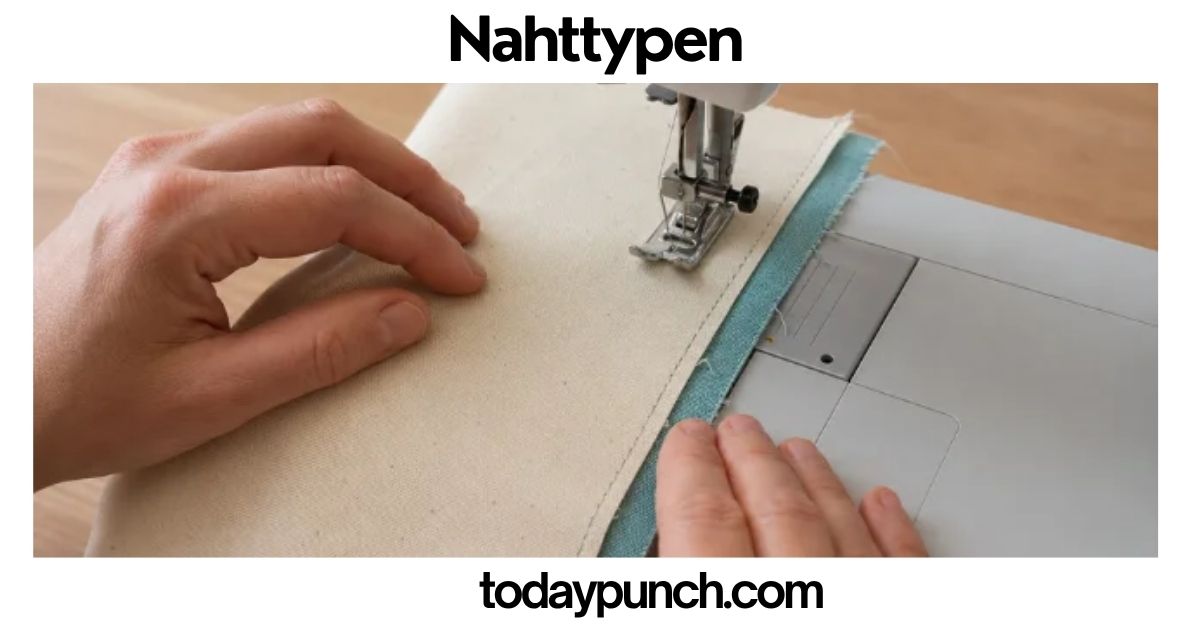
Nahttypen: The Seam Types in Sewing and Textile Construction
Nahttypen is a German term that means “seam types.” In sewing, garment making, tailoring, and textile production, the word describes the different ways pieces of fabric are joined together. A seam may look simple, but it plays an important role in the strength, comfort, appearance, and durability of a finished product.
Understanding Nahttypen is useful for beginners, home sewers, fashion students, tailors, designers, and people who work with industrial sewing machines. Different fabrics and projects need different types of seams. A lightweight shirt may need a clean and flexible seam, while denim jeans require a stronger construction. Outdoor clothing may need seams that resist water, while decorative garments may use seams mainly for appearance.
This guide explains the meaning of Nahttypen, the most common seam types, how they work, where they are used, and how to select the right seam for a project.
What Does Nahttypen Mean?
Nahttypen is the German plural form of “Nahttyp,” which can be understood as “seam type” in English.
The word is connected to sewing and textile construction. A seam is the area where two or more pieces of material are joined. The joining method can involve stitching, folding, overlapping, binding, or other construction techniques.
In simple terms:
Nahttypen = types of seams used to join fabric or textile pieces.
Seam types can be classified in several ways. They may be grouped according to how fabric pieces are positioned, how they are stitched, how the seam is finished, or what purpose the seam serves.
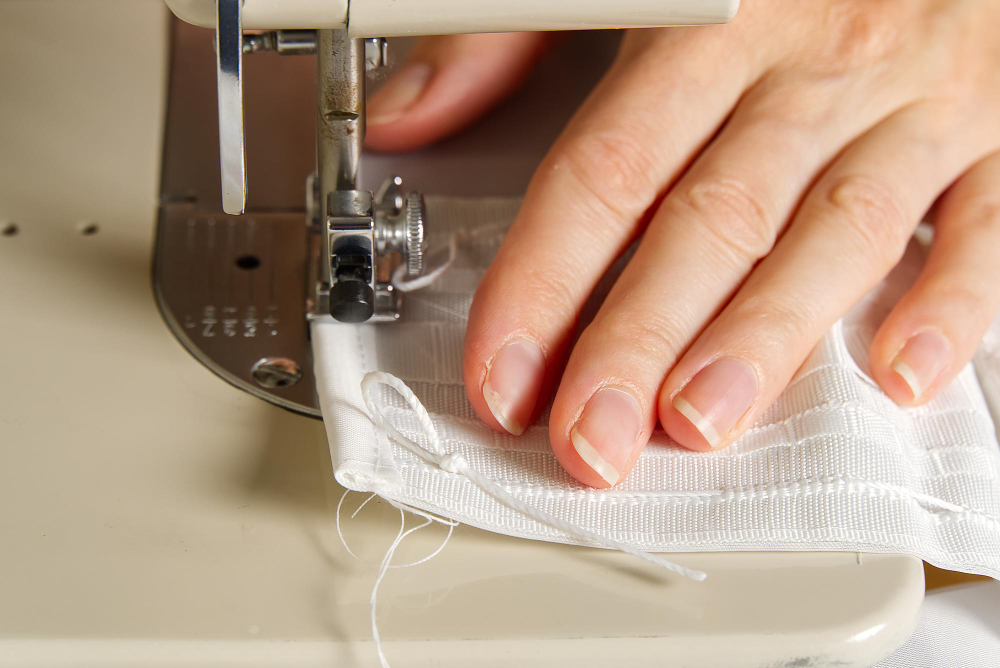
Common examples include:
- Plain seam
- French seam
- Flat-felled seam
- Lapped seam
- Bound seam
- Overlock seam
- Welt seam
- Butt seam
- Double-stitched seam
- Decorative seam
The correct seam depends on the fabric, garment design, stress placed on the seam, desired appearance, and production method.
Why Are Seam Types Important?
A seam is much more than a line of stitches.
The seam is often one of the areas of a garment that experiences the most stress. When a person moves, sits, stretches, or washes clothing, the seams must handle repeated forces.
A suitable seam can provide:
- Strength
- Durability
- Comfort
- A clean appearance
- Better shape retention
- Improved fabric stability
- Reduced fraying
- Better resistance to wear
- A professional finish
Choosing the wrong seam can create problems. A weak seam may open under pressure. A bulky seam may be uncomfortable. A poorly finished seam may fray after washing.
This is why understanding Nahttypen is an important part of learning sewing and garment construction.
The Basic Parts of a Seam
Before learning different Nahttypen, it helps to understand basic seam terminology.
Seam Allowance
Seam allowance is the extra fabric between the stitching line and the cut edge of the fabric.
For example, if two fabric pieces are stitched together 5/8 inch from the edge, the fabric outside that stitching line is part of the seam allowance.
The seam allowance may later be:
- Pressed open
- Pressed to one side
- Trimmed
- Graded
- Folded
- Enclosed
- Finished with an overlock stitch
The required seam allowance depends on the pattern and construction method.
Stitching Line
The stitching line is the path followed by the sewing machine needle and thread.
It is important to keep the stitching line consistent because uneven stitching can affect the final shape.
Seam Edge
The seam edge is the cut edge of the fabric inside the seam allowance.
Some fabrics do not fray easily, while others can unravel quickly. Seam finishing helps protect these edges.
Seam Finish
A seam finish is a method used to control raw fabric edges.
Examples include:
- Overlocking
- Zigzag stitching
- Pinked edges
- Binding
- Folding
- Enclosing the raw edge inside another seam
A good seam finish can improve both appearance and durability.
Common Nahttypen and Seam Types
There are many ways to classify seams. The following seam types are among the most useful for sewing and textile construction.
Also Read: Kibard: What Does Kibard Mean and Is It a Keyboard Typo?
Plain Seam
The plain seam is one of the simplest and most common seam types.
Two fabric pieces are placed together, usually with their right sides facing each other. They are stitched along the desired seam line. The seam allowance is then pressed open or to one side.
Plain seams are widely used because they are simple and adaptable.
They can be found in:
- Shirts
- Dresses
- Skirts
- Pants
- Jackets
- Home sewing projects
- Household textiles
A plain seam can be finished in several ways depending on the fabric.
For a beginner, the plain seam is often one of the first Nahttypen worth learning.
French Seam
A French seam is a neat seam in which the raw fabric edges are enclosed inside the seam.
This construction produces a clean finish on the inside of the garment. It is especially useful for lightweight and delicate fabrics.
French seams are commonly associated with:
- Blouses
- Lightweight dresses
- Fine shirts
- Lingerie-style garments that are not being discussed for adult content
- Scarves
- Fine home textiles
The main advantage is that the raw edge is hidden.
One limitation is that French seams can become bulky on thick fabrics. They are generally more suitable for lightweight materials.
Flat-Felled Seam
A flat-felled seam is a strong seam in which the raw edges are enclosed and the seam is secured with additional stitching.
This seam is known for its durability and clean appearance.
It is commonly used in:
- Jeans
- Workwear
- Shirts
- Uniforms
- Heavy-duty garments
- Outdoor clothing
A flat-felled seam can withstand considerable wear because the fabric layers are secured together.
This is one reason similar construction methods are common in durable clothing.
Lapped Seam
In a lapped seam, one fabric edge overlaps another rather than placing the two edges directly together.
The overlapping layers are then secured with stitching.
Lapped seams can be useful when a strong or visually distinctive construction is needed.
They are sometimes used in:
- Leather goods
- Denim
- Outerwear
- Heavy fabrics
- Decorative textile construction
The amount of overlap can vary depending on the design and required strength.
Bound Seam
A bound seam uses another strip of fabric or binding material to cover a raw seam edge.
The binding surrounds or covers the edge and is secured with stitching.
This technique gives the inside of a garment a neat and finished appearance.
Bound seams are useful for:
- Jackets
- Coats
- Unlined garments
- Quilting
- Bags
- Home textiles
The binding may be made from the same fabric or a different material.
Overlock Seam
An overlock seam is produced using an overlock machine, often called a serger in the United States.
An overlock machine trims the fabric edge while wrapping thread around the edge. Depending on the machine and stitch configuration, it can perform several functions at the same time.
Overlock construction can:
- Reduce fraying
- Join fabric
- Finish raw edges
- Create stretch-friendly seams
- Speed up production
Overlock stitching is especially common in modern clothing production.
It is widely used with:
- Knit fabrics
- T-shirts
- Sportswear
- Casual clothing
- Stretch garments
For stretch fabrics, the correct stitch settings are important because the seam needs to stretch with the fabric.
Zigzag Seam
A zigzag stitch is not always considered a separate structural seam type, but it is an important seam-finishing method.
The needle moves from side to side while forming the stitch.
Zigzag stitching can help control fraying on fabrics that do not require an overlock machine.
It is commonly available on household sewing machines, making it useful for beginners.
Butt Seam
A butt seam joins two fabric edges without overlapping them in the traditional way.
The edges meet, and the material may be secured using another piece of fabric, tape, or specialized stitching.
This type of construction can help reduce bulk because the fabric layers do not simply overlap.
Butt seams can be found in specialized textile work and certain technical or industrial applications.
Welt Seam
A welt seam is a seam construction that creates a raised or visible ridge.
It can be both functional and decorative.
Welt-style construction is sometimes used in:
- Jackets
- Coats
- Uniforms
- Upholstery
- Bags
- Decorative garments
The exact structure can vary depending on the design.
Double-Needle Seam
A double-needle sewing machine uses two needles to create two parallel rows of stitching.
This can produce a strong and professional-looking finish.
Double-needle stitching is commonly seen on:
- T-shirts
- Sportswear
- Jeans
- Workwear
- Casual clothing
It can also create a decorative effect.
Decorative Seams
Not every seam exists only to join fabric.
Some seams are deliberately made visible as part of the design.
Decorative seams can include:
- Topstitching
- Contrast stitching
- Multiple parallel stitch lines
- Piped seams
- Raised seams
- Patterned stitching
Decorative seams are common in fashion because they can add visual structure without requiring additional prints or decorations.
Seam Types by Construction Method
Nahttypen can also be understood by looking at how the fabric layers are positioned.
Open Seam
An open seam is stitched and then pressed so that the seam allowances spread apart.
This creates a relatively flat result.
Open seams are common in:
- Dresses
- Skirts
- Shirts
- Jackets
- Tailored clothing
The seam allowances may need edge finishing to prevent fraying.
Closed Seam
In a closed seam, the seam allowances are usually directed to one side rather than pressed apart.
This construction can be practical for many types of garments.
Enclosed Seam
An enclosed seam hides the raw edges between layers of fabric.
French seams are a well-known example.
This is useful when a clean inside finish is important.
Overlapped Seam
An overlapped seam places one fabric piece over another.
This method can create strength and may also produce a distinctive appearance.
Seam Types for Different Fabrics
One of the most important lessons in sewing is that there is no single seam that works perfectly for every fabric.
Fabric characteristics affect seam selection.
Cotton
Cotton is one of the easiest fabrics to sew.
Plain seams, French seams, flat-felled seams, and overlock finishes can all work well depending on the weight and design.
Light cotton may work well with a French seam, while heavier cotton can support stronger construction.
Denim
Denim is thick and durable.
Strong seam constructions are usually preferred for jeans and other denim products.
Flat-felled seams and reinforced stitching are common choices.
Silk
Silk can be lightweight and slippery.
A fine French seam can be useful because it encloses the raw edges and creates a clean finish.
Careful handling is important because silk can be damaged by rough sewing or unsuitable machine settings.
Wool
Wool fabrics vary greatly in thickness.
Tailored wool garments often require careful pressing and structured seam construction.
The seam method should match the fabric weight and garment design.
Knit Fabric
Knit fabric stretches.
A seam that does not stretch enough may break when the garment is worn.
Overlock and other stretch-friendly stitches are commonly used for knit fabrics.
Linen
Linen can fray easily.
A suitable seam finish is therefore important.
Plain seams with an appropriate edge finish, French seams, and other enclosed constructions may be used depending on the garment.
Polyester
Polyester is available in many forms, from lightweight clothing fabric to heavy technical textiles.
The correct seam depends on the specific polyester fabric, its stretch, thickness, and intended use.
How to Choose the Right Seam Type
Choosing a seam should begin with the purpose of the product.
Ask several simple questions.
What Fabric Are You Using?
Start with fabric.
Is it:
- Thin?
- Thick?
- Stretchy?
- Slippery?
- Heavy?
- Delicate?
- Likely to fray?
The answers can immediately narrow down suitable Nahttypen.
How Much Stress Will the Seam Receive?
A decorative seam on a loose garment does not have the same requirements as the seam of work pants.
High-stress areas may need stronger construction or reinforcement.
Common high-stress areas include:
- Crotch seams
- Armholes
- Pockets
- Shoulder seams
- Waistbands
- Side seams
Does the Seam Need to Stretch?
Stretch garments require construction that can accommodate movement.
A rigid stitch can restrict the garment or break when the fabric stretches.
Should the Seam Be Visible?
If the seam is intended to be part of the design, visible topstitching or decorative construction may be appropriate.
If the seam should disappear, an enclosed or carefully pressed construction may be better.
Is the Inside Appearance Important?
For unlined garments, the inside may be visible.
A clean seam finish can make a major difference in professional appearance.
Seam Strength and Durability
Seam strength is an important consideration in clothing and textile production.
A seam’s performance depends on several factors:
- Fabric strength
- Thread strength
- Stitch type
- Stitch density
- Seam allowance
- Sewing tension
- Number of stitching rows
- Fabric construction
- Finishing method
A strong fabric does not automatically produce a strong seam.
If the thread, stitch, or construction method is unsuitable, the seam can still fail.
For demanding products, manufacturers may test seam strength before production.
Seam Allowance and Why It Matters
Seam allowance provides the fabric needed to construct and stabilize a seam.
Too little seam allowance can make a seam difficult to sew and may increase the risk of the fabric pulling away from the stitches.
Too much seam allowance can create unnecessary bulk.
Pattern instructions usually specify an intended seam allowance. It is important to follow those instructions unless the construction has been deliberately changed.
The Role of Pressing in Seam Construction
Pressing is one of the most overlooked parts of professional sewing.
After stitching, pressing helps shape the seam.
Pressing can:
- Flatten the seam
- Improve garment shape
- Reduce wrinkles
- Make stitching look cleaner
- Prepare the garment for later construction
Pressing is different from simply ironing.
Ironing is generally associated with moving the iron back and forth to remove wrinkles. Pressing involves placing the iron on a particular area to shape or flatten it.
Good seam construction often depends on both accurate stitching and careful pressing.
Common Seam Problems and Their Causes
Even experienced sewers can encounter seam problems.
Seam Puckering
Puckering happens when fabric gathers or wrinkles along the stitching line.
Possible causes include:
- Incorrect thread tension
- Incorrect stitch length
- Needle problems
- Fabric feeding issues
- Poor machine settings
- Unsuitable thread
Testing on scrap fabric can help identify the problem.
Seam Slippage
Seam slippage happens when fabric pulls away from the stitching.
This can be more common with loosely woven fabrics.
Possible solutions include choosing a more suitable seam construction, adjusting seam allowance, and using appropriate stabilization.
Also Read: Robyoc.online: Website Overview, Safety, Privacy, and What You Should Know in 2026
Broken Thread
Thread can break because of:
- Excessive tension
- Incorrect needle
- Poor-quality thread
- Incorrect threading
- Heavy fabric
- Improper machine settings
The cause should be identified rather than simply increasing thread tension.
Fraying
Some fabrics fray rapidly after cutting.
A seam finish such as overlocking, zigzag stitching, binding, or an enclosed seam can help control the problem.
Nahttypen in Industrial Sewing
Industrial clothing factories use many seam constructions because garments must be produced consistently and efficiently.
Industrial sewing machines are often designed for specific tasks.
Examples include machines for:
- Lockstitch sewing
- Overlock stitching
- Coverstitching
- Chain stitching
- Buttonhole construction
- Heavy-duty sewing
- Decorative stitching
Factories may select a seam based on production speed, garment design, material, durability requirements, and cost.
Industrial seam construction is therefore not simply about making two pieces of fabric stay together. It is also about repeatability and production efficiency.
Nahttypen and Quality Control
Quality control is an important part of textile manufacturing.
Inspectors may examine seams for:
- Uneven stitching
- Loose threads
- Open seams
- Puckering
- Skipped stitches
- Incorrect seam width
- Fraying
- Broken stitches
- Poor alignment
A professional garment needs consistent construction across many pieces.
For large-scale production, small problems can become expensive if they are repeated thousands of times.
Seam Types in Clothing Design
Fashion designers often think about seams as design elements.
A seam can change how a garment looks and fits.
For example, a curved seam can help create shape. A vertical seam may visually divide a garment. Decorative topstitching can make a simple design look more structured.
Seam placement can also affect comfort.
A seam placed in an area that experiences frequent rubbing may be uncomfortable even if it is technically strong.
Therefore, seam design involves both appearance and human use.
Seam Types and Garment Fit
Seams are closely connected to garment fit.
Pattern pieces are shaped so that seams join together in a particular way.
When the seam is moved, curved, widened, or changed, the garment’s shape may also change.
Examples include:
- Princess seams
- Center-back seams
- Side seams
- Shoulder seams
- Waist seams
- Yoke seams
Some of these are primarily design or structural seam placements rather than stitch types.
This distinction is useful because “seam type” can refer to either the construction method or the location and design of the seam, depending on the context.
Seam Types vs. Stitch Types
These terms are related but not identical.
A seam describes how pieces of material are joined.
A stitch describes the individual formation of thread through the fabric.
For example, a plain seam may be sewn using a lockstitch.
An overlock seam may use an overlock stitch formation.
Understanding this difference makes sewing terminology much easier.
In simple terms:
Seam = how fabric pieces are joined.
Stitch = how thread is formed through or around the fabric.
Seam Types vs. Seam Finishes
A seam finish is used to manage the raw edges of a seam.
It may be part of the overall seam construction, but the two terms should not always be treated as identical.
For example, a plain seam can have several different finishes.
The raw edges could be:
- Zigzag stitched
- Overlocked
- Pinked
- Bound
- Folded
- Left unfinished when the fabric and project allow it
The main seam joins the fabric, while the seam finish controls the edges.
How Beginners Can Practice Different Nahttypen
Learning seam types does not require expensive equipment.
A beginner can create a small practice collection using fabric scraps.
Start with simple samples:
- Plain seam
- Pressed-open seam
- Closed seam
- French seam
- Overlock finish
- Zigzag finish
- Flat-felled seam
- Bound seam
- Decorative topstitching
Label each sample.
Write down:
- Fabric type
- Thread type
- Needle size
- Stitch length
- Seam allowance
- Machine used
- Finishing method
This creates a personal seam reference guide.
It can become very useful when starting future projects.
How Sewing Machines Affect Seam Selection
Modern sewing machines offer many stitch options.
A basic household machine may provide:
- Straight stitch
- Zigzag stitch
- Stretch stitches
- Decorative stitches
- Buttonhole stitches
A serger or overlock machine provides additional options for edge finishing and seam construction.
A coverstitch machine is commonly used for professional-looking hems on stretch garments.
The machine available to you does not completely determine the seam you can create, but it affects which techniques are practical and efficient.
Sustainability and Seam Construction
Seam construction can also have an environmental impact.
Durable seams may help garments last longer. Longer-lasting clothing can reduce the need for frequent replacement.
Repairable construction can also support a more sustainable approach to clothing.
A garment with accessible seams may be easier to:
- Repair
- Alter
- Resize
- Reinforce
- Reconstruct
This is an important point in modern textile design.
Sustainable fashion is not only about the material used. Construction quality also matters.
Repairing Seams
Seam repair is a useful practical skill.
When a seam opens, first determine whether the fabric itself is damaged.
If the fabric is intact, the seam may simply need to be restitched.
A basic repair process is:
- Remove loose threads.
- Turn the garment inside out.
- Align the fabric edges.
- Match the original seam line.
- Stitch carefully.
- Secure the thread ends.
- Press the repaired area.
For heavily stressed areas, reinforcement may be necessary.
If the surrounding fabric has weakened, simply restitching the same line may not provide a lasting repair.
Alterations and Seam Types
Tailors often work directly with seams when altering garments.
A garment may need to be:
- Taken in
- Let out
- Shortened
- Lengthened
- Reshaped
- Repaired
The amount of available seam allowance affects how much alteration is possible.
For example, if a garment has very little extra fabric inside the seam, it may be difficult to make it larger.
This is one reason seam allowance has practical value long after the original garment was sewn.
Choosing Thread for Different Seams
Thread selection should match the fabric and sewing purpose.
Important characteristics include:
- Strength
- Thickness
- Flexibility
- Fiber type
- Color
- Intended use
Common thread materials include polyester, cotton, and specialty fibers.
Polyester thread is widely used because it combines strength and flexibility.
Cotton thread may be appropriate for certain natural fabrics and sewing applications.
The thread should work with the fabric, needle, and sewing machine.
Choosing the Correct Needle
The needle also affects seam quality.
Needles are available for different materials and applications.
For example:
- Universal needles work for many common fabrics.
- Ballpoint or stretch needles are designed for knit materials.
- Denim needles are designed for heavier fabrics.
- Microtex-style needles are useful for certain fine or tightly woven materials.
Using an unsuitable needle can lead to skipped stitches, fabric damage, or poor seam quality.
How to Make Seams Look Professional
Professional-looking seams usually come from several small habits rather than one special trick.
Focus on:
- Accurate cutting
- Correct seam allowance
- Consistent stitching
- Suitable thread
- Correct needle
- Proper machine tension
- Careful pressing
- Clean seam finishing
- Trimming where necessary
Good sewing is often about consistency.
Even a simple plain seam can look professional when it is straight, even, correctly pressed, and properly finished.
A Simple Nahttypen Comparison
For quick reference, different seam constructions serve different purposes.
| Seam type | Main feature | Common use |
| Plain seam | Simple fabric joining | General clothing |
| French seam | Raw edges enclosed | Lightweight fabrics |
| Flat-felled seam | Strong enclosed construction | Denim and workwear |
| Lapped seam | Fabric layers overlap | Heavy or decorative construction |
| Bound seam | Raw edge covered with binding | Jackets and unlined garments |
| Overlock seam | Edge wrapped with thread | Knits and mass production |
| Butt seam | Edges meet rather than overlap | Specialized applications |
| Welt seam | Raised or visible construction | Clothing and upholstery |
| Double-needle seam | Two parallel stitch lines | Casual and sportswear |
| Decorative seam | Visible design element | Fashion and styling |
The table is a general guide. Actual seam selection should always consider the specific fabric and construction requirements.
Common Mistakes When Learning Seam Types
Beginners often focus only on the stitch itself.
However, several other factors are equally important.
One common mistake is failing to test the seam on scrap fabric.
Another is using the same seam technique for every fabric.
A third mistake is ignoring seam allowance.
Some beginners also forget that pressing is part of construction.
Another problem is choosing thread or needles without considering the fabric.
The best way to improve is to make small samples and compare the results.
A Practical Seam Selection Guide
When deciding which Nahttypen to use, follow this simple process.
First, identify the fabric.
Second, consider whether it stretches.
Third, determine how much stress the seam will receive.
Fourth, decide whether the raw edge needs to be hidden.
Fifth, consider the appearance of the finished seam.
Sixth, check which sewing machine and tools are available.
Also Read: Faibloh: The Modern Digital Collaboration Platform
Finally, test the construction on a fabric sample.
This process is more reliable than choosing a seam simply because it is popular.
Frequently Asked Questions About Nahttypen
What is Nahttypen in English?
Nahttypen is a German term that refers to seam types in English. It describes different methods used to join fabric or other textile materials together.
What is the most common seam type?
The plain seam is one of the most commonly used seam constructions because it is simple, versatile, and suitable for many fabrics and garments.
What seam type is best for delicate fabric?
There is no single best seam for every delicate fabric. French seams are often useful for lightweight materials because they enclose raw edges, but the fabric should always be tested first.
What seam is commonly used for jeans?
Strong constructions such as flat-felled seams are commonly associated with jeans and other durable garments. Reinforced stitching may also be used in areas exposed to high stress.
Why do seam types matter in sewing?
Seam types affect strength, comfort, appearance, durability, bulk, stretch, and fabric stability. Choosing an appropriate seam can improve the performance and appearance of a finished product.
Why Learning Nahttypen Is Valuable
Learning Nahttypen gives you a better understanding of how sewn products are built.
It helps beginners understand why some seams are simple while others require several construction steps.
For intermediate sewers, seam knowledge can improve garment quality.
For fashion students, it provides a foundation for understanding garment construction.
For designers, it helps connect visual ideas with practical manufacturing methods.
For manufacturers, seam selection can affect production speed, product durability, and quality control.
For consumers, basic seam knowledge can even help when examining clothing quality.
A garment with neat, consistent seams is often easier to evaluate than one where construction is hidden.
The Future of Seam Construction
Sewing technology continues to develop.
Modern textile manufacturing increasingly uses automation, computer-controlled sewing machines, digital pattern systems, and specialized equipment.
At the same time, traditional sewing techniques remain valuable.
Methods such as French seams and flat-felled seams have existed for a long time because they solve practical construction problems.
The future of textile production is therefore unlikely to be based entirely on either traditional or automated methods. Instead, manufacturers and designers can combine established sewing knowledge with modern technology.
Automation can improve consistency and production speed, while human expertise remains important for design decisions, material selection, quality evaluation, and unusual construction challenges.
Final Thoughts on Nahttypen
Nahttypen simply means seam types, but the subject is much broader than a list of stitches.
A seam affects how fabric behaves, how a garment feels, how long a product lasts, and how the finished item looks. Different materials and designs require different approaches.
Plain seams are useful for everyday sewing. French seams provide a clean finish for lightweight fabrics. Flat-felled seams offer durable construction for products such as denim and workwear. Overlock seams are especially useful for edge finishing and stretch fabrics. Bound, lapped, welt, butt, and decorative constructions provide additional options for specialized projects.
The most important lesson is that there is no universal seam that is correct for every project.
Good seam selection considers the fabric, stress, stretch, appearance, comfort, equipment, and intended use. Testing a technique on scrap fabric before beginning the final project is one of the simplest ways to improve results.
Whether you are learning sewing at home, studying fashion design, working as a tailor, or simply interested in how clothing is made, understanding Nahttypen gives you a useful foundation in textile construction.
Once you understand why different seams are used, sewing becomes easier to understand. You are no longer simply following a line of stitches. You are making deliberate construction choices that affect the strength, shape, comfort, appearance, and life of the finished product.