Messonde: What It Means, How It Works and Where It Is Used
The word messonde can be confusing because it is not a common English technical word. In many cases, it is connected to the German technical term Messsonde, which means a measuring probe, measurement probe, test probe, measuring sensor, or measuring head. German-English technical dictionaries list several of these English equivalents.
A measuring probe is a part of a measurement system that detects a physical, chemical, electrical, or environmental property. Depending on its design, a probe may measure temperature, pressure, flow, level, oxygen, conductivity, gas concentration, material properties, thickness, radiation, or another quantity.
This distinction is important because messonde does not describe one single product. It is better understood as a general idea: a device or sensing element used to obtain information from a real-world environment.
For someone searching for messonde in the United States, the most useful English terms are usually measuring probe, measurement probe, sensor probe, test probe, sensing probe, or measuring sensor. The exact term depends on the application.
What Does Messonde Mean?
In technical contexts, messonde is commonly associated with Messsonde, the German word for a measuring probe. The German compound combines the idea of measurement with a probe or sensing device.
English technical dictionaries translate Messsonde as measuring probe, test probe, measuring head, measuring sensor, or sensor.
In simple language, a messonde is a device that helps a larger measuring system find out what is happening in a particular place.
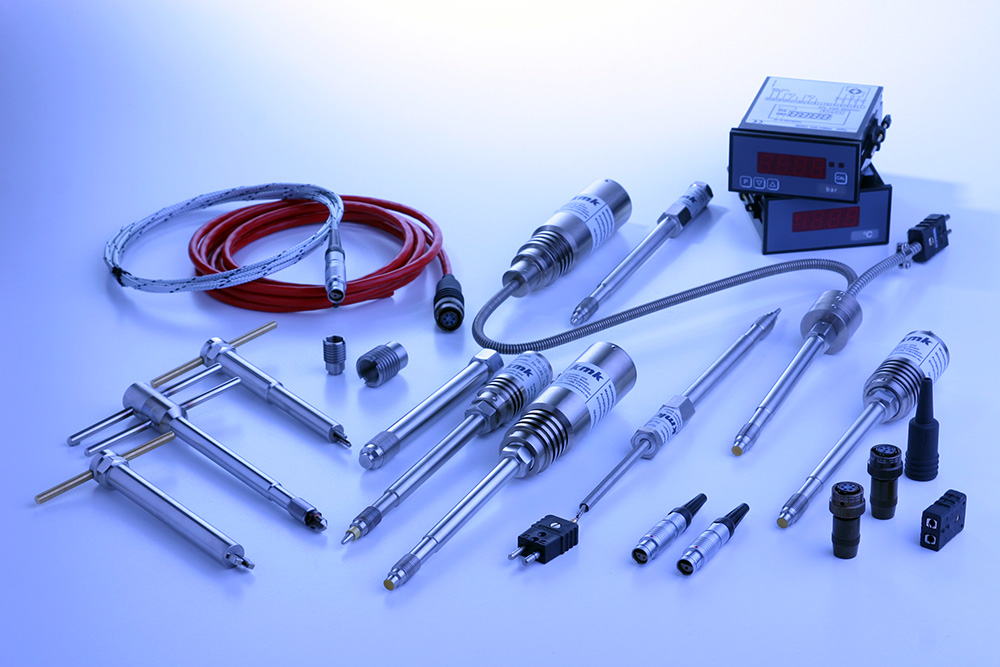
For example, imagine a large industrial tank containing liquid. An electronic instrument outside the tank cannot always determine the exact condition of the liquid by itself. A probe can be placed inside the tank. The probe interacts with the liquid and detects a property such as level, conductivity, temperature, or another measurable condition. The information is then sent to electronics that process and display the result.
The same basic idea can be used in many different situations.
A probe can be:
- inserted into a material
- placed against a surface
- suspended in a tank
- installed inside a pipe
- positioned in air or another gas
- placed in water
- attached to a measuring instrument
- connected by cable
- integrated into a larger sensor system
- designed for temporary or continuous measurement
The word therefore describes a function rather than one specific shape.
Also Read: Uncuymaza: AI-Powered Game Weapon Development Explained
Is Messonde the Correct English Spelling?
This is one of the most important points for anyone researching the term.
The established German technical spelling is Messsonde. Dictionaries such as dict.cc and LEO translate Messsonde into English using terms such as measuring probe and test probe.
The spelling messonde can still appear in technical searches, product listings, translated material, patents, and copied terminology. Historical technical documents also show forms such as Meßsonde, using the older German spelling with the character ß.
This means that a search for messonde may lead to information about Messsonde.
For an English-speaking reader, the safest approach is to search for several related terms:
- messonde
- Messsonde
- measuring probe
- measurement probe
- sensor probe
- test probe
- measuring sensor
- sensing probe
Using these variations is particularly useful when looking for replacement parts, technical manuals, specifications, patents, or engineering documentation.
What Is a Measuring Probe?
A measuring probe is the part of a measurement system that interacts most directly with the thing being measured.
Consider a digital thermometer. The display is not usually the part that directly senses the temperature. A temperature-sensitive component inside the probe detects changes in temperature. Electronics then convert those changes into a number that the user can read.
The same principle appears in industrial and scientific systems.
The probe may detect a change in:
- temperature
- electrical resistance
- electrical conductivity
- pressure
- light
- radiation
- chemical concentration
- fluid movement
- position
- distance
- material thickness
- vibration
- humidity
- gas concentration
The sensing method depends on the measurement.
A probe may therefore be very simple or highly sophisticated. Some probes are little more than a sensing tip and cable. Others contain several sensors, electronics, protective housings, signal conditioning, communication systems, or calibration features.
The Physikalisch-Technische Bundesanstalt, Germany’s national metrology institute, provides examples of specialized measuring probes used for scientific and industrial measurements. In one example, a small probe is designed to measure temperature and thermal conductivity in small material samples.
This shows why it is not accurate to treat messonde as a single type of sensor. The measurement method and application determine the actual design.
How Does a Messonde Work?
The basic process is easier to understand when it is divided into several steps.
First, the probe is positioned where the measurement needs to happen.
Second, a sensing element responds to the property being measured.
Third, that response becomes an electrical, optical, mechanical, or other measurable signal.
Fourth, electronics process the signal.
Finally, the measurement system presents the result as a number, graph, warning, control signal, or stored data.
For example, consider a temperature probe.
The probe contains a temperature-sensitive element. When temperature changes, the electrical characteristics of that element also change. The instrument detects the change and calculates a temperature value.
A different probe might measure electrical conductivity. Instead of responding primarily to temperature, it may detect how easily electrical current passes through a liquid.
Another probe could use light. Changes in light absorption, reflection, fluorescence, or another optical property can provide information about the material being examined.
This is why the phrase measuring probe is broad. The physical principle can be very different from one application to another.
Main Types of Messonde and Measuring Probes
There is no single universal classification for messonde. A practical way to understand different probes is to classify them according to what they measure.
Temperature Probes
Temperature probes are among the most familiar types.
They are used in homes, laboratories, restaurants, manufacturing plants, HVAC systems, medical equipment, food processing, and research.
Common temperature-sensing technologies include resistance-based sensors, thermocouples, and semiconductor sensors.
A temperature probe can be designed for:
- air temperature
- liquid temperature
- surface temperature
- food temperature
- industrial process temperature
- high-temperature environments
- low-temperature environments
The physical design matters as much as the sensor itself.
A probe used in food may need a thin, easy-to-clean tip. A probe used in an industrial furnace may require materials that tolerate extreme temperatures. A probe placed inside a chemical process may need corrosion-resistant materials.
Therefore, choosing a temperature probe is not simply a matter of choosing a temperature range.
The probe must also match the environment.
Pressure Probes
Pressure probes detect force applied by a gas or liquid over an area.
They can be used in:
- industrial equipment
- hydraulic systems
- pneumatic systems
- pipelines
- process equipment
- environmental monitoring
- laboratory systems
- engineering test equipment
The probe may convert pressure into an electrical signal that an instrument can read.
Pressure measurement can become challenging when the environment includes high temperatures, vibration, corrosive chemicals, rapidly changing pressure, or contamination.
For this reason, engineers consider the probe’s pressure range, materials, connection type, response time, accuracy, and environmental rating.
Level Probes
Level probes determine how much material is present in a tank, container, vessel, or similar structure.
They can be used for liquids and, with suitable technology, bulk solids.
Industrial manufacturers use different sensing methods, including conductive, capacitive, radar, ultrasonic, and other technologies.
For example, VEGA provides conductive probes for level switching and overfill or dry-run protection in conductive liquids.
The important point is that a level probe does not necessarily measure an exact continuous level.
Some systems are designed only to answer a simple question:
Is the material above or below this point?
Other systems provide continuous information such as the estimated distance from the probe to the material surface.
This distinction is important when selecting equipment.
Flow and Velocity Probes
Some measuring probes are designed to determine how quickly a gas or liquid is moving.
Flow probes can be used in:
- ventilation systems
- industrial pipes
- chemical processes
- heating and cooling systems
- laboratories
- environmental studies
Historical technical records demonstrate that measuring probes have been developed specifically for detecting low flow velocities inside pipes.
A flow probe may use thermal, pressure-based, mechanical, electromagnetic, ultrasonic, or other principles.
The best choice depends on the fluid, speed, pipe geometry, temperature, pressure, and required accuracy.
Oxygen and Gas Probes
A messonde may also be designed to measure oxygen or another gas.
Gas measurement is common in:
- industrial processing
- environmental monitoring
- water treatment
- laboratories
- combustion systems
- medical and scientific equipment
Gas probes can use electrochemical, optical, thermal, catalytic, or other sensing principles.
An example from the scientific literature describes optical probes for measuring oxygen and carbon dioxide in gases and liquids.
This demonstrates another important point: a measuring probe does not necessarily need to directly consume or chemically react with the substance it measures. Optical sensing methods can measure a property through changes in light.
Conductivity Probes
Conductivity probes measure how easily electrical current passes through a material.
They are especially useful for liquids.
Applications include:
- water treatment
- laboratory testing
- chemical processing
- industrial cleaning systems
- environmental monitoring
- quality control
Conductivity can provide information about dissolved ions in water and other solutions.
The probe usually contains electrodes or another sensing arrangement. The measurement system uses the electrical response to estimate conductivity.
Because conductivity depends on factors such as temperature, the measurement system may need temperature compensation.
This is a good example of why a sensor reading should not automatically be treated as a perfect description of the material. A measurement is meaningful only when the sensing method, conditions, calibration, and interpretation are appropriate.
pH Probes
pH probes measure how acidic or alkaline a solution is.
They are widely used in:
- water treatment
- swimming pools
- laboratories
- agriculture
- food processing
- chemical manufacturing
- aquaculture
- environmental testing
A pH probe is usually more delicate than a simple temperature sensor.
Its condition can strongly affect measurement quality. Contamination, aging, storage problems, temperature, and calibration can all influence the result.
The German Federal Agency for Nature Conservation’s marine terminology resource lists pH meters, oxygen probes, CTD measuring probes, and other instruments under the broader concept of measuring probe/device.
This supports the broader understanding of Messsonde as a category rather than a single instrument.
Radiation Probes
Measuring probes can also detect radiation.
Depending on the instrument, the probe may detect:
- alpha radiation
- beta radiation
- gamma radiation
- X-rays
- neutron radiation
- other forms of ionizing radiation
The design depends heavily on the type and energy of radiation being measured.
Radiation measurement is a specialized field. Instruments may include detectors, shielding, electronics, calibration systems, and software.
Historical German technical guidance also used the term Meßsonde for the component used to take gas-mixture samples in certain measurement systems, illustrating how the word can describe the sampling or sensing component of a larger device.
Material and Surface Measurement Probes
A measuring probe can also be used to examine solid materials.
Examples include probes for:
- thickness
- surface shape
- hardness-related measurements
- thermal properties
- dimensional inspection
- electromagnetic properties
- surface roughness
Some probes physically touch the surface.
Others work without physical contact.
The Physikalisch-Technische Bundesanstalt describes high-resolution measurement systems in which the sensing function is integrated close to the actual measuring tip. This type of design can reduce certain sources of measurement error and improve usability.
This illustrates a broader engineering principle: where the sensing element is located can affect the quality of the measurement.
Environmental Measuring Probes
Environmental monitoring is another major area for measuring probes.
A single monitoring station may use several probes to measure different conditions.
Possible measurements include:
- air temperature
- humidity
- pressure
- water temperature
- dissolved oxygen
- conductivity
- pH
- water level
- gas concentration
- radiation
- flow
Environmental probes are often exposed to difficult conditions.
Water can cause corrosion. Dust can contaminate surfaces. Biological growth can change a sensor’s response. Temperature changes can alter sensor behavior.
For long-term monitoring, durability and maintenance are therefore just as important as the initial accuracy specification.
Industrial Applications of Messonde
Industrial measurement is one of the most important areas for probe technology.
Manufacturing systems depend on measurement to keep processes stable.
A factory may need to know:
- how hot a process is
- how much liquid is in a tank
- whether a pipeline has sufficient flow
- whether a chemical concentration is within limits
- whether a pressure is safe
- whether equipment is operating normally
- whether a material has the correct properties
In many cases, the probe is the first point where real-world information enters the control system.
That makes probe selection extremely important.
A poor measurement can lead to a poor decision.
For example, if a level probe falsely reports that a tank is full, a control system may stop filling too early. If it falsely reports that the tank is empty, a pump could run when it should not.
The probe may therefore be small compared with the entire industrial installation, but its role can be critical.
Messonde in Automation and Control Systems
Modern factories often connect sensors and probes to automated control systems.
The basic chain can look like this:
Physical condition → probe → signal → electronics → software → decision → action
For example, a temperature probe can detect that a process is becoming too hot.
The signal reaches a controller.
The controller compares the measurement with a target value.
If the temperature is above the allowed range, the system can reduce heating or activate cooling.
In this way, the measuring probe becomes part of an automatic feedback loop.
Modern industrial systems may also send measurement data to computers, databases, dashboards, cloud platforms, or maintenance systems.
This creates opportunities for predictive maintenance and process optimization.
However, adding software does not remove the need for a reliable physical measurement.
If the probe is wrong, the digital system can simply make a wrong decision faster.
Why Calibration Matters
Calibration is one of the most important parts of measurement.
A probe can appear to work while producing inaccurate results.
Calibration compares the measurement system with a known reference or standard.
The goal is to determine whether the instrument is producing trustworthy results and, where appropriate, establish a correction or adjustment.
The exact calibration process depends on the type of probe.
A temperature probe may be checked against a known temperature reference.
A pressure sensor may be compared against a pressure standard.
A pH probe may be checked using reference buffer solutions.
A dimensional probe may be checked against known reference dimensions.
Calibration is especially important when measurements are used for safety, quality control, scientific research, regulatory compliance, or expensive industrial decisions.
The German national metrology institute PTB also emphasizes the relationship between measurement systems, detectors, probes, processing equipment, software, and calibration-related parameters in regulated measurement applications.
Calibration Is Not the Same as Accuracy
These concepts are often confused.
Accuracy describes how close a measurement is to the true or accepted value.
Calibration is a process used to assess and, where applicable, improve the relationship between the instrument’s indication and a reference.
A probe can be high quality but still require calibration.
Likewise, calibration cannot make an unsuitable probe appropriate for every application.
For example, a sensor designed for a clean laboratory liquid may not be suitable for a hot, abrasive industrial slurry simply because it has been calibrated.
Application suitability comes first.
Common Causes of Measurement Errors
A messonde can produce poor results for many reasons.
Incorrect Probe Placement
Where the probe is placed can have a major effect on the reading.
A temperature probe near a heater may show a different value from one in the center of a well-mixed liquid.
A level probe installed in a location affected by turbulence may behave differently from one placed in a calmer area.
Contamination
Dirt, dust, oil, biological growth, deposits, and chemical residue can affect sensing surfaces.
This is particularly important for probes used in water, food, chemical processes, and industrial environments.
Temperature Effects
Some sensors are strongly affected by temperature.
Even when temperature is not the quantity being measured, it may influence the sensor or the surrounding material.
Mechanical Damage
A probe may be exposed to vibration, impact, bending, pressure, or abrasion.
A damaged probe can produce unstable or incorrect results.
Electrical Interference
Electronic probes may experience interference from nearby electrical equipment.
Grounding, shielding, cable design, and installation practices can affect signal quality.
Aging
Sensors do not always remain exactly the same over time.
Some sensing elements age because of chemical exposure, repeated heating, mechanical wear, or normal material changes.
Regular verification can help detect this problem.
How to Choose the Right Measuring Probe
If you are buying or specifying a messonde, start with the measurement rather than the product name.
Ask these questions.
What do I need to measure?
Is it temperature, pressure, level, flow, oxygen, pH, conductivity, thickness, radiation, or something else?
What is the measurement range?
A sensor designed for a small range may not be appropriate for extreme values.
What level of accuracy is required?
Not every application needs laboratory-level accuracy. However, important processes may require tight measurement limits.
Also Read: Milyom: Meaning, Origin, Uses, Safety, and Online Guide
What is the environment?
Consider:
- temperature
- pressure
- humidity
- chemicals
- dust
- water
- vibration
- mechanical impact
- radiation
- biological contamination
How will the probe be installed?
Will it be inserted, mounted, suspended, attached to a surface, or installed permanently?
How will it communicate?
Possible options include wired electrical signals, digital interfaces, wireless systems, or specialized connections.
How often will it need maintenance?
A probe that requires frequent cleaning may be unsuitable for a difficult-to-access location.
Is calibration required?
For critical measurements, consider how calibration will be performed and how often it needs to be checked.
Messonde vs Sensor
The terms sensor and measuring probe overlap, but they are not always identical.
A sensor is generally the component that detects a physical or chemical condition.
A probe often describes the physical assembly that places the sensing element into the measurement location.
For example, a probe may contain a sensor at its tip, along with a protective housing and cable.
However, manufacturers do not always use these terms in exactly the same way.
This is why it is better to examine the technical specifications rather than assume that two products are equivalent because both are called sensors.
Messonde vs Measuring Instrument
A measuring instrument is usually the larger system used to obtain, process, display, record, or analyze measurements.
A measuring probe may be only one component.
For example:
Probe → sensing element → cable → signal processing → display
In some modern products, several of these functions are built into one physical device.
In other systems, the probe is separate from the main instrument.
Understanding this distinction is especially useful when ordering replacement parts.
If a manual says that the Messsonde is defective, it may mean that the probe itself needs replacement rather than the entire measuring instrument.
Industrial documentation demonstrates this type of separation. Siemens documentation, for example, identifies a fault condition involving mechanical damage to a measuring probe and instructs the user to inspect or replace the probe.
Why Probe Design Matters
The sensing element is only one part of a successful measurement.
The physical design around it can be equally important.
A good probe design may need to provide:
- mechanical protection
- chemical resistance
- thermal stability
- electrical insulation
- correct positioning
- easy cleaning
- reliable connection
- resistance to vibration
- suitable response time
The probe must also avoid interfering too much with the thing being measured.
For example, a large probe inserted into a small sample can change the temperature or physical conditions of that sample.
This is particularly important in scientific measurements.
The PTB has described small measurement probes designed specifically for small material samples, showing how probe size can become an important part of measurement design.
Response Time and Messonde Performance
Response time describes how quickly a probe responds when the measured condition changes.
A fast probe is useful when conditions change quickly.
A slower probe may be perfectly acceptable when the measurement environment changes slowly.
For example, a temperature probe monitoring a rapidly changing industrial process may need a faster response than one used to monitor the temperature of a storage room.
However, faster is not automatically better.
A very sensitive and fast probe may also require more careful handling or signal processing.
The correct design depends on the application.
Continuous Measurement vs Point Measurement
Another important distinction is whether the probe provides continuous information or simply detects a condition.
A continuous level probe may report a changing liquid level.
A point-level probe may simply indicate whether material has reached a particular position.
Both can be useful.
For example, a storage tank may use one probe to provide continuous level information and another independent device as a high-level safety alarm.
The choice depends on what the control system actually needs.
Wired and Wireless Measuring Probes
Traditional measuring probes often use cables.
Wired systems remain popular because they can provide reliable power and communication, particularly in industrial environments.
Wireless systems are increasingly useful when wiring is difficult or expensive.
Wireless probes can be valuable for:
- remote environmental monitoring
- temporary installations
- large facilities
- difficult-to-reach locations
- distributed sensor networks
However, wireless measurement introduces additional considerations such as battery life, signal range, network reliability, cybersecurity, and data management.
A wireless probe therefore solves some installation problems while creating new engineering requirements.
The Role of Digital Technology
Modern measurement is becoming increasingly digital.
A traditional probe may simply generate an analog signal.
A modern intelligent sensor may perform some processing inside the device.
It may also provide:
- digital communication
- self-diagnostics
- status information
- configuration data
- calibration information
- fault warnings
- measurement history
This can make maintenance easier.
Instead of simply receiving a number, the control system may also know whether the probe believes it is functioning correctly.
Still, intelligent electronics do not eliminate basic measurement problems.
A contaminated sensing surface remains contaminated.
A badly positioned probe remains badly positioned.
A damaged probe remains damaged.
Digital technology improves the information available to users, but good measurement still begins with sound physical design.
Maintenance of a Measuring Probe
Proper maintenance depends on the probe type.
Common maintenance tasks may include:
- cleaning the sensing surface
- checking cables
- inspecting connectors
- checking for corrosion
- inspecting mechanical damage
- verifying calibration
- checking mounting hardware
- reviewing unusual readings
- replacing worn components
Maintenance schedules should follow the manufacturer’s instructions and the demands of the application.
A probe exposed to clean indoor air may require little maintenance.
A probe exposed to aggressive chemicals or dirty wastewater may need frequent inspection.
The most useful approach is to create a maintenance plan based on actual operating conditions rather than using the same schedule for every probe.
Safety Considerations
Some measuring probes are simple consumer devices.
Others operate in environments where safety is a major concern.
Industrial probes may be used around:
- flammable gases
- high pressures
- high temperatures
- hazardous chemicals
- moving machinery
- electrical hazards
- radiation
The probe must therefore be suitable for its intended environment.
A product’s measurement range alone is not enough.
For hazardous environments, users should verify the relevant equipment approvals, installation requirements, electrical classifications, temperature limits, pressure ratings, and manufacturer’s instructions.
Do not assume that a probe designed for ordinary laboratory use is safe for an industrial hazardous location.
Messonde in Research and Science
Scientific research often depends on carefully designed probes.
Researchers use probes because many important conditions cannot be measured simply by looking at a sample.
A probe can allow measurements to be made:
- inside a material
- at a specific location
- over a period of time
- under controlled conditions
- without removing the sample
- repeatedly during an experiment
In some cases, the probe itself becomes part of the research challenge.
Scientists may need to reduce its size, improve sensitivity, increase response speed, reduce interference, or make the sensing process less invasive.
The PTB’s work on specialized thermal measurement probes is an example of how probe design can support new measurement capabilities.
Why the Term Messonde Appears in Older Documents
People researching messonde may encounter older German technical documents that use Meßsonde rather than Messsonde.
This is not necessarily a different device.
The German spelling reform changed how ß is used in many words. Older technical publications can therefore use Meßsonde while newer publications commonly use Messsonde.
Historical technical literature also shows that the term has been used for many different measuring applications, including gas measurement, temperature measurement, flow measurement, and material testing.
This historical range is useful because it confirms that the word refers to a broad technical concept rather than a newly invented type of equipment.
How to Search for Messonde in the United States
If you are in the United States and encounter the term messonde in a manual or product listing, do not search only for that exact spelling.
Try:
“Messsonde measuring probe”
“Messsonde sensor”
“measuring probe”
“measurement probe”
“test probe”
“sensor probe”
Then add the property being measured.
For example:
“Messsonde temperature probe”
“Messsonde oxygen probe”
“Messsonde pressure probe”
“Messsonde level probe”
“Messsonde conductivity probe”
Also include the manufacturer name, model number, or equipment number if one is available.
This can make a large difference when searching for replacement parts.
How to Tell What a Messonde Is Used For
The surrounding words usually reveal the meaning.
If a document mentions temperature, resistance, heating, or thermocouples, the probe may be temperature-related.
If it mentions tank level, electrodes, overfill, or dry-run protection, it may be a level probe.
If it mentions oxygen, pO2, or dissolved oxygen, it may be an oxygen probe.
If it mentions pH, buffer solutions, or acidity, it may be a pH probe.
If it mentions radiation or a detector, it may be a radiation probe.
If it mentions flow, velocity, pipes, or fluid movement, it may be a flow probe.
This contextual approach is much more reliable than assuming that every use of messonde refers to the same product.
Common Misunderstandings About Messonde
One common misunderstanding is that messonde is the name of one particular machine.
It is not generally used that way in established technical terminology.
Another misunderstanding is that every messonde is a sensor.
A probe may contain a sensor, but the probe can also include the housing, connection, protective components, and other parts needed to position and operate the sensing element.
Another mistake is assuming that any measuring probe can be used for any measurement.
It cannot.
A temperature probe cannot automatically measure pressure.
A conductivity probe cannot automatically measure oxygen.
The sensing principle must match the property being measured.
Another mistake is assuming that a digital reading is automatically accurate.
The display may be digital, but the measurement still depends on the physical sensor, calibration, installation, environmental conditions, and signal processing.
The Future of Measuring Probes
Measuring probes are likely to become more capable as sensors, electronics, software, and communication technologies continue to develop.
Future systems are likely to focus on:
- smaller sensing elements
- lower power consumption
- wireless communication
- improved self-diagnostics
- longer service life
- better environmental resistance
- more automated calibration
- multi-parameter measurement
- easier integration with industrial networks
- real-time data analysis
One important trend is the combination of several measurements in one system.
Instead of measuring only temperature, a future environmental probe might combine temperature, pressure, conductivity, dissolved oxygen, and other variables.
This can provide a more complete picture of the environment.
Another important trend is smarter maintenance.
A probe may eventually provide more information about its own condition, helping operators determine when cleaning, calibration, or replacement is necessary.
A Practical Way to Think About Messonde
The easiest way to understand messonde is to stop thinking of it as a mysterious word.
Think of it as a technical term associated with a measuring probe.
The probe is the part of a measurement system that interacts with the thing being measured.
The exact probe can be very different depending on the application.
Also Read: HydraHD: A Complete Guide to the Movie and TV Discovery App
It might be a thin temperature probe.
It might be a pressure-sensing device.
It might be a conductivity electrode.
It might be a level probe inside a tank.
It might be an optical probe used in scientific research.
It might be a specialized industrial sensor designed for difficult environments.
The common feature is the measurement function.
FAQs About Messonde
Is messonde an English word?
Messonde is not generally used as a standard everyday English technical word. In many technical contexts, it is associated with the German term Messsonde, which is translated as measuring probe, test probe, measuring sensor, or sensor.
What is the correct German spelling of messonde?
The established modern German spelling is Messsonde. Older technical documents may use Meßsonde. The difference is primarily related to German spelling conventions rather than necessarily indicating two different types of equipment.
Can a messonde measure more than one property?
Yes, depending on its design. Some modern measuring systems can combine multiple sensing functions. However, a basic probe is normally designed around a particular measurement principle and target property.
How long does a measuring probe last?
There is no single lifespan for every probe. Service life depends on the sensor technology, operating environment, chemical exposure, temperature, pressure, mechanical stress, cleaning practices, and maintenance. A probe used in a harsh industrial process may require replacement much sooner than one used in a clean laboratory.
Where can someone find the specifications for a messonde?
The most reliable source is the manufacturer’s technical documentation for the exact probe model. Look for the model number, part number, data sheet, installation manual, calibration information, and operating limits. If the term came from a German document, searching for Messsonde rather than only messonde can also produce more relevant technical information.
Conclusion
The term messonde becomes much easier to understand once its technical context is clear.
In most cases, it points toward Messsonde, the German term for a measuring probe. A measuring probe is a sensing component used to collect information about a physical or chemical condition. It can be used for temperature, pressure, flow, level, oxygen, conductivity, pH, radiation, material properties, and many other measurements.
The technology behind the probe can be simple or advanced, but the purpose is the same: to obtain useful information from the real world and provide that information to a measurement system.
For American readers, the most useful English search terms are measuring probe, measurement probe, test probe, sensor probe, and measuring sensor. Using these terms together with the specific property being measured is usually the fastest way to find accurate product information, manuals, replacement parts, and technical specifications.
Most importantly, the word alone does not tell you exactly what equipment is involved. The application, sensing technology, model number, installation method, and measurement target all matter.
That is the key to understanding messonde correctly and using the term effectively when researching technical equipment.